
Loading, please wait...

LOT 0089
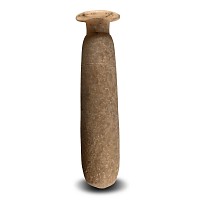
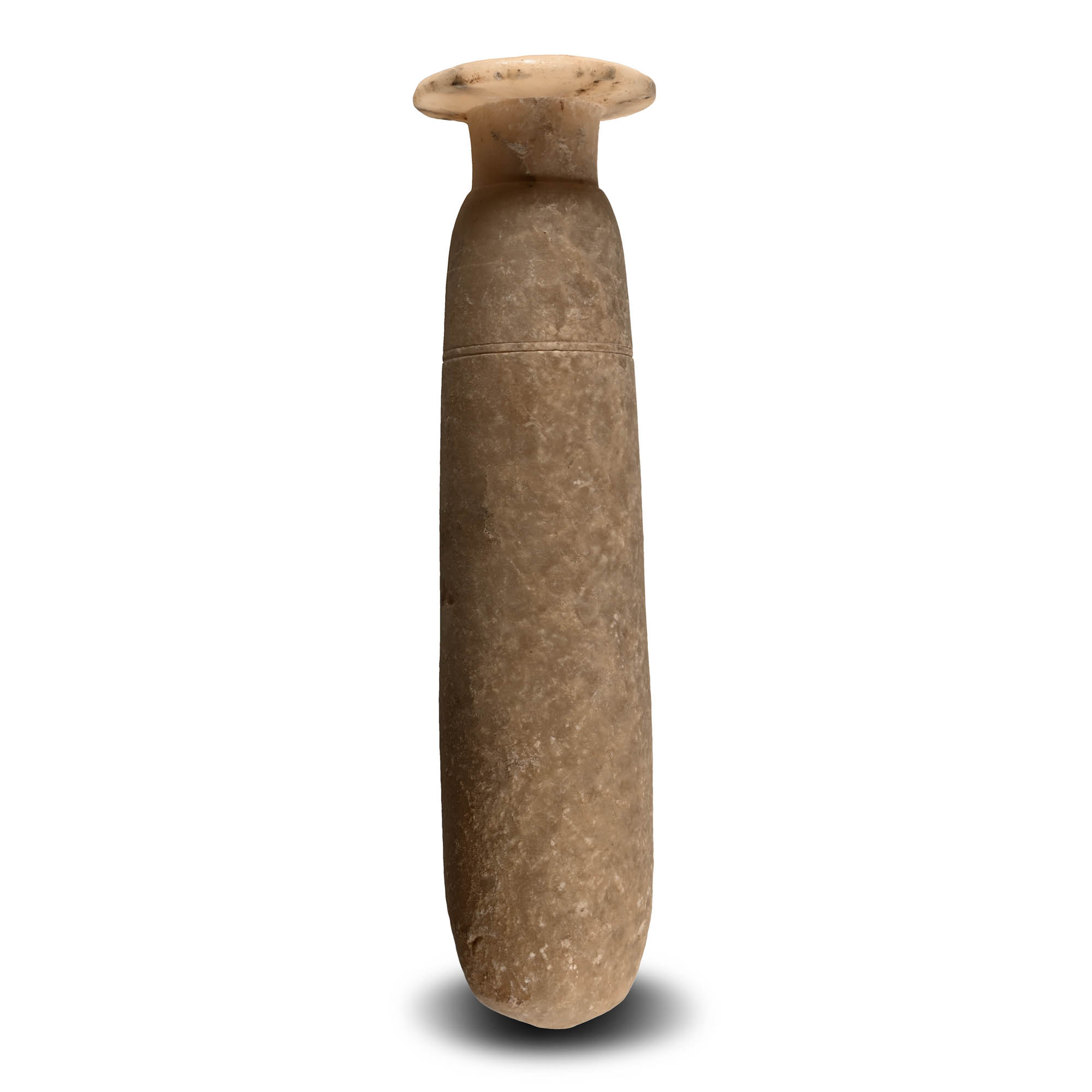
Greek Alabaster Alabastron
CIRCA 600 B.C.
8 1/4 in. (540 grams, 21 cm).
With fusiform body, slender neck and broad flange rim, circumferential incised rings.
ProvenanceAcquired in Germany, 1993.
Private collection, Europe.
Cf. Berlev, O. and Hodjash, S., Catalogue of Monuments of Ancient Egypt: From the Museums of the Russian Federation, Ukraine, Bielorussia, Caucasus, Middle Asia and the Baltic States, Orbis Biblicus et Orientalis 17, Zurich, 1998, pl. 145, VIII.46, for a similar vessel.
CONDITIONTimeLine Auctions follows a vetting process to ensure the authenticity and legality of all items, reinforcing our commitment to integrity and responsible trading. Each antiquity, antique, and coin lot undergoes thorough examination by a vetting committee of at least ten external specialists, professional trade association members, scientists, and archaeologists: Our Vetting Process
AUCTIONS:
TimeLine is a leading auction house specialising in antiquities, ancient art, collectables, natural history, coins, medals, and books. Our auctions offer museums, collectors, historians, and enthusiasts the opportunity to acquire unique and historically significant pieces.
LOT 0089
Greek Alabaster Alabastron
Estimate £800 - 1,000€930 - 1,160 (for guidance only)$1,080 - 1,350 (for guidance only)
-
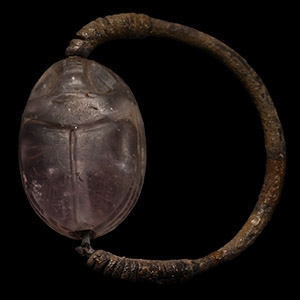
Etruscan Silver Ring with Amethyst Scarab
8th-3rd century B.C.Estimate: £700 - 900 (+bp*)
Opening Bid: £280
Wire hoop with ends wound round the shank at each shoulder, swivel-mounted amethyst scarab with flat underside, segmented border around a dolphin with putto mounted on its back. 5.44 grams, 30.77 mm overall, 25.27 mm internal diameter (approximate size British W, USA 11, Europe 25, Japan 24)
From the private collection of Mr K.A., acquired in the 1990s-early 2000s. -
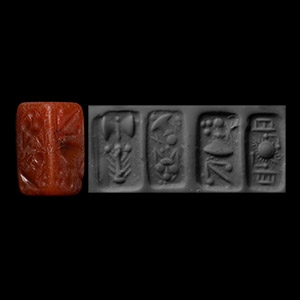
Cretan Red Carnelian Hieroglyphic Seal
Early 2nd millennium B.C.Sold for (Inc. bp): £4,680
Square in section and pierced longitudinally, incuse scene to each face: labrys above a tree; starburst between hatched panels; arrow, axe and other objects; figure above an axe. 3.99 grams, 18 mm
From the Priday collection, Brookmans Hall, Hertfordshire, UK, formed 1930-1940s onwards by descent. This lot has been checked against the Interpol Database of stolen works of art and is accompanied by a search certificate number no.12385-225393. -
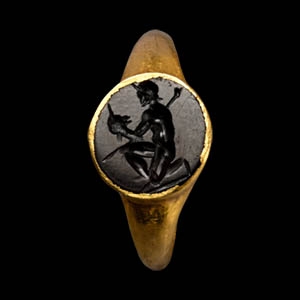
Hellenistic Gold Ring with Satyr Gemstone
2nd-1st century B.C.Sold for (Inc. bp): £2,860
With hollow-form hoop widening towards the shoulders, raised bezel set with a round intaglio, engraved with an image of a satyr or kneeling nude warrior on a baseline, wearing a Boeotian-style helmet pushed back, holding a spear in one hand and an object in the other; a marriage. 2.91 grams, 23.57 mm overall, 19.25 mm internal diameter (approximate size British O 1/2 , USA 7 1/4, Europe 15.61, Japan 15)
From a private family collection formed since the early 19th century, thence by descent. Property of a New Zealand legal professional. Accompanied by an academic report by Dr Raffaele D’Amato. This lot has been checked against the Interpol Database of stolen works of art and is accompanied by search certificate number no.12322-223716.
The scene possibly alludes to the incident in the Trojan Cycle where Achilles is wounded by an arrow in his heel, the only part of his body which was not impervious to injury.
