
LOT 3465
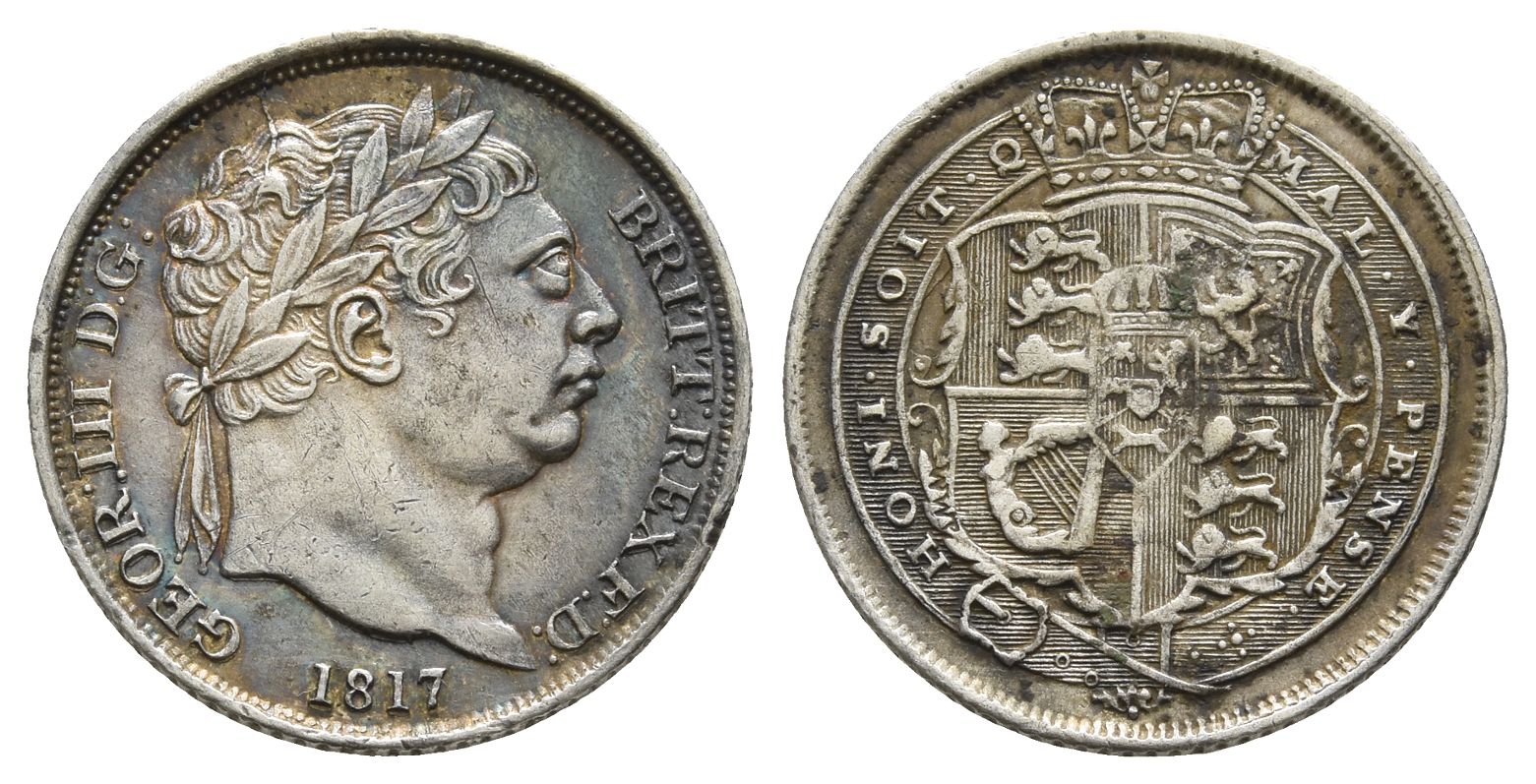
Great Britain. Hanover, George III AR Sixpence. 1760-1820.
London mint. Dated 1817. Design by Benedetto Pistrucci and Jean Baptiste Merlen. GEOR : III D : G : BRITT : REX F : D :, laureate head to right; date below / Crowned, garnished shield of arms within Garter inscribed HONI • SOIT • Q MAL • Y • PENSE •. SCBC 3791. Good Very Fine. Toned with gold and blue iridescence around the devices on obverse.(2.82gr, 19mm, 12h.).
ProvenanceEx Stocker collection, Kent, UK, 1955-early 2000s.
TimeLine Auctions follows a vetting process to ensure the authenticity and legality of all items, reinforcing our commitment to integrity and responsible trading. Each antiquity, antique, and coin lot undergoes thorough examination by a vetting committee of at least ten external specialists, professional trade association members, scientists, and archaeologists: Our Vetting Process
AUCTIONS:
TimeLine is a leading auction house specialising in antiquities, ancient art, collectables, natural history, coins, medals, and books. Our auctions offer museums, collectors, historians, and enthusiasts the opportunity to acquire unique and historically significant pieces.
-
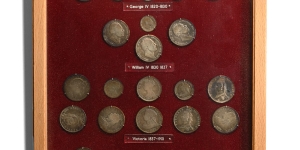
Framed Coin Presentation Case. 16th-20th century AD.
Estimate: £150 - 200 (+bp*)
Opening Bid: £75
Freelage coins presented to the Lord Mayor of Newcastle upon Tyne Councillor Norman Stockdale J. P. 1984-1985. 1998gr, 270mm x 457mm.
Conditions as seen.
Acquired on the UK art market before 2000. Property of an Essex, UK, gentleman. -
![Group of Fifty-Seven [57] British AE Coins.](https://timelineauctions.com/upload/images/items/small/223199-s.jpg)
Group of Fifty-Seven [57] British AE Coins. 18th-19th century AD.
Sold for (Inc. bp): £39
Various dates. 335gr total.
Fine to Very Fine.
Ex Stocker collection, Kent, UK, 1955-early 2000s. -
![Group of Seven [7] George II & III AR Coins.](https://timelineauctions.com/upload/images/items/small/224526-s.jpg)
Group of Seven [7] George II & III AR Coins. 18th century BC.
Sold for (Inc. bp): £52
Various dates (Ex Mount). 16.81gr total.
Very Fine to Good Very Fine.
Property of a Cambridgeshire, UK, gentleman.
