
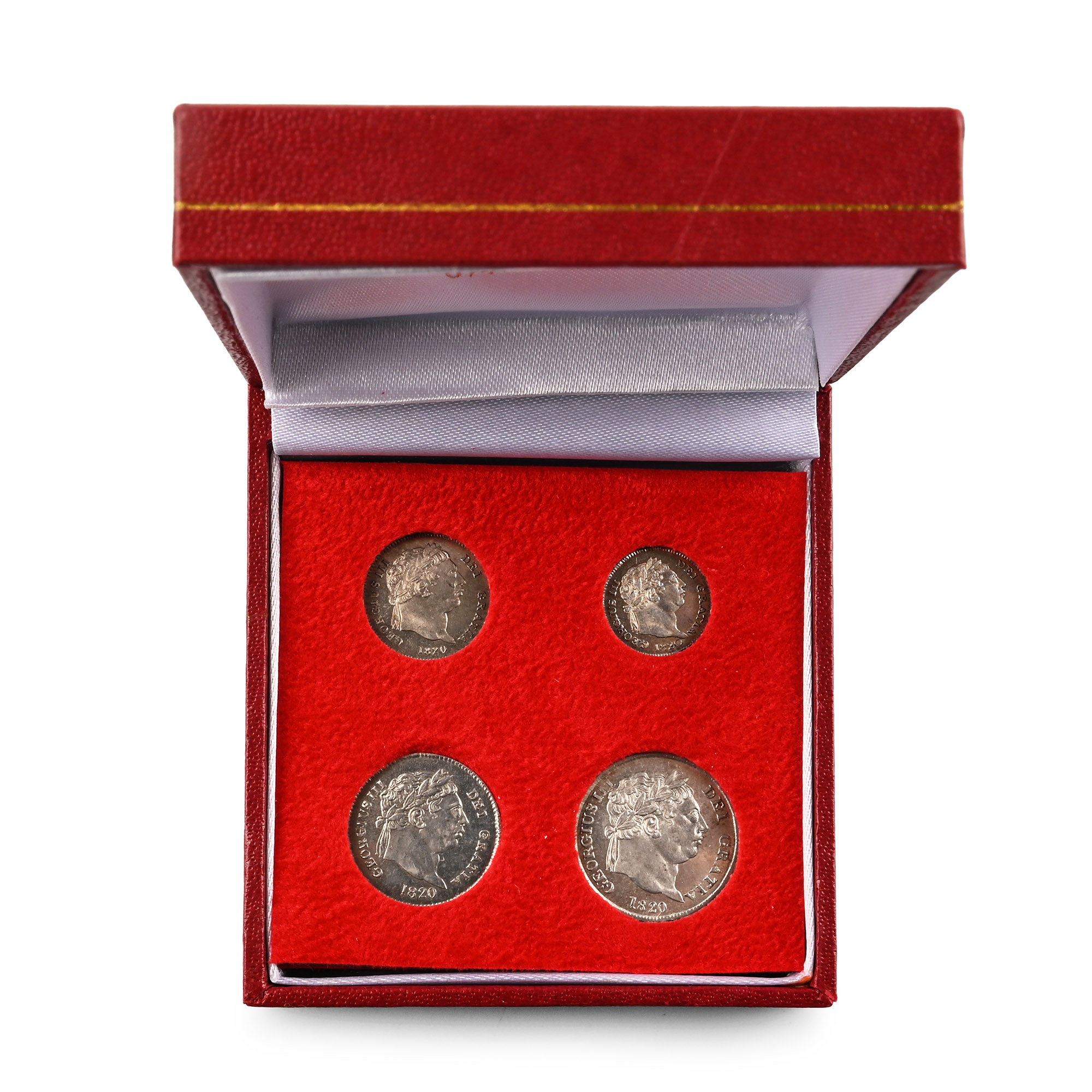
LOT 4022
Great Britain. Hanover, George III AR Maundy Money Set. Dated 1720.
Comprising: Set of Four, Three, Two and One Penny denominations in a Maundy coin box. SCBC 3792. Near Extremely Fine.(48.45gr total.).
ProvenanceFrom the private coin collection of a West London, UK, gentleman, formed since the mid 1980s.
TimeLine Auctions follows a vetting process to ensure the authenticity and legality of all items, reinforcing our commitment to integrity and responsible trading. Each antiquity, antique, and coin lot undergoes thorough examination by a vetting committee of at least ten external specialists, professional trade association members, scientists, and archaeologists: Our Vetting Process
AUCTIONS:
TimeLine is a leading auction house specialising in antiquities, ancient art, collectables, natural history, coins, medals, and books. Our auctions offer museums, collectors, historians, and enthusiasts the opportunity to acquire unique and historically significant pieces.
LOT 4022
Great Britain. Hanover, George III AR Maundy Money Set.
Sold for (Inc. bp): £364
-
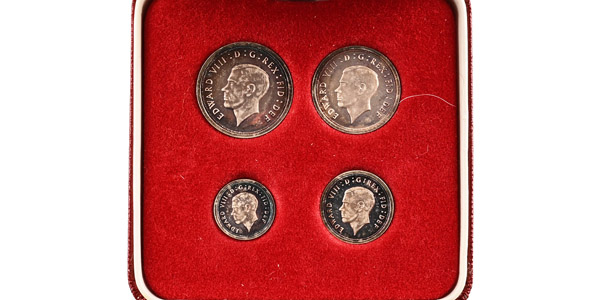
Great Britain. Windsor, Edward VIII AR Maundy Money Set. Dated 1936.
Sold for (Inc. bp): £338
Comprising: Set of Four, Three, Two and One Penny denominations in a Maundy coin box. 60.96gr total.
Uncirculated.
From the private coin collection of a West London, UK, gentleman, formed since the mid 1980s. -
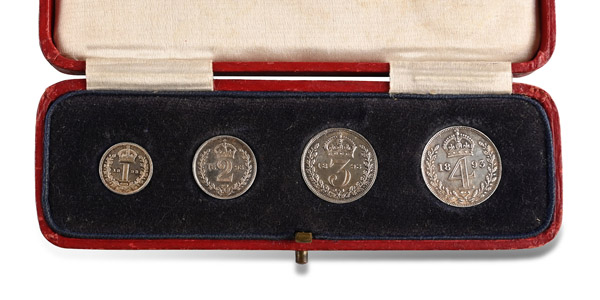
Great Britain. Hanover, Victoria AR Maundy Money Set. Dated 1893.
Sold for (Inc. bp): £111
Comprising: Set of Four, Three, Two and One Penny denominations in an old long Maundy coin box. SCBC 3943. 44.30gr total.
Extremely Fine.
From the private coin collection of a West London, UK, gentleman, formed since the mid 1980s. -
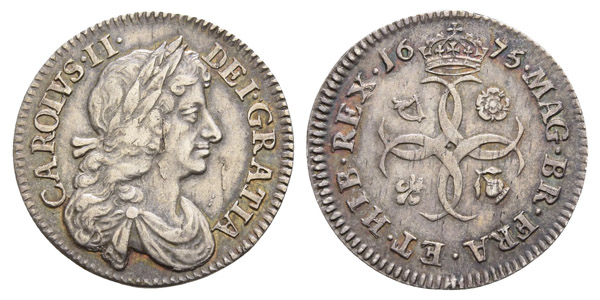
Great Britain. Stuart, Charles II AR Fourpence. Dated 1675.
Sold for (Inc. bp): £130
CAROLVS·II· DEI·GRATIA, laureate and draped bust to right / MAG·BR·FRA·ET·HIB·REX, crowned four interlinked Cs; emblems of England (rose), Scotland (thistle), France (lis), and Ireland (harp) in quarters; date above. SCBC 3384. 1.86gr, 19mm, 6h.
Very Fine. Toned.
From the private collection of John Meredith, acquired since the 1990s; thence by descent.
