
Loading, please wait...
LOT 2026
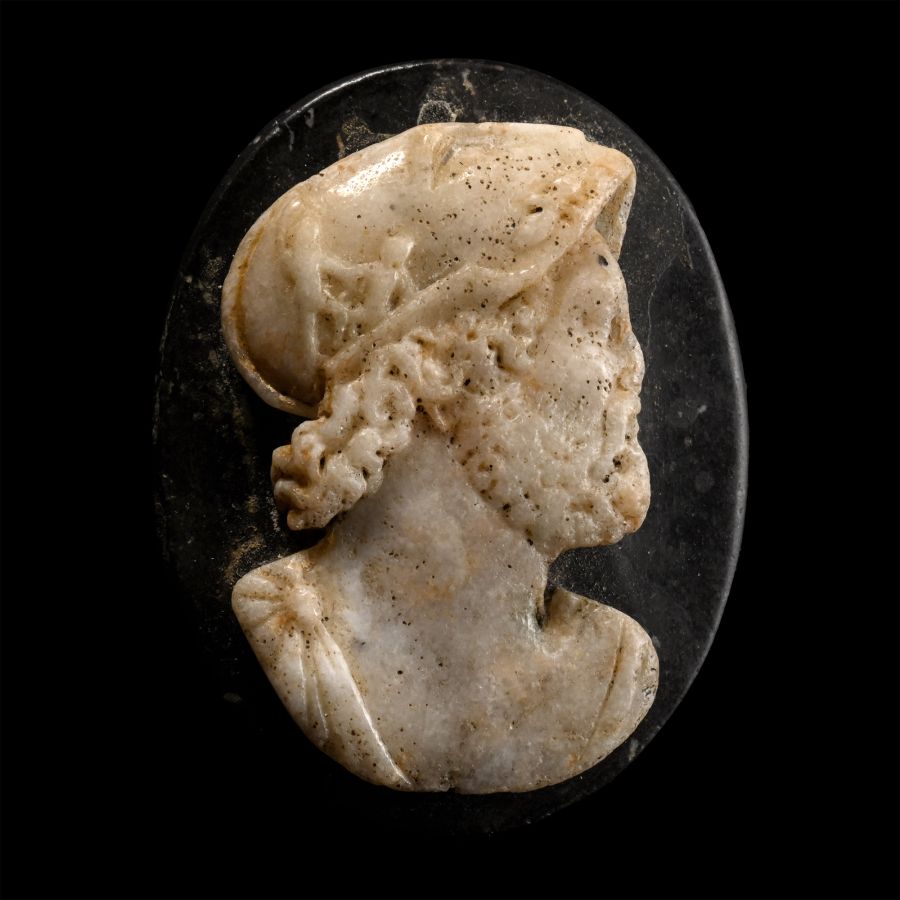
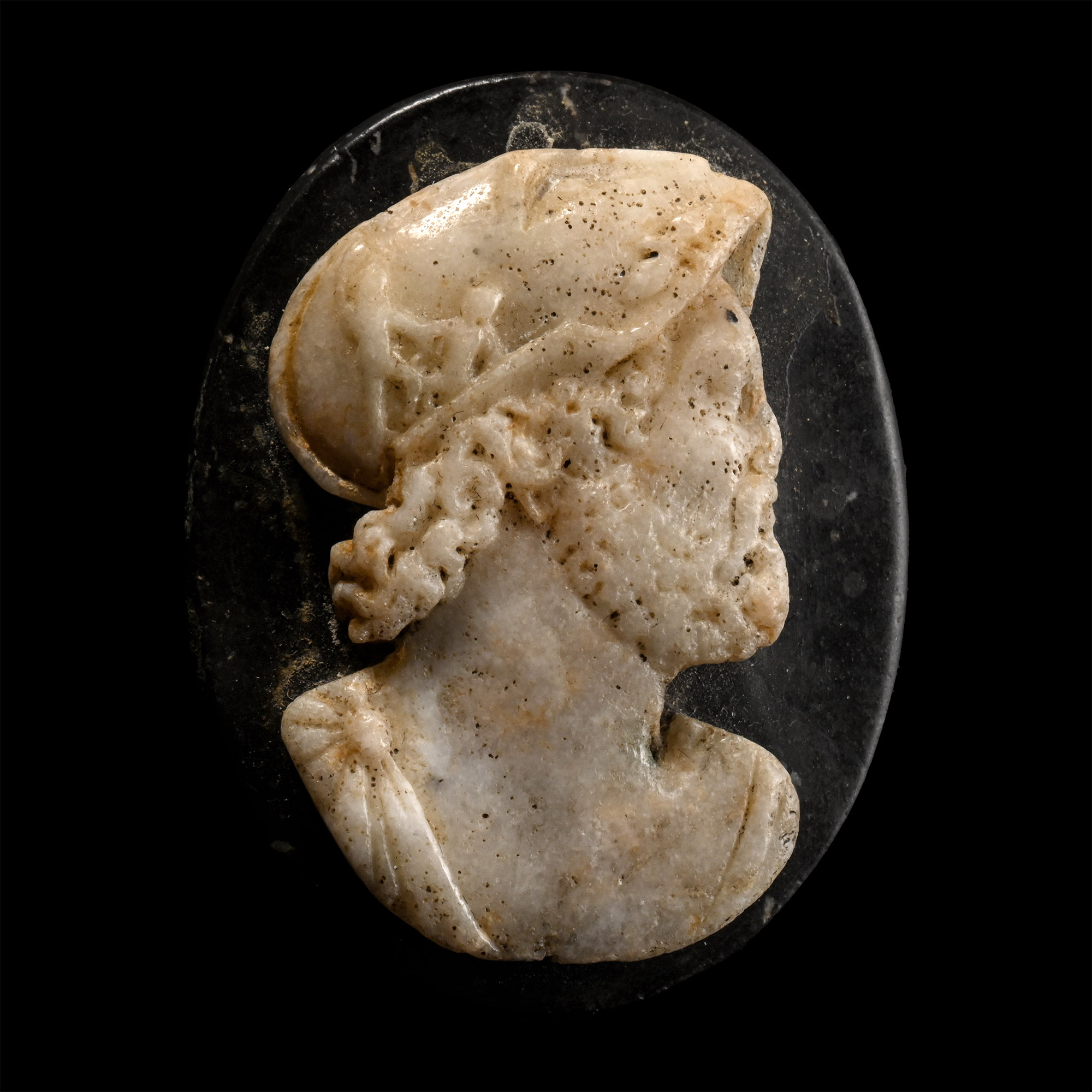
Grand Tour Stone Cameo with Bust of Ajax
18TH CENTURY A.D.
1 7/8 in. (27.3 grams, 48 mm).
Large oval cameo with profile bust of the Greek hero Ajax, shown bearded and with his helmet pushed up exposing his face.
ProvenanceUK private collection, acquired on the French art market in the 2000s.
FootnotesAjax is recorded in The Iliad as ‘the best man among the Thracians, being both brave and of great stature’. He was one of the strongest warriors for the Achaeans, second only to his cousin Achilles. His epic duel with Hector is detailed in the seventh book of the famed poem by Homer.
CONDITIONTimeLine Auctions follows a vetting process to ensure the authenticity and legality of all items, reinforcing our commitment to integrity and responsible trading. Each antiquity, antique, and coin lot undergoes thorough examination by a vetting committee of at least ten external specialists, professional trade association members, scientists, and archaeologists: Our Vetting Process
AUCTIONS:
TimeLine is a leading auction house specialising in antiquities, ancient art, collectables, natural history, coins, medals, and books. Our auctions offer museums, collectors, historians, and enthusiasts the opportunity to acquire unique and historically significant pieces.
-
.jpg)
Antique Gold Ring with Agate Cameo of an African
Late 17th century A.D.Estimate: £1,500 - 2,000 (+bp*)
Opening Bid: £750
D-section hoop and an oval bezel set with a grey banded agate cameo featuring a mature man in three-quarter view facing left, furrowed brow and short-cropped curly hair. 4.69 grams, 27.33 mm overall, 18.81 mm internal diameter (approximate size British Q 1/2, USA 8 1/2, Europe 18.12, Japan 17)
Acquired on the European art market. -
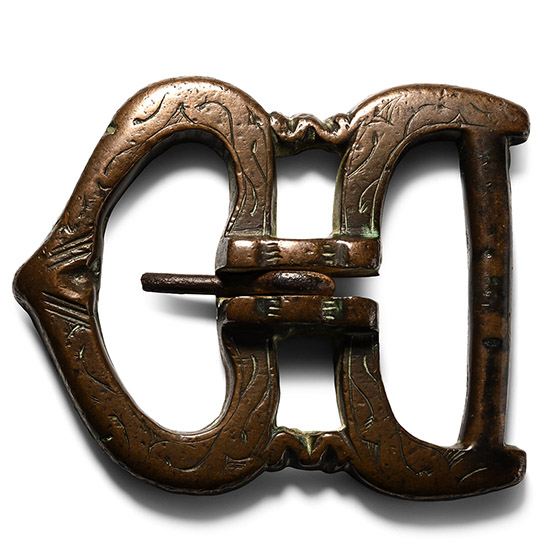
Massive Stuart Period Bronze Buckle
Continental Europe, 17th century A.D.Sold for (Inc. bp): £117
Pointed outer edge on a rounded loop, bifid knop on either end of the strap bar, surface decorated with stylised vegetal ornaments. 253 grams, 95 mm
Private collection, UK.
These buckles usually have one rectangular and one rounded D-shaped loop on either side of the central bar. During the late 16th and 17th centuries, the range of asymmetrical buckles became wide. -
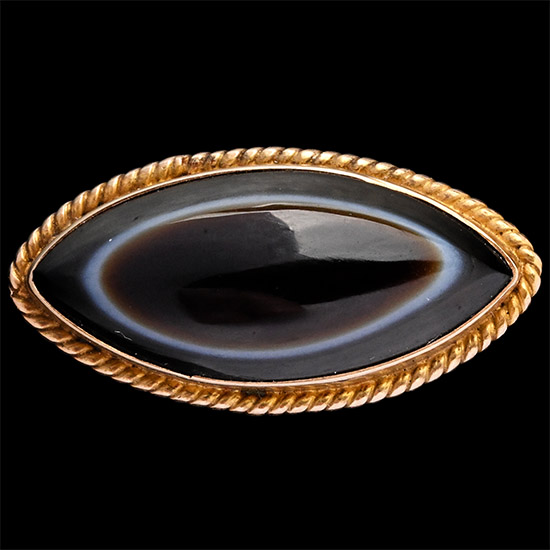
Archaelogical Revival Apotropaic 'Eye' Ring
Europe, 19th century A.D.Estimate: £600 - 800 (+bp*)
Opening Bid: £300
The ring with a U-shaped hoop and lentoid bezel with ropetwist border, set with a polished banded agate resembling the all-seeing eye. 3.57 grams, 24.17 mm overall, 19.26 x 17.26 mm internal diameter (approximate size British P 1/2, USA 7 3/4, Europe 16.86, Japan 16)
Acquired on the European art market.
Eye beads, often crafted with concentric circle motifs resembling an eye, served as powerful amulets thought to offer protection against the evil eye and malevolent forces.
