
Loading, please wait...
LOT 2092
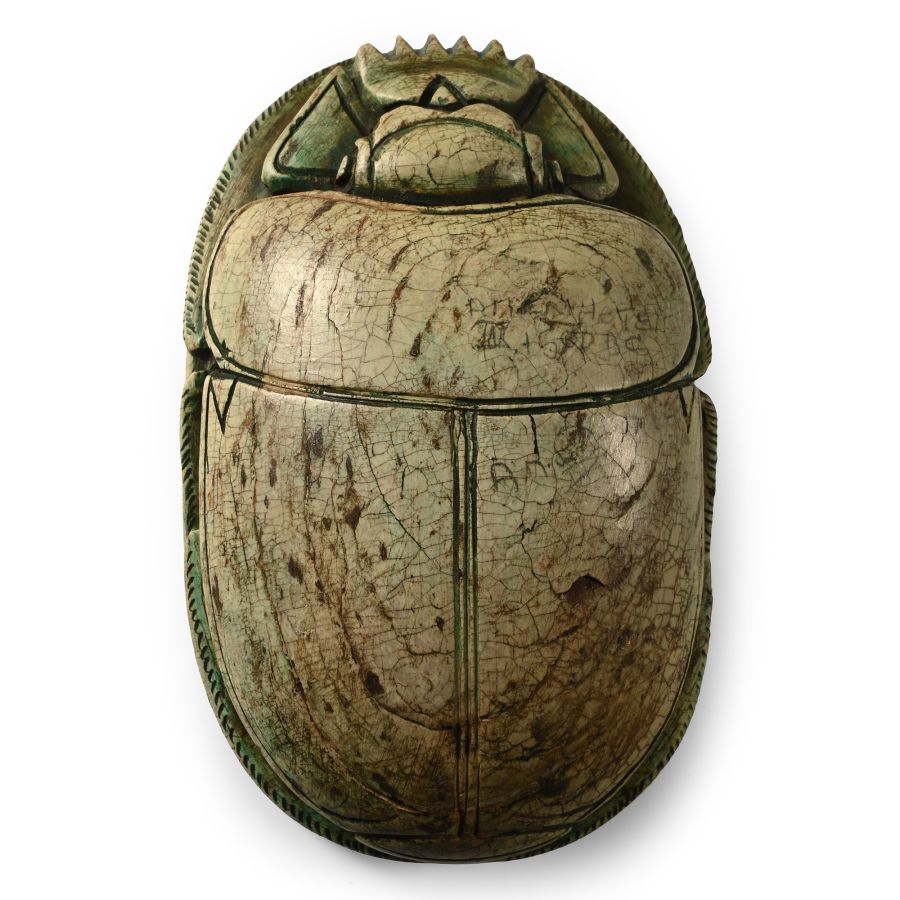
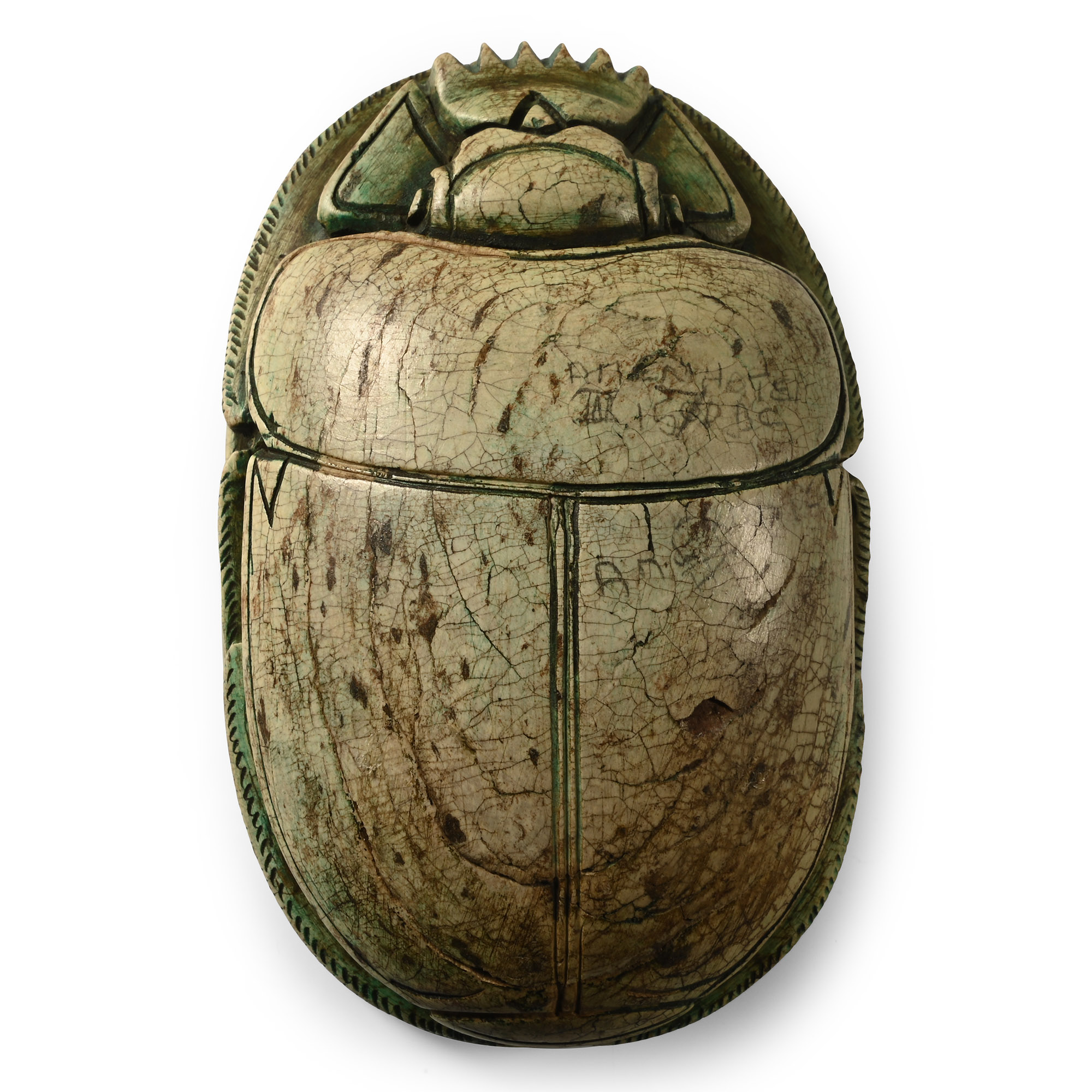
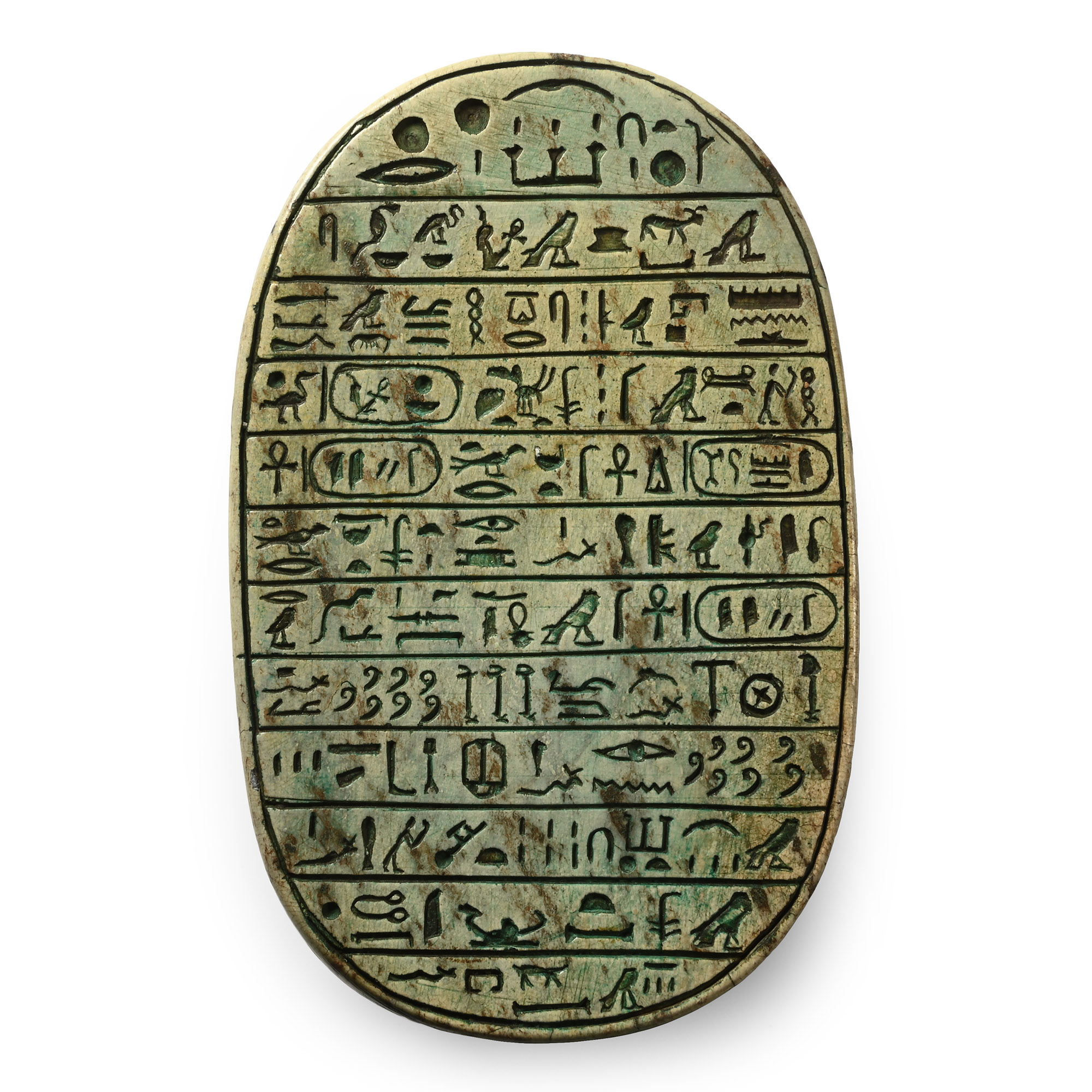
Grand Tour Steatite Scarab with Hieroglyphics
19TH-20TH CENTURY A.D.
3 7/8 in. (326 grams, 98 mm).
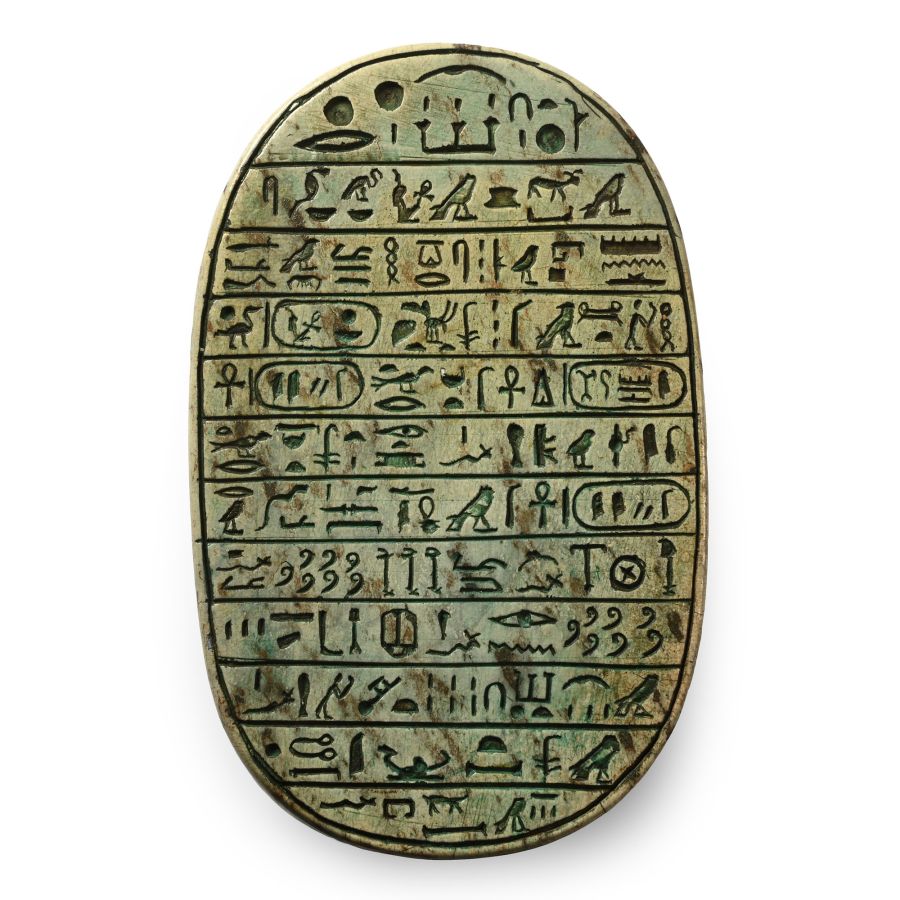
Anatomical detailing to the carapace, head and legs, underside with twelve lines of hieroglyphic text, replicating the royal scarab of the Pharaoh Amenhotep III (ca. 1390–1352 B.C.), commemorating the construction of an artificial lake for his principal wife, Tiye. [No Reserve]
ProvenanceFrom a private, UK, collection in the 1980s.
Property of a London, UK, antiquarian.
This lot is accompanied by an illustrated lot declaration signed by the Head of the Antiquities Department, Dr Raffaele D’Amato.
Cf. Kozloff, A.P., Bryan, B., and Berman, L.M., Egypt's Dazzling Sun: Amenhotep III and his World, Cleveland, 1992, pp. 71-72, no.2, for a discussion of an original scarab of this type.
FootnotesThis is a replica of one of several commemorative scarabs issued by Pharaoh Amenhotep III to celebrate various events. The text reads: Regnal Year 11 under the majesty of Horus, the Strong Bull Appearing in Truth, Two Ladies, Who Established the Laws and Pacifies the Two Lands, Horus of Gold, Strong of Arm who Smites the Asiatics, King of Upper and Lower Egypt Nebmaatre, Son of Re, Amenhotep Ruler of Thebes given life, the great royal wife Tiye, may she live, whose father's name is Yuya and whose mother's name is Tjuyu. His majesty commanded the making of a basin for the great royal wife Tiye, may she live, in her town of Djarukha. Its length is 3700 (cubits) and its width is 700 (cubits.) (His Majesty) celebrated the opening of the lake in the third month of the Akhet season, day 16. The procession of his majesty in the royal barge Aten-Tjehen (literally, 'the dazzling sun disk') was in it.
CONDITIONTimeLine Auctions follows a vetting process to ensure the authenticity and legality of all items, reinforcing our commitment to integrity and responsible trading. Each antiquity, antique, and coin lot undergoes thorough examination by a vetting committee of at least ten external specialists, professional trade association members, scientists, and archaeologists: Our Vetting Process
AUCTIONS:
TimeLine is a leading auction house specialising in antiquities, ancient art, collectables, natural history, coins, medals, and books. Our auctions offer museums, collectors, historians, and enthusiasts the opportunity to acquire unique and historically significant pieces.
-
Greek Wooden Icon with Silver Cover Showing Saint Michael and Gabriel
Istanbul, circa 1860 A.D.Sold for (Inc. bp): £481
Showing the standing Taxiarches (commanders of the Heavenly Army) Michael (A[rchangel] M[ichael]) and Gabriel (A[rchangel] G[abriel]); Michael dressed in pseudo-Roman scale armour worn over a garment with hanging pteryges, partially covered by his military cloak, the raised right hand holding a sword and the left hand resting on a shield; Gabriel dressed in long mantion (a cloak fastened under the neck), long court dress with embroidery, holding the messenger’s flower in one hand and the Globe of the Divine Power over the world in the other; floral frame; fabric mark in Turkish and Greek (ω) near the right shoulder of Saint Michael. 285 grams, 16.2 x 12 cm
Property of a London, UK, gentleman collector. This lot is accompanied by an illustrated lot declaration signed by the Head of the Antiquities Department, Dr Raffaele D’Amato.
The icon is from a Constantinople workshop circa 1860 A.D. During the Turkokratia (the Turkish domination) the Orthodox inhabitants of Constantinople continued to entrust their protection to the powerful military commanders of the Heavenly Host, the Archangels. Following the Slavic style, the icons were often covered by embossed silver plates (riza), generally reproducing the same figures on the painted wood. -
Georgian Silver and Gold 'The Heart Brings Love To You' Posy Ring
18th-19th century A.D.Sold for (Inc. bp): £442
Barrel-shaped hoop with incised inscription 'Corte Porta Amor' (The Heart Brings Love [To You]) amid tendrils and flowers; applied gold triangle to each shoulder, gold cel with inset facetted ruby-coloured gem. 11.30 grams, 24.72 mm overall, 19.18 mm internal diameter (approximate size British S, USA 9, Europe 20, Japan 19)
Private collection, Arundel, West Sussex, UK, 1980s. This lot is accompanied by an illustrated lot declaration signed by the Head of the Antiquities Department, Dr Raffaele D’Amato. -
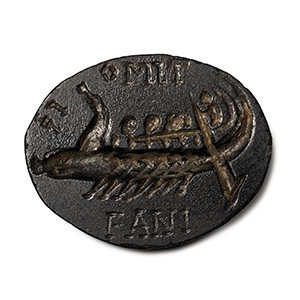
Roman Style Gemstone with Galley
19th-20th century A.D.Sold for (Inc. bp): £59
Ellipsoid in plan with incuse galley and legend '[??] OMIT FANI'. 1.84 grams, 21 mm
From the collection of a London antiquarian, formed since the 1980s. This lot is accompanied by an illustrated lot declaration signed by the Head of the Antiquities Department, Dr Raffaele D’Amato.
