
Loading, please wait...
LOT 2042
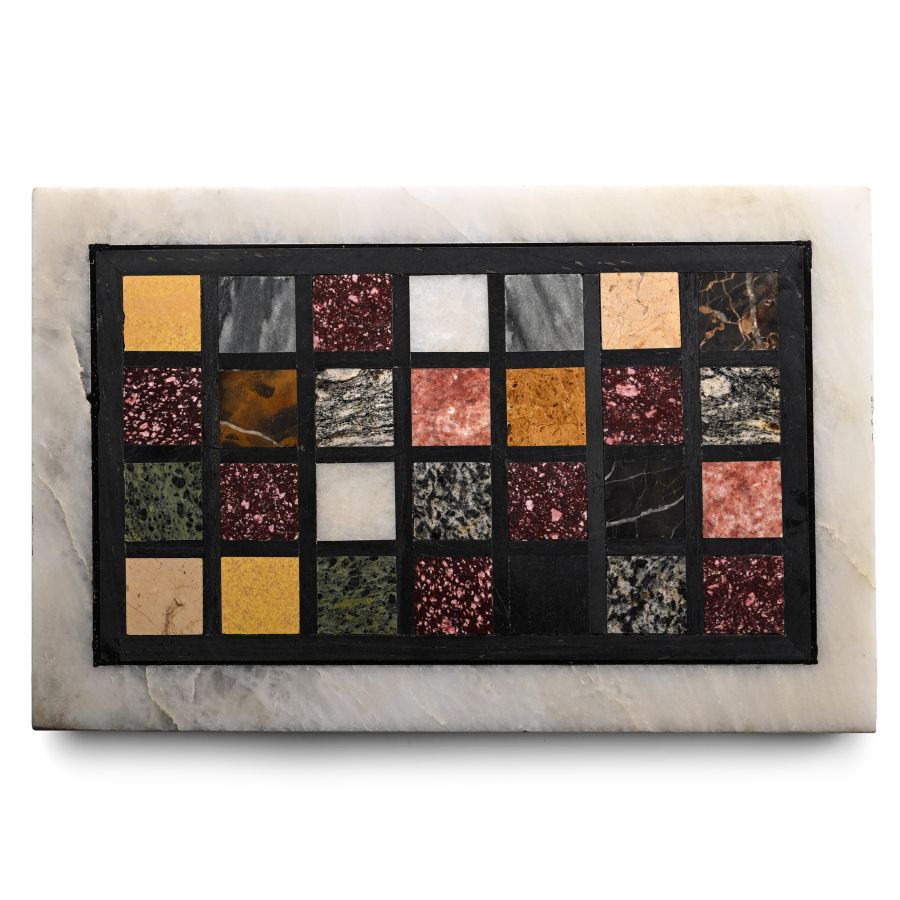
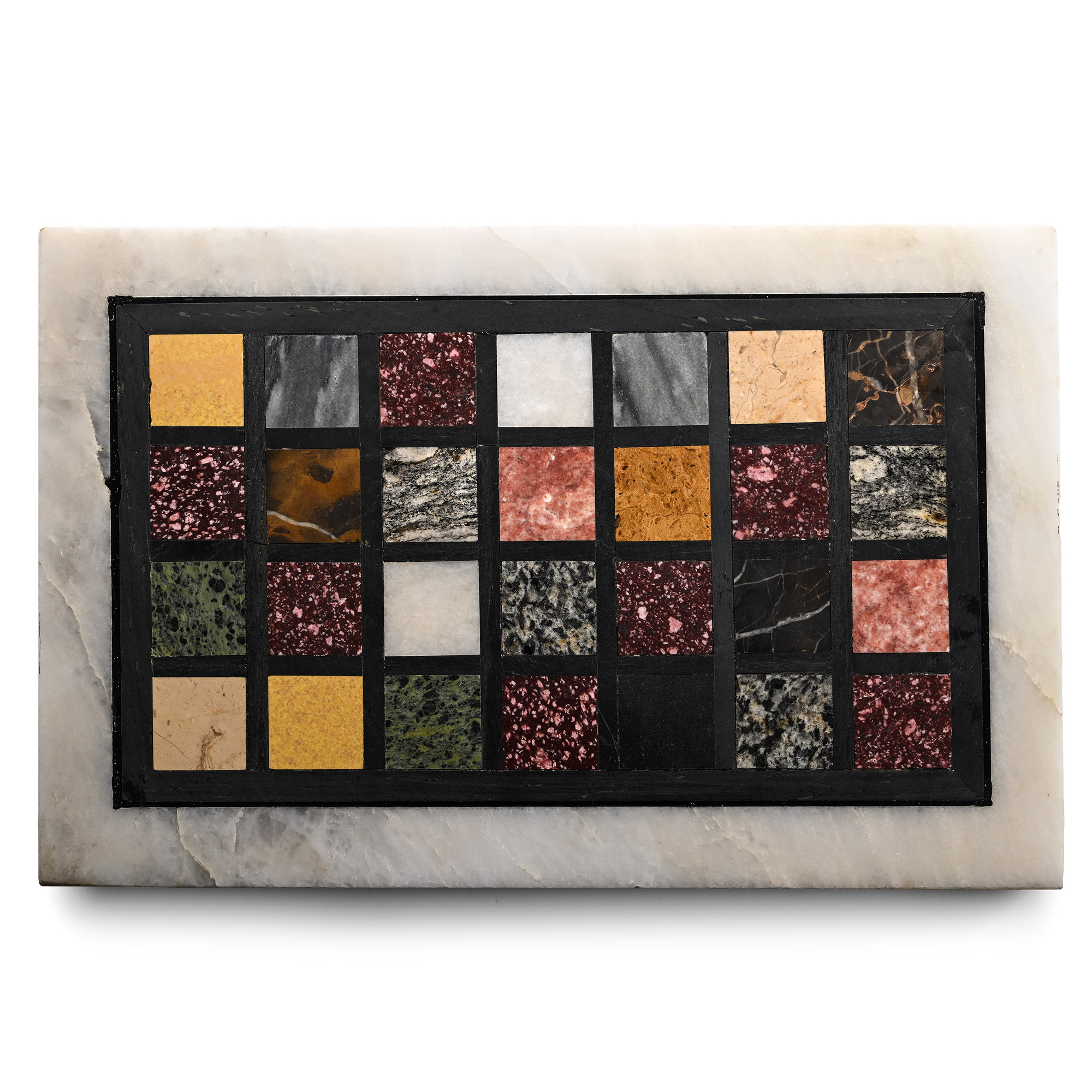
Grand Tour Specimen Marble Panel
LATE 19TH-EARLY 20TH CENTURY A.D.
10 7/8 x 7 1/8 in. (2.86 kg, 27.5 x 18 cm).
A rectangular plaque with four rows and seven columns of various marble and imperial porphyry specimens, from the Grand Tour Set.
ProvenanceAcquired at Shepton Mallet Fair, Somerset, UK, in 2010.
From the private collection of a Somerset gentleman.
For similar see Coutau-Bégarie Paris, 3rd June 2022, lot 303.
CONDITIONTimeLine Auctions follows a vetting process to ensure the authenticity and legality of all items, reinforcing our commitment to integrity and responsible trading. Each antiquity, antique, and coin lot undergoes thorough examination by a vetting committee of at least ten external specialists, professional trade association members, scientists, and archaeologists: Our Vetting Process
AUCTIONS:
TimeLine is a leading auction house specialising in antiquities, ancient art, collectables, natural history, coins, medals, and books. Our auctions offer museums, collectors, historians, and enthusiasts the opportunity to acquire unique and historically significant pieces.
-
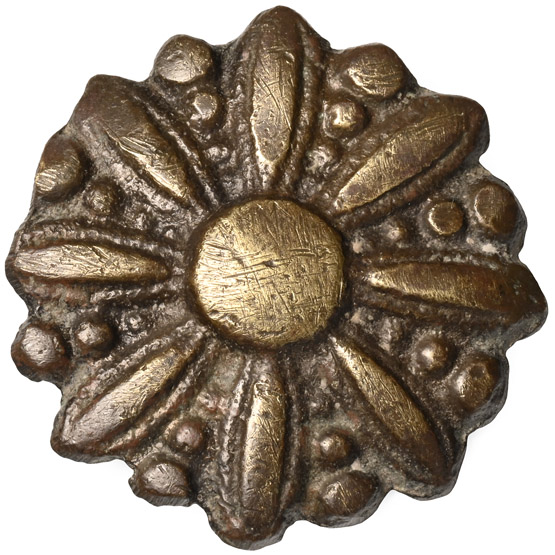
Post Medieval Bronze Flower Mount
17th-18th century A.D.Sold for (Inc. bp): £7
Modelled as an eight-petalled flower with pellets between the petals; remains of mounting lugs on the reverse. 13.6 grams, 36 mm
London, UK, art market, 1980s. Private collection, London, UK. -
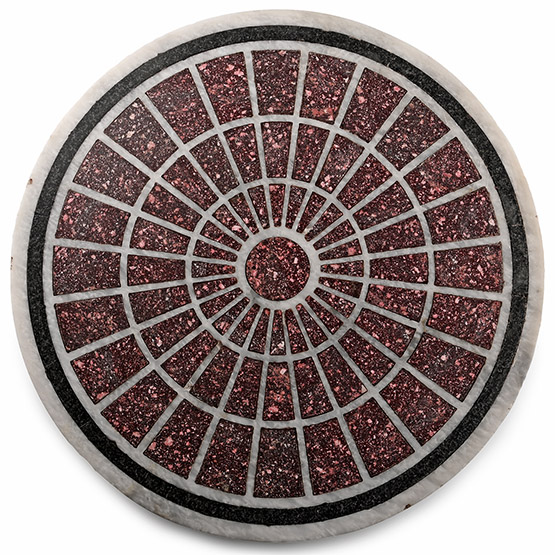
Imperial Porphyry Specimens from the Grand Tour Set into a Marble Table Top
Late 19th-early 20th century A.D.Sold for (Inc. bp): £3,640
Porphyry specimens set into a circular marble 'table top' with a black band border similar to items from the workshop of Francesco Sibilio. 14.75 kg, 39.3 cm
Acquired from Diana Steel in Suffolk around 2000. From the private collection of a Somerset gentleman. -
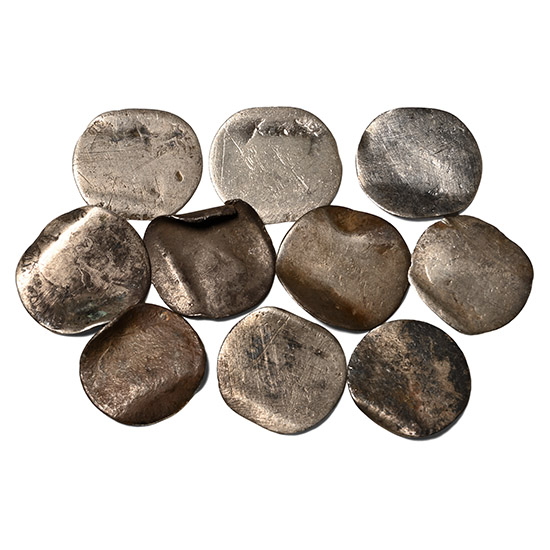
Post Medieval Silver Love Token Collection
18th-19th century A.D.Sold for (Inc. bp): £78
Each coin worn flat and bent into a double-curved 's' profile, for use as a token of love. 17.55 grams total, 18-20 mm
Found Tyne and Wear, UK. This lot is for UK buyers only, not for export.
The custom of giving a bent coin as a love-token is known from the 17th century in England. The coins were usually smoothed to obliterate the monarch’s head and then bent twice; sometimes they were engraved with initials or symbols such as hearts or knots. If the sweetheart accepted the youth's advances, she kept the token; if not, she disposed of it. The tradition is referred to in the children's rhyme 'There was a crooked man, and he walked a crooked mile, and found a crooked sixpence upon a crooked stile.'
