
Loading, please wait...
LOT 2200
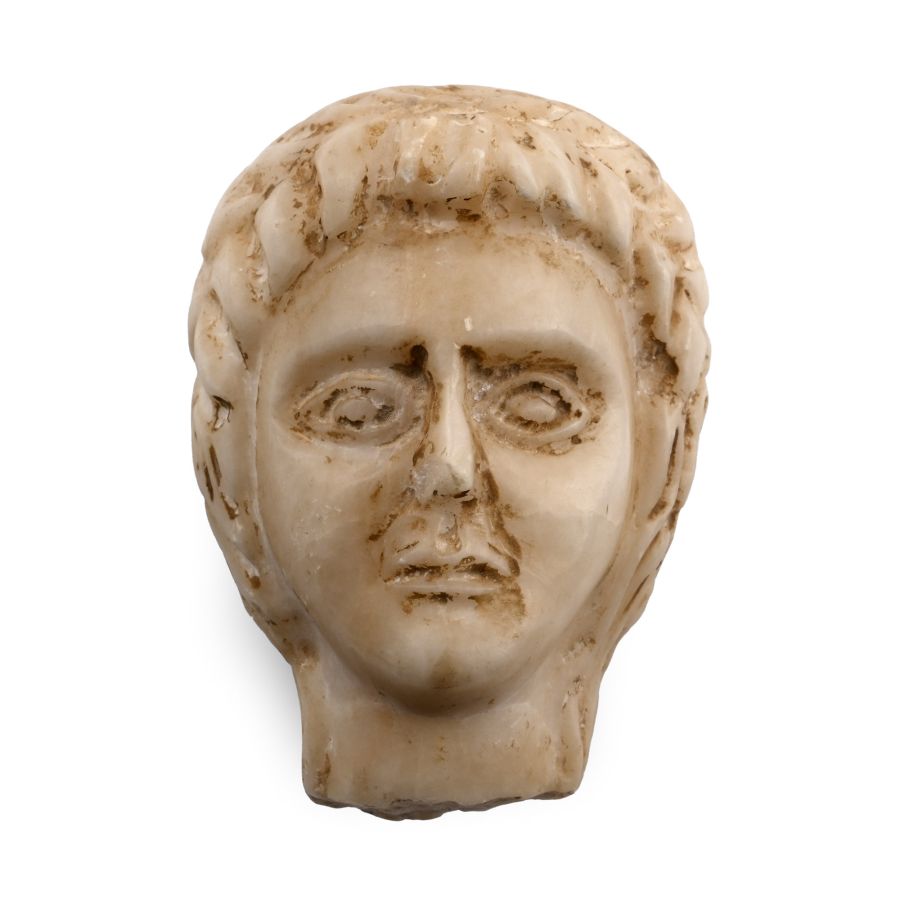
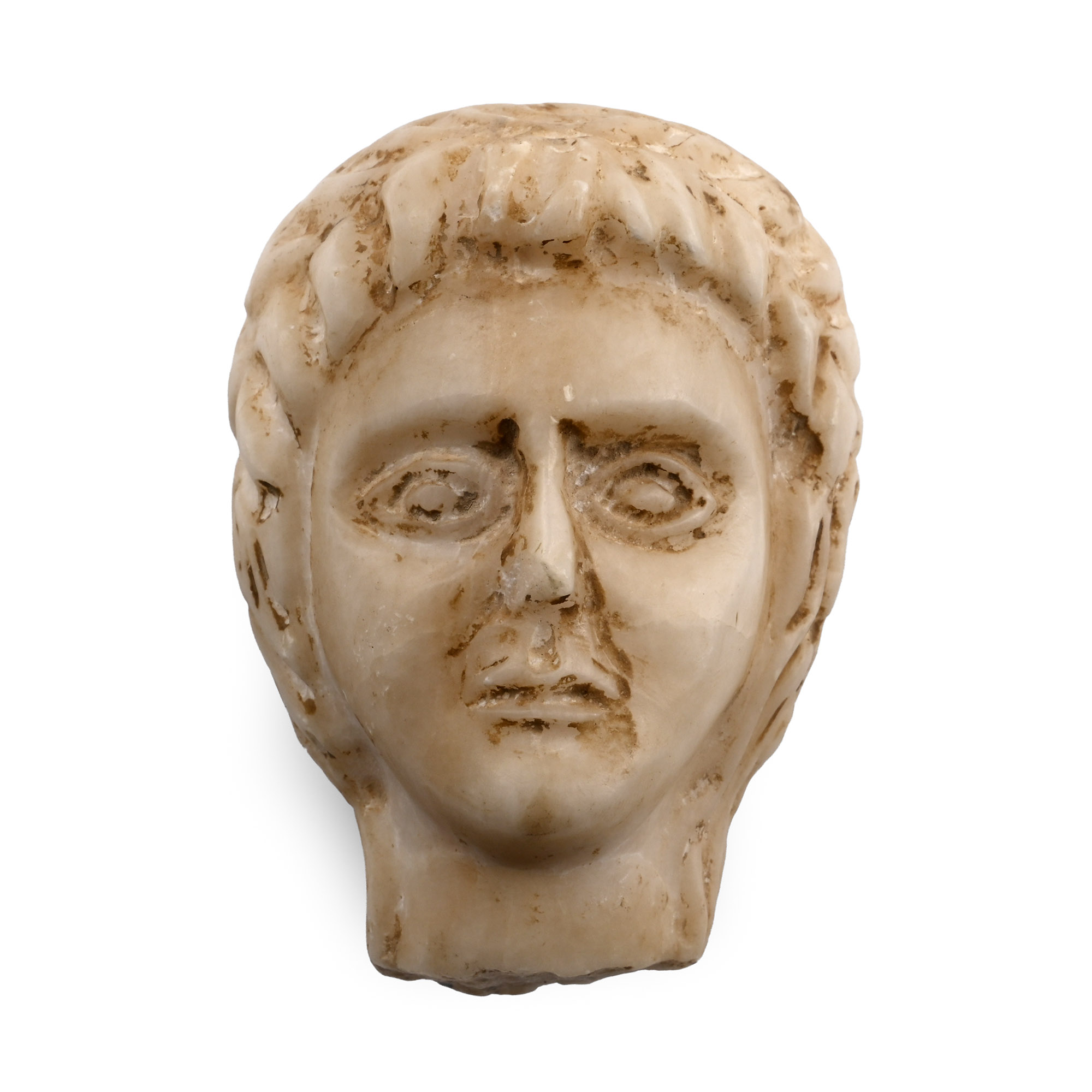
Grand Tour Marble Head of a Roman Gentleman
19TH CENTURY A.D.
3 3/8 in. (360 grams, 85 mm).
Carved in the round male head with laurel-leaf diadem to the brow; exaggerated eyes and small mouth. [No Reserve]
ProvenanceAcquired on the UK art market in the early 2000s.
This lot is accompanied by an illustrated lot declaration signed by the Head of the Antiquities Department, Dr Raffaele D'Amato.
TimeLine Auctions follows a vetting process to ensure the authenticity and legality of all items, reinforcing our commitment to integrity and responsible trading. Each antiquity, antique, and coin lot undergoes thorough examination by a vetting committee of at least ten external specialists, professional trade association members, scientists, and archaeologists: Our Vetting Process
AUCTIONS:
TimeLine is a leading auction house specialising in antiquities, ancient art, collectables, natural history, coins, medals, and books. Our auctions offer museums, collectors, historians, and enthusiasts the opportunity to acquire unique and historically significant pieces.
-
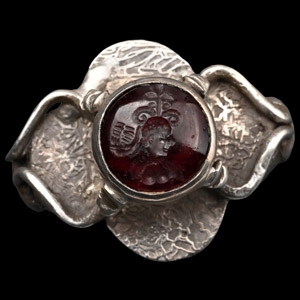
Sasanian Style Silver Ring with Gemstone
20th century A.D. or earlierSold for (Inc. bp): £104
Comprising a D-section hoop, lobe to the underside with inset turquoise cabochon, lobe to each shoulder, applied crocodile supporters on flat cruciform plaque with open mouths, discoid cell inset with garnet cabochon, intaglio crowned profile bust. 47.11 grams, 46.70 mm overall, 19.23 mm internal diameter (approximate size British P 1/2, USA 7 3/4, Europe 16.86, Japan 16)
Acquired on the UK art market 1971-1974. From the private collection of a Kent, UK, gentleman. This lot is accompanied by an illustrated lot declaration signed by the Head of the Antiquities Department, Dr Raffaele D'Amato. -
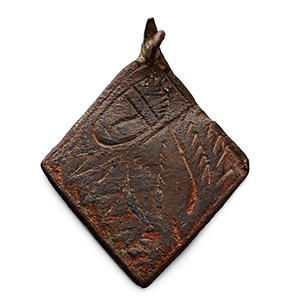
Medieval Knight's Bronze Heraldic Horse Harness Pendant
14th-15th century A.D.Sold for (Inc. bp): £33
Lozenge-shaped with integral loop; low-relief design of a squirrel with bushy tail. 12.6 grams, 47 mm
Found East Anglia, UK. This lot is accompanied by an illustrated lot declaration signed by the Head of the Antiquities Department, Dr Raffaele D'Amato. -
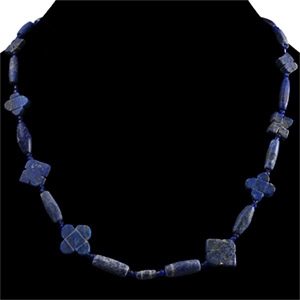
Bactrian Style Lapis Lazuli Bead Necklace String
20th century A.D.Sold for (Inc. bp): £26
Composed of alternating tabular flower-shaped, barrel-shaped and grooved cylindrical beads interspersed with small glass oblate beads; restrung. 29 grams, 43.2 cm
From the London, UK, art market in the 1990s. This lot is accompanied by an illustrated lot declaration signed by the Head of the Antiquities Department, Dr Raffaele D'Amato.
