
Loading, please wait...
LOT 1456
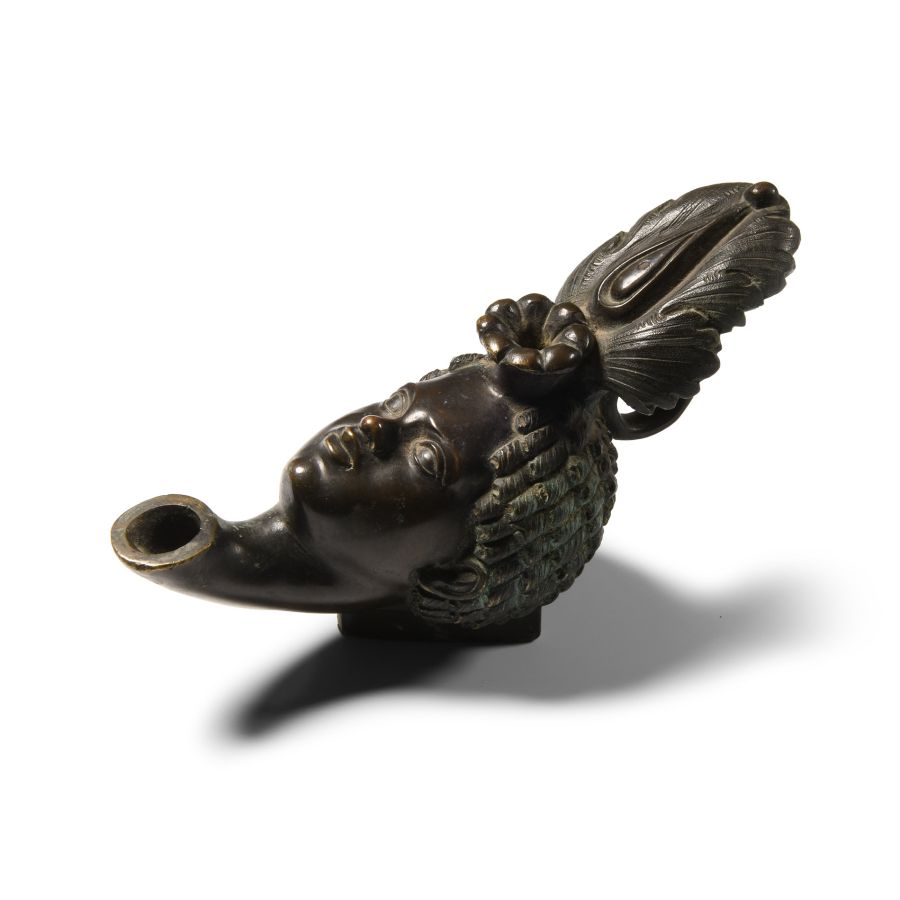
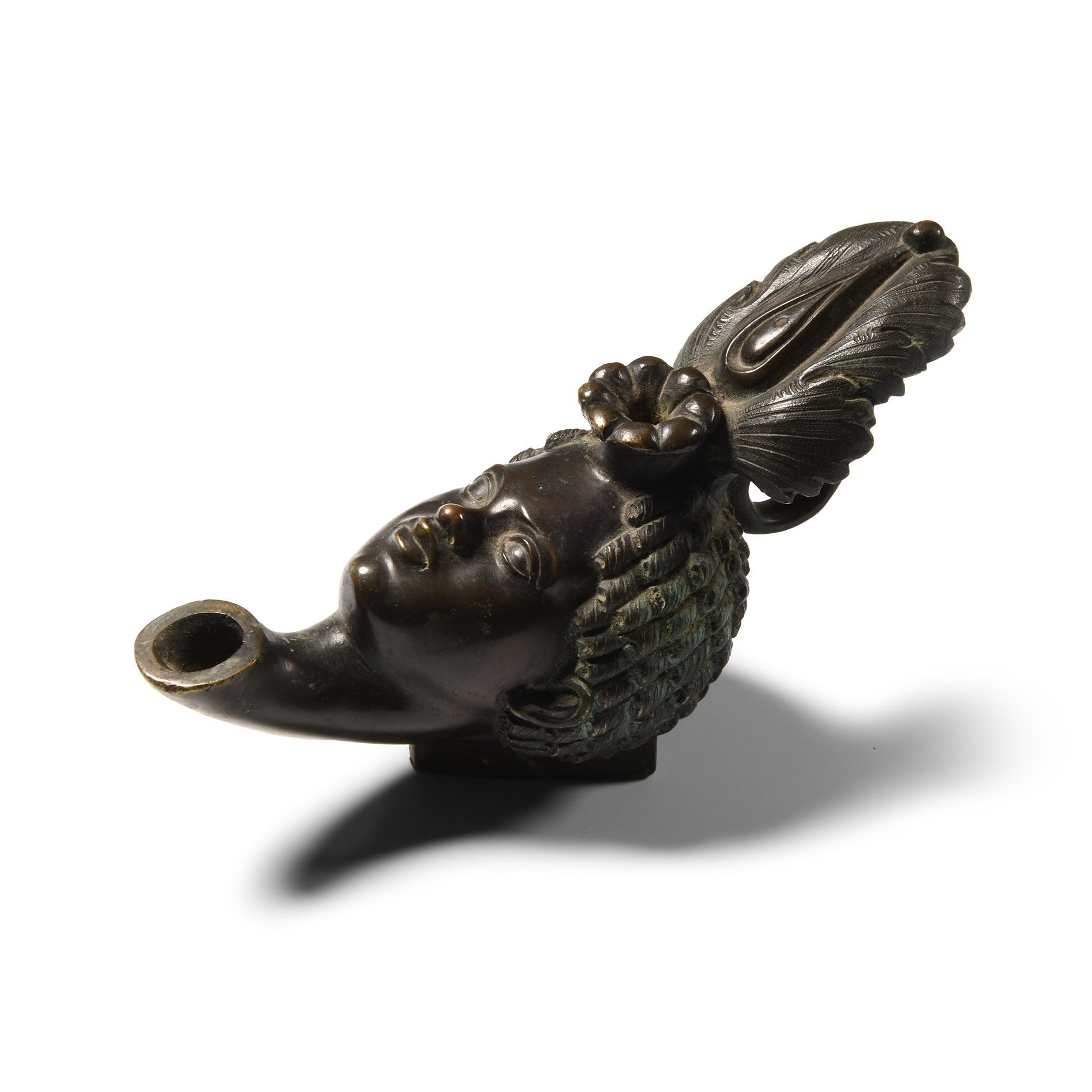
Grand Tour Bronze Oil Lamp
NAPLES, CIRCA 1890S A.D.
5 1/2 in. (632 grams, 14 cm wide).
Modelled in Roman style, depicting the head of a Nubian youth on a triangular base, the neck extending to a slender round nozzle; the filling hole formed as a flower emerging from the forehead, a tongue-shaped reflector behind with a looped handle underneath. [No Reserve]
ProvenanceFrom a family collection formed in the 1970s-1980s.
From the Inglismaldie Castle estate, Angus, Scotland, by descent to the current owner.
TimeLine Auctions follows a vetting process to ensure the authenticity and legality of all items, reinforcing our commitment to integrity and responsible trading. Each antiquity, antique, and coin lot undergoes thorough examination by a vetting committee of at least ten external specialists, professional trade association members, scientists, and archaeologists: Our Vetting Process
AUCTIONS:
TimeLine is a leading auction house specialising in antiquities, ancient art, collectables, natural history, coins, medals, and books. Our auctions offer museums, collectors, historians, and enthusiasts the opportunity to acquire unique and historically significant pieces.
-
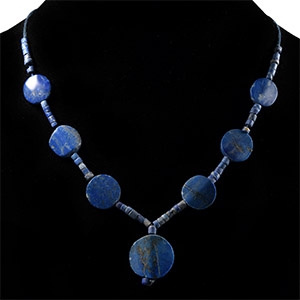
Bactrian Style Lapis Lazuli Bead Necklace String
20th century A.D.Sold for (Inc. bp): £33
Restrung necklace of annular beads with interstitial tabular types, the centrepiece a tabular disc pendant. 30.6 grams, 64 cm long
Acquired 1980-2015. Ex Abelita family collection. -
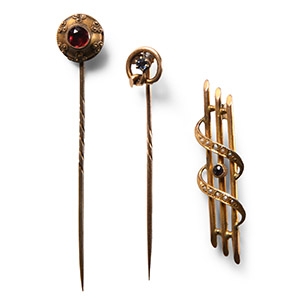
Jewelled Gold Tie Pin Group
19th century A.D.Sold for (Inc. bp): £52
Comprising a gold pin with facetted blue gem in a loose loop and a conical cell with granules around a cell with facetted red glass stud; offered with another gilt example of three staggered bars and scrolls with facetted red glass gem. 6.05 grams total, 45-67 mm
Acquired London, UK. Property of a Harwich gentleman. -
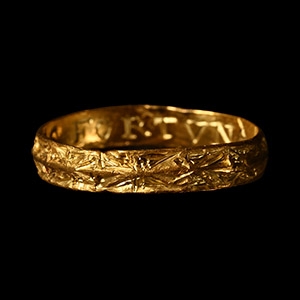
'The Wingham' Gold 'Fortune Favours the Brave' Posy Ring
1500-1650 A.D.Sold for (Inc. bp): £2,080
Broadly rectangular in cross-section and constructed from two sheets of gold; the external hoop carrying an etched decorative design comprised of a row of eight-armed stars in relief with a prominent horizontal line connecting the stars; the internal hoop with Latin inscription in block capitals reading '+FORTES FORTVNA IVVAT' translating to 'fortune favours the brave/strong'; straightened. 1.45 grams, 18.86 mm overall, 16.70 mm internal diameter (approximate size British L 1/2, USA 5 3/4, Europe 11.24, Japan 10)
Found whilst searching with a metal detector in Wingham, near Dover, Kent, UK, on Sunday 8th August 2021. Accompanied by a copy of the British Museum's Portable Antiquities Scheme (PAS) report for Oxfordshire under reference no.KENT-8F86BC. Accompanied by a copy of the report on find of potential Treasure for H M Coroner with reference no.2021T985. Accompanied by a copy of the letter from HM Senior Coroner for Oxfordshire disclaiming the Crown's interest in the find.
The inscription is a Latin proverb used in the play Phormio by Terence in 151 B.C. It is possible that the inscription was intended as a devotion of loyalty and symbol of pride, instead of being given as a symbol of fidelity.
