Loading, please wait...

Use mousewheel to zoom in and out, click to enlarge

Details

LOT 2219

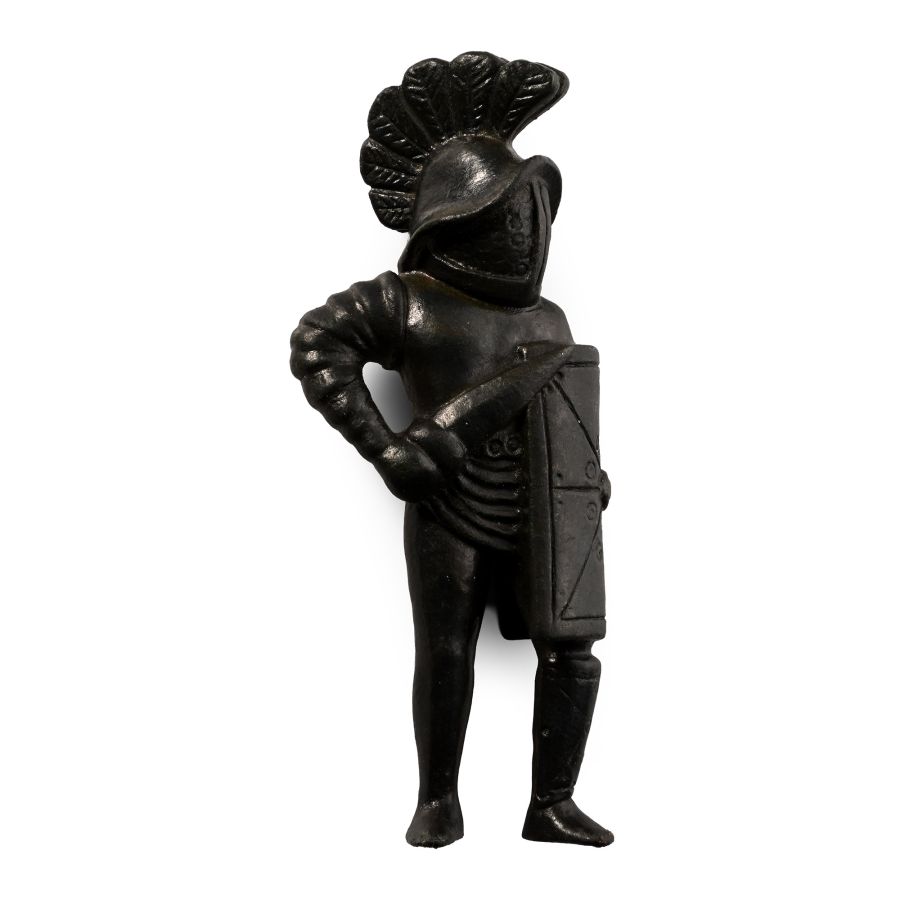
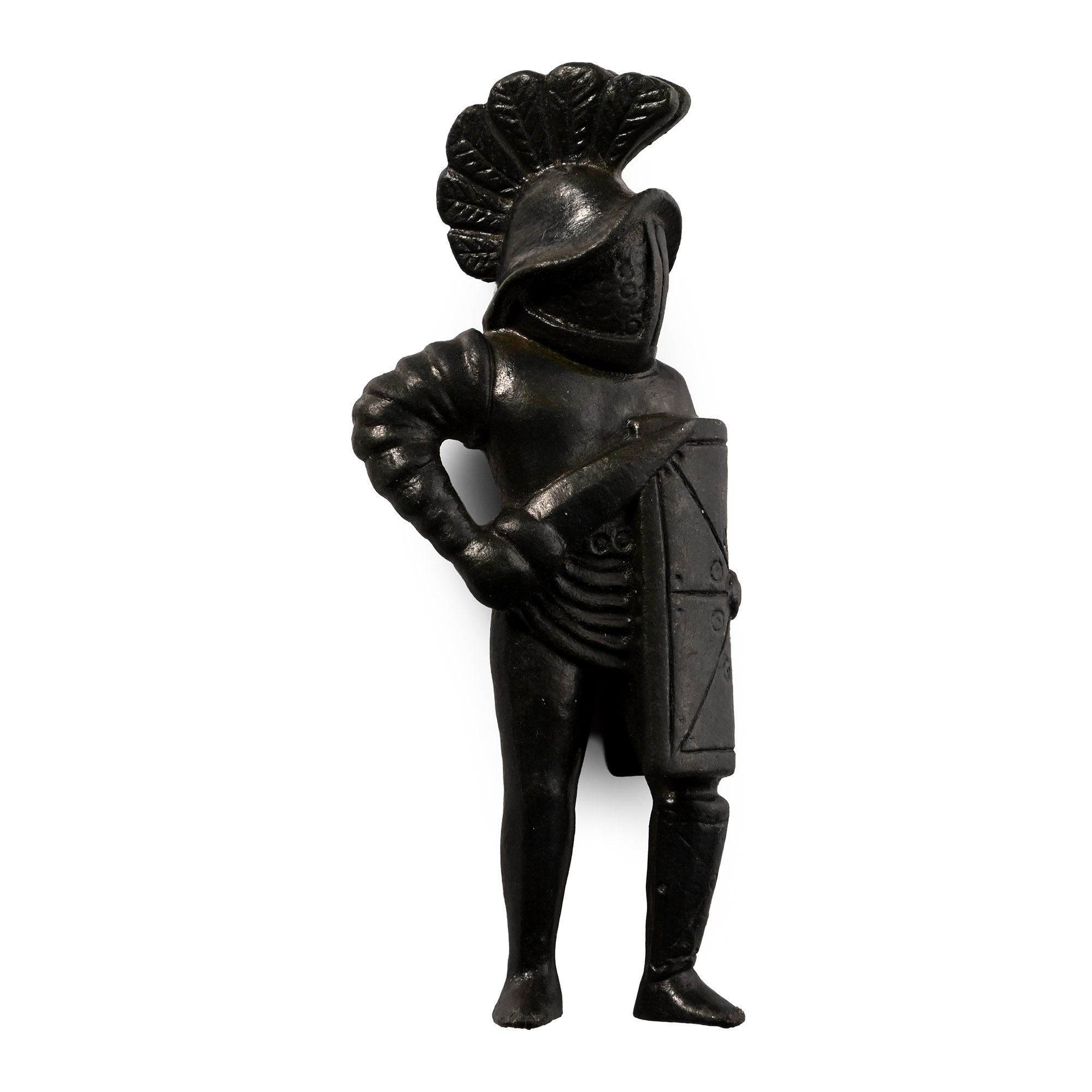
Grand Tour Bronze Murmillo Gladiator Statuette

LATE 19TH CENTURY A.D.

3 5/8 in. (128 grams, 92 mm).

Standing murmillo type gladiator, holding a sword and rectangular shield, wearing feathered helmet. [No Reserve]

Provenance

Acquired on the UK art market in the early 2000s.
This lot is accompanied by an illustrated lot declaration signed by the Head of the Antiquities Department, Dr Raffaele D'Amato.

CONDITION

VETTING:

TimeLine Auctions follows a vetting process to ensure the authenticity and legality of all items, reinforcing our commitment to integrity and responsible trading. Each antiquity, antique, and coin lot undergoes thorough examination by a vetting committee of at least ten external specialists, professional trade association members, scientists, and archaeologists: Our Vetting Process


AUCTIONS:

TimeLine is a leading auction house specialising in antiquities, ancient art, collectables, natural history, coins, medals, and books. Our auctions offer museums, collectors, historians, and enthusiasts the opportunity to acquire unique and historically significant pieces.

LOT 2219

Grand Tour Bronze Murmillo Gladiator Statuette

Sold for (Inc. bp): £117

Print page

RELATED LOTS

  • Roman Coin and Later Artefact Group
    Roman Coin and Later Artefact Group
    4th-19th century A.D.

    Sold for (Inc. bp): £65

    Including nine Roman and later coins, a large convex disc with low relief foliage decoration, two bronze moulds, a carved stone fragment. 668 grams total, 1.1-14.1 cm


    Acquired on the UK art market. Property of an East Anglia private collector. This lot is accompanied by an illustrated lot declaration signed by the Head of the Antiquities Department, Dr Raffaele D'Amato.

    Lot Details

  • Pair of Elaborate Gold and Silver Earrings Set with Diamonds
    Pair of Elaborate Gold and Silver Earrings Set with Diamonds
    Ottoman, 1870-1900 A.D.

    Estimate: £18,000 - 24,000 (+bp*)

    Opening Bid: £9,000

    Each earring composed of five articulated segments, masterfully crafted in silver and gold with an openwork gold base frame executed in the ajour technique extending to the edges; the upper section featuring a hexagonal stud centred by a table-cut diamond within a border of small inset stones, followed by heart-shaped and hexagonal links adorned with further diamonds; the central rosette displaying a prominent diamond encircled by six flat-cut stones, with the interstitial lobes and the hexagonal double frame highlighted by rows of tiny diamonds; the reverse richly ornamented with a stylised flowering plant motif, two leaves flanking a central stem surmounted by a round flower, all defined in silver-set diamonds against the openwork gold ground, further enclosed by a twin ring of zig-zagging diamond lines; suspended below, a claw-form dangle holding a large round pearl, capped above and below with diamond-set finials. 53.62 grams total, 10.1-10.2 cm


    Acquired in 2010. Private collection, London. This lot has been checked against the Interpol Database of stolen works of art and is accompanied by search certificate number no.12802-241417. This lot has been cleared against the Art Loss Register database, and is accompanied by an illustrated lot declaration signed by the Head of the Antiquities Department, Dr Raffaele D'Amato.

    Lot Details

  • Caravaca de la Cruz Bronze Cross Pendant
    Caravaca de la Cruz Bronze Cross Pendant
    17th-18th century A.D.

    Estimate: £200 - 300 (+bp*)

    Opening Bid: £75

    Bifacial double cross with two angels at the base carrying the cross, applied figures of Corpus Christi and Virgin Mary to one side with an inscription 'CAR VACA'; separately made reverse panel with openwork panels and foliate decoration; made as a reliquary. 101 grams, 13.7 cm


    Acquired on the UK art market, early 2000s. This lot is accompanied by an illustrated lot declaration signed by the Head of the Antiquities Department, Dr Raffaele D'Amato.

    The Caravaca Cross, also known as the Cross of Caravaca, originated in the Spanish town of Caravaca de la Cruz and according to tradition, first appeared in the 13th century during the Christian reconquest of Spain. According to a legend, during the rule of the Muslim king Abu Zeid in 1231, a miraculous event occurred. A Christian priest lacking a cross celebrated Mass and was not able to continue as the cross is an essential element for the Eucharist. Miraculously, two angels bearing the Caravaca Cross appeared thus enabling the Mass to proceed. This event is considered the foundational miracle of the Caravaca Cross.

    Lot Details

Stay up-to-date with the latest from TimeLine Auctions by joining our mailing list