
Loading, please wait...
_900x900.jpg "Graeco-Roman Terracotta Nude Goddess Figure")
_200x200.jpg "Graeco-Roman Terracotta Nude Goddess Figure")
.jpg "Graeco-Roman Terracotta Nude Goddess Figure")
LOT 0541
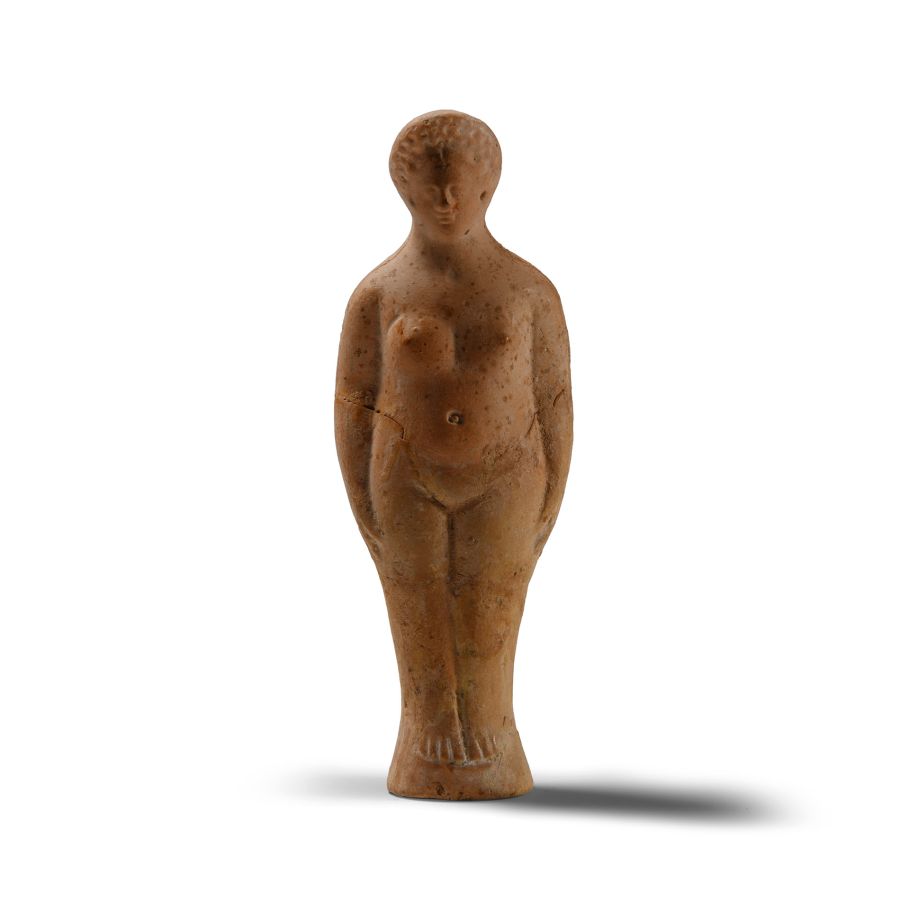
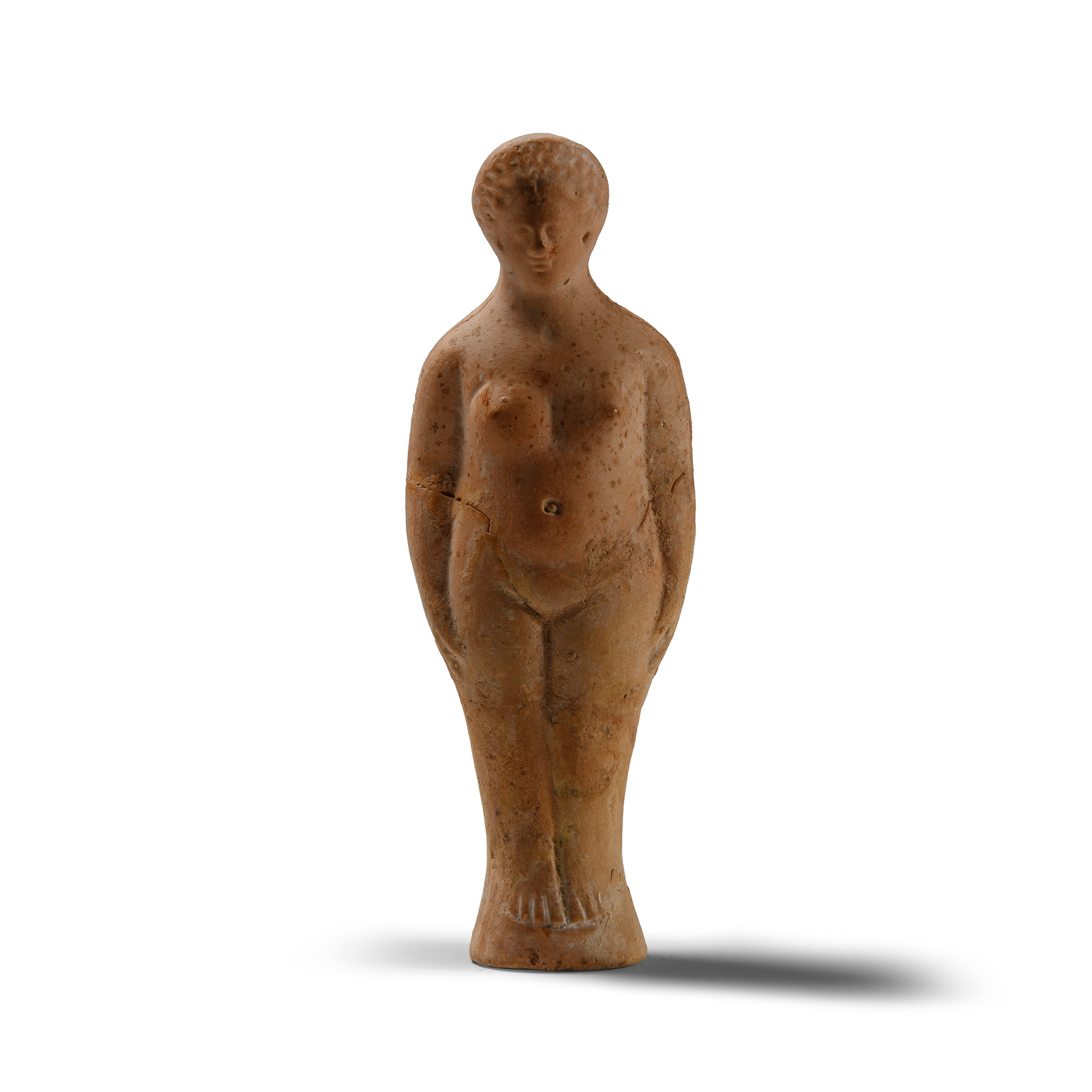
Graeco-Roman Terracotta Nude Goddess Figure
2ND CENTURY B.C.-1ST CENTURY A.D.
4 1/2 in. (46 grams, 11.3 cm).
Tanagra-type hollow-formed figurine of a nude female with dressed hair, possibly depicting Demeter; hole to the reverse and underside.
ProvenancePrivate collection of Mr S.A., Switzerland, 1990s, thence by descent.
This lot is accompanied by an illustrated lot declaration signed by the Head of the Antiquities Department, Dr Raffaele D’Amato.
TimeLine Auctions follows a vetting process to ensure the authenticity and legality of all items, reinforcing our commitment to integrity and responsible trading. Each antiquity, antique, and coin lot undergoes thorough examination by a vetting committee of at least ten external specialists, professional trade association members, scientists, and archaeologists: Our Vetting Process
AUCTIONS:
TimeLine is a leading auction house specialising in antiquities, ancient art, collectables, natural history, coins, medals, and books. Our auctions offer museums, collectors, historians, and enthusiasts the opportunity to acquire unique and historically significant pieces.
LOT 0541
Graeco-Roman Terracotta Nude Goddess Figure
Estimate £400 - 600€460 - 700 (for guidance only)$540 - 810 (for guidance only)
-
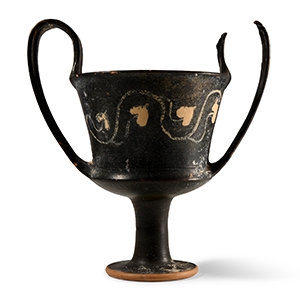
South Italian Blackware Wine Kantharos with Vine
5th-4th century B.C.Sold for (Inc. bp): £1,105
The high-handled drinking cup with carinated lower body, discoid feet and vines painted to the equator. 525 grams, 22.2 cm
Acquired in the late 1980. Ex S.A. collection. This lot is accompanied by an illustrated lot declaration signed by the Head of the Antiquities Department, Dr Raffaele D’Amato. -
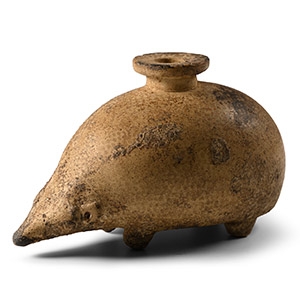
Greek Corinthian Hedgehog Aryballos
6th century B.C.Estimate: £1,500 - 2,000 (‡+bp*)
Opening Bid: £750
Hollow-formed with textured body and four stub legs, conical nose and lateral flanges with impressed point eyes; discoid flange rim to the neck with incised petal detailing. 55 grams, 98 mm
Ex Mrs IM, nr 18 (widow of Leo Mildenberg), formed in Zurich, gift from her husband between 1975-2000. Acquired by the present owner from the above. This lot has been checked against the Interpol Database of stolen works of art and is accompanied by search certificate number no.12208-222174. This lot has been cleared against the Art Loss Register database, and is accompanied by an illustrated lot declaration signed by the Head of the Antiquities Department, Dr Raffaele D’Amato. -
.jpg)
Hellenistic Gold Ring with Artemis Gemstone
2nd-1st century B.C.Estimate: £5,000 - 7,000 (‡+bp*)
Opening Bid: £2,500
Hollow-formed shank with broad plaque and inset garnet cabochon intaglio profile bust of Artemis in high-relief. 11.27 grams, 26.91 mm overall, 17.95 x 20.72 mm internal diameter (approximate size British R, USA 8 1/2, Europe 18 3/4, Japan 18)
European art market. This lot has been checked against the Interpol Database of stolen works of art and is accompanied by search certificate number no.12219-222340. This lot has been cleared against the Art Loss Register database, and is accompanied by an illustrated lot declaration signed by the Head of the Antiquities Department, Dr Raffaele D’Amato.
