
Loading, please wait...
LOT 0547
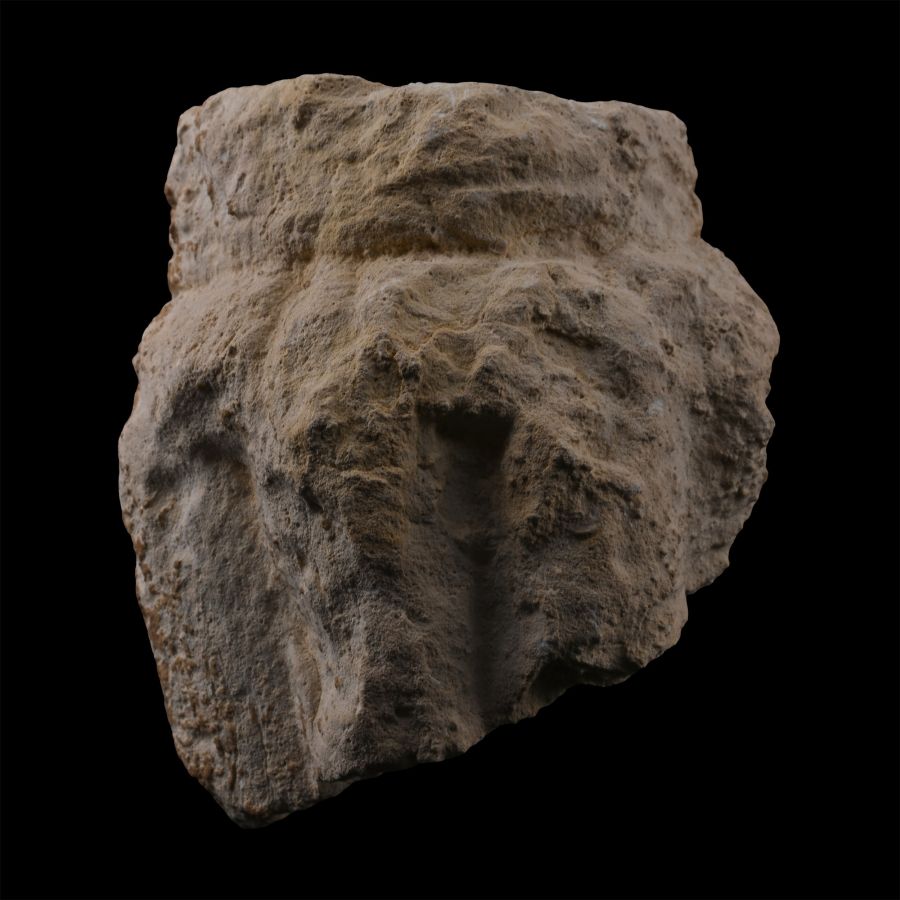
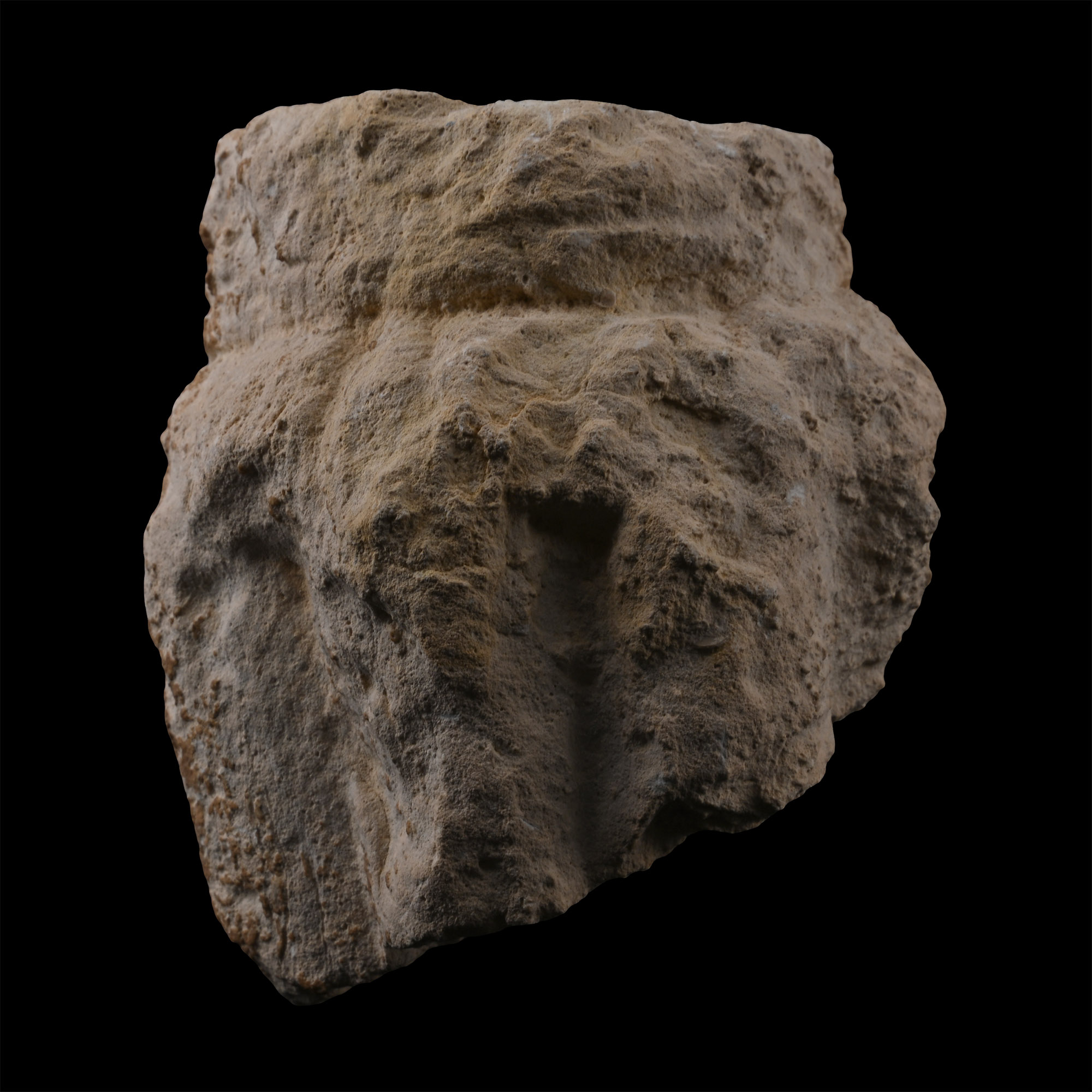
Graeco-Roman Stone Column Section
LATE 1ST CENTURY B.C.-EARLY 1ST CENTURY A.D.
3 3/4 in. (492 grams, 95 mm).
A section showing tightly wrapped lotus petals. [No Reserve]
ProvenanceFrom the late collection of a Cornish couple formed from the early 1990s.
CONDITIONTimeLine Auctions follows a vetting process to ensure the authenticity and legality of all items, reinforcing our commitment to integrity and responsible trading. Each antiquity, antique, and coin lot undergoes thorough examination by a vetting committee of at least ten external specialists, professional trade association members, scientists, and archaeologists: Our Vetting Process
AUCTIONS:
TimeLine is a leading auction house specialising in antiquities, ancient art, collectables, natural history, coins, medals, and books. Our auctions offer museums, collectors, historians, and enthusiasts the opportunity to acquire unique and historically significant pieces.
-
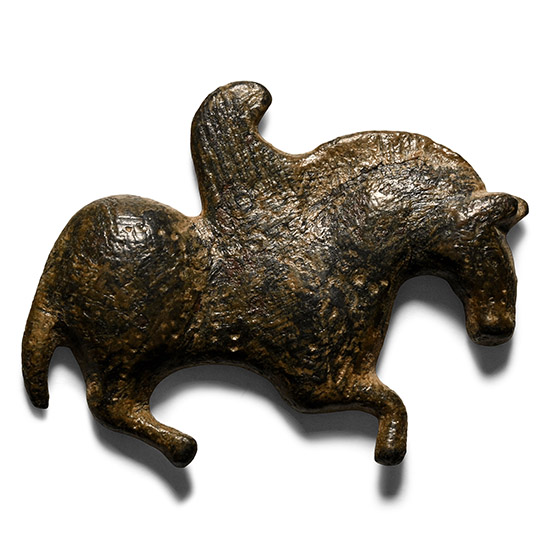
Greek Bronze Pegasus Belt Mount
Hellenistic, 2nd-1st century B.C.Sold for (Inc. bp): £117
The flying horse depicted in a dynamic pose with open wings. 6.71 grams, 34 mm
Ex German art market, 2000s. Acquired from an EU collector living in London. From the collection of a Surrey, UK, gentleman. -
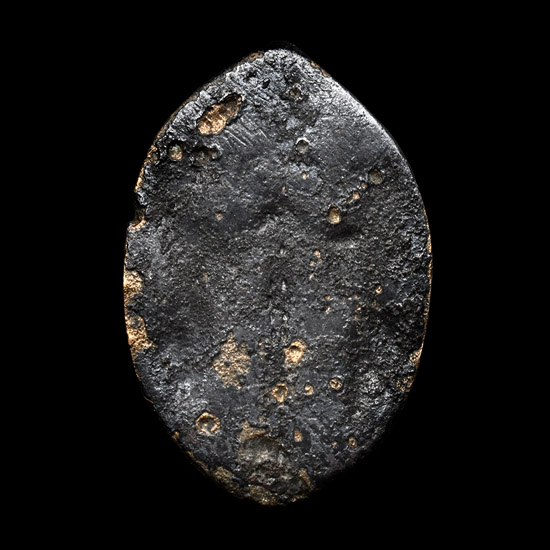
Large Greek Bronze Ring with Standing Goddess
Circa 4th-2nd century B.C.Sold for (Inc. bp): £26
Comprising a slender hoop and a large lentoid bezel with two standing figures flanking a staff(?). 4.01 grams, 22.61 mm overall, 21.02 x 19.12 mm internal diameter (approximate size British U 1/2, USA 10 1/4, Europe 23.15, Japan 22)
From the private collection of a European gentleman (1942-2024), formed since the 1970s. -
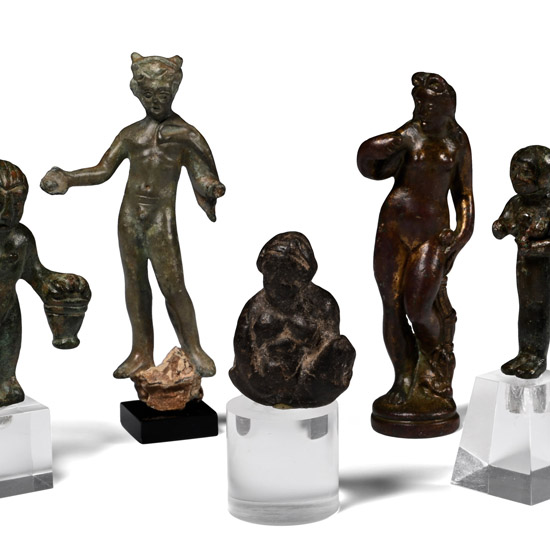
Greek and Roman Bronze Statue Collection
4th century B.C.-4th century A.D.Sold for (Inc. bp): £1,560
Comprising: an Etruscan figure of Turms (Greek Hermes), standing and holding a patera in his right hand, original lead mounting beneath; a standing figure of nude Aphrodite, possibly later; a figure of Baubo with her legs bent and right hand touching her genitals; two standing bronze figures holding offerings. 352 grams total, 63-96 mm
Hermes from the estate of a Swiss gentleman, Ticino, before 1970. Sardinian figure ex private collection of Prof. Dr Hans (1918-1984) and Dr Ines (1922-2013) Jucker, classical archaeologists, Bern, Switzerland. with Galerie Rhéa, Zurich, Switzerland. This lot has been checked against the Interpol Database of stolen works of art and is accompanied by a search certificate number no.12669-236450.
Baubo was a minor divinity of Greek mythology, linked to the cult of Demeter and Persephone. The Egyptian Baubo figures are split into two groups. In some of these figurines her right hand is touching her genitalia. All these statuettes were votive offerings to the gods, and many of them were used as amulets.
