
Loading, please wait...
LOT 0095
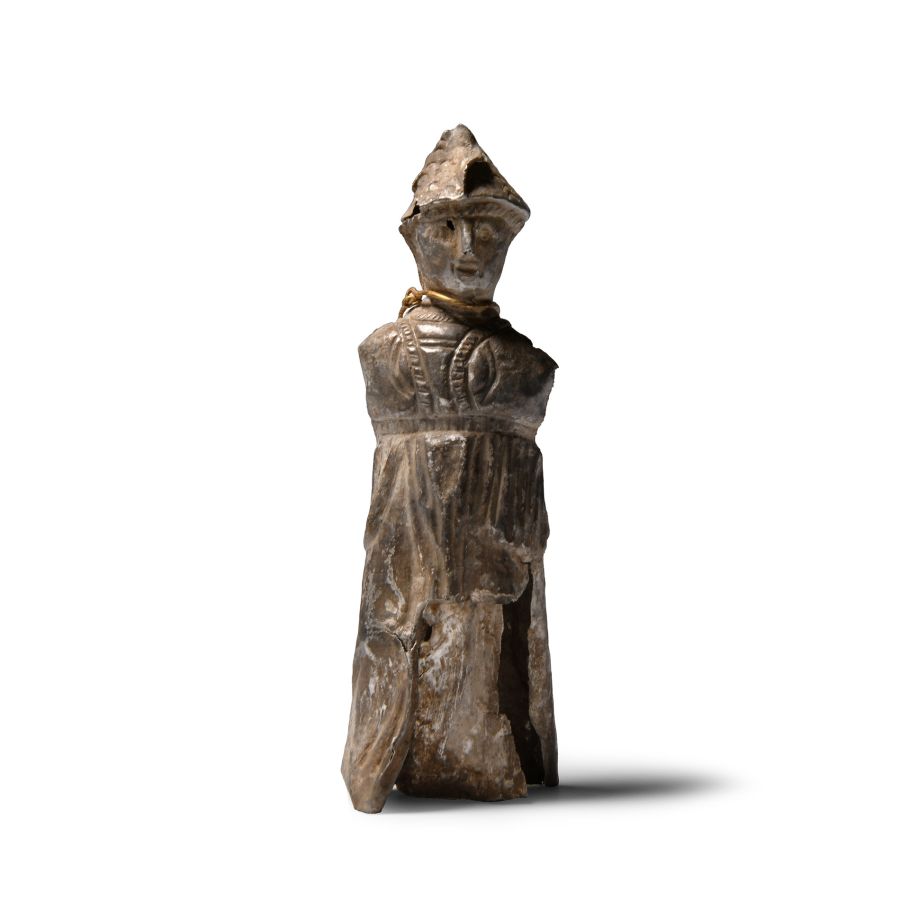
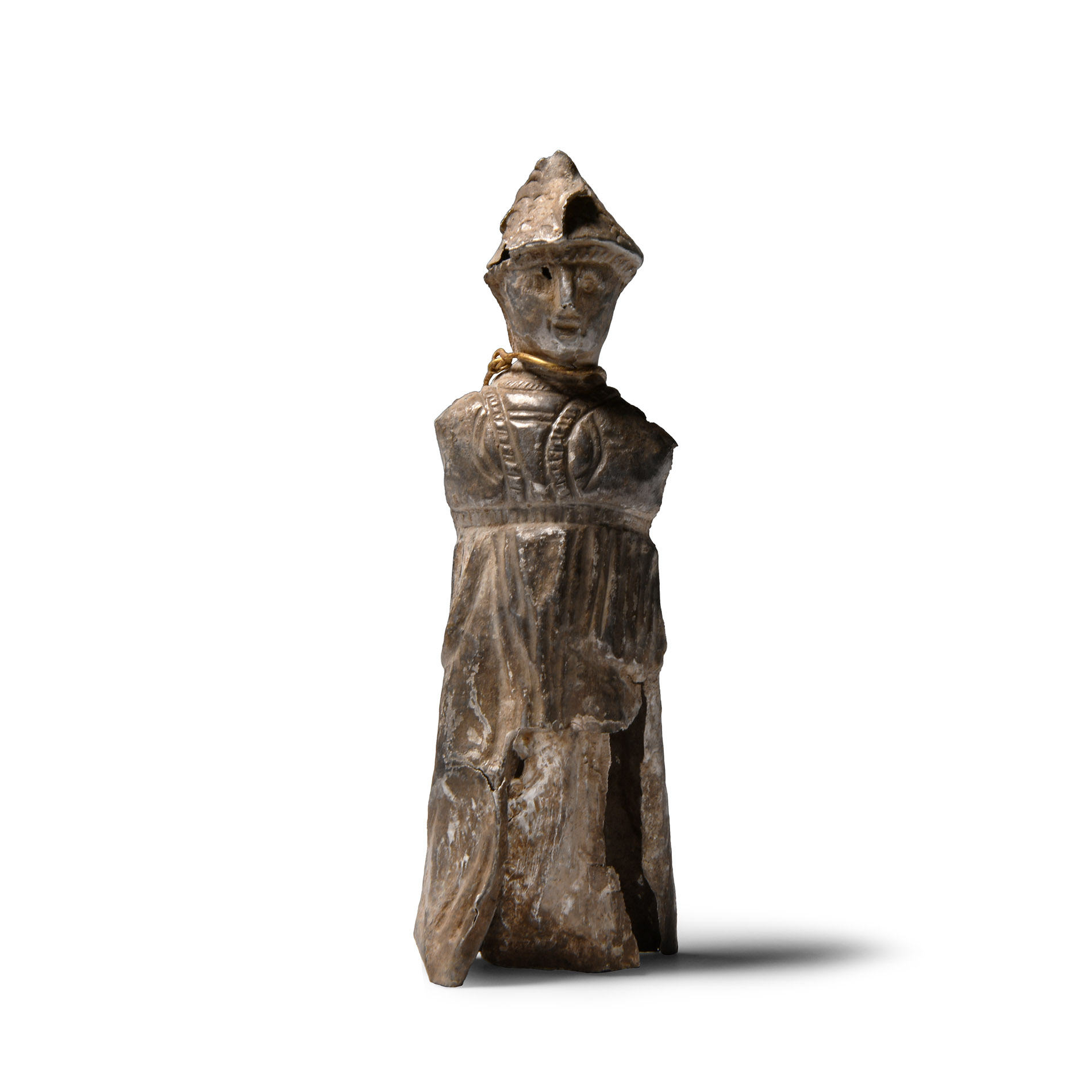
Graeco-Roman Silver Votive Figure of Pallas Athena
CIRCA 1ST CENTURY B.C.
4 3/4 in. (32 grams, 12.1 cm).
Sheet silver beaten over a former; Pallas Athena wearing a chiton gathered at the waist and a conical cap, a stylised aegis armour covering the chest; gold filigree torc at the neck; chiton repaired.
ProvenanceAcquired on the UK art market before 2000.
Property of a Surrey, UK, collector.
TimeLine Auctions follows a vetting process to ensure the authenticity and legality of all items, reinforcing our commitment to integrity and responsible trading. Each antiquity, antique, and coin lot undergoes thorough examination by a vetting committee of at least ten external specialists, professional trade association members, scientists, and archaeologists: Our Vetting Process
AUCTIONS:
TimeLine is a leading auction house specialising in antiquities, ancient art, collectables, natural history, coins, medals, and books. Our auctions offer museums, collectors, historians, and enthusiasts the opportunity to acquire unique and historically significant pieces.
LOT 0095
Graeco-Roman Silver Votive Figure of Pallas Athena
Estimate £400 - 600€460 - 700 (for guidance only)$540 - 810 (for guidance only)
-
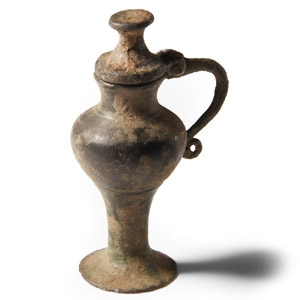
Hellenistic Bronze Lidded Cosmetic Vessel
Circa 1st century B.C.Sold for (Inc. bp): £117
Elegantly proportioned miniature ewer with trumpet-shaped base, swept loop handle with recurved finial, hinged lid. 54.4 grams, 66 mm
Acquired on the German art market before 2000. From an EU collection before 2020. -
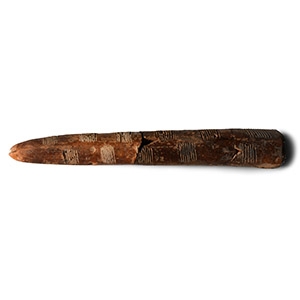
Cypriot Terracotta Votive Horn
2100-1850 B.C.Sold for (Inc. bp): £221
Tapering square-section votive with transverse bands of dense linear hatching; repaired. 116 grams, 16.5 cm
From the celebrated personal collection of art formed by the famous anthropologist, artist, and television presenter Desmond Morris. with Christie’s, South Kensington, 14 May 2002, lot 19 (part). -
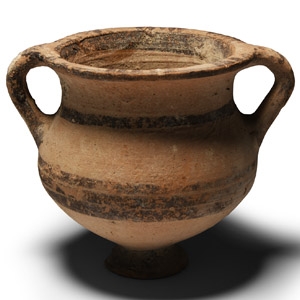
Cypriot Painted Terracotta Amphora
Circa 8th-5th century B.C.Sold for (Inc. bp): £169
In black-painted geometric buffware, with wide bands of black painted decoration on the ovoid body and on the rim, loop handles. 164 grams, 11.8 cm wide
Ex P.A., Hertfordshire, UK, specialist collection of Greek art, 1980-1990s. Accompanied by a copy of an old typed catalogue slip.
The type is well known on Cyprus from 850 B.C. The simplification of the geometric ornaments in panels on the neck and shoulder suggest that the present specimen is later than the Geometric Period.
