
Loading, please wait...
LOT 0025
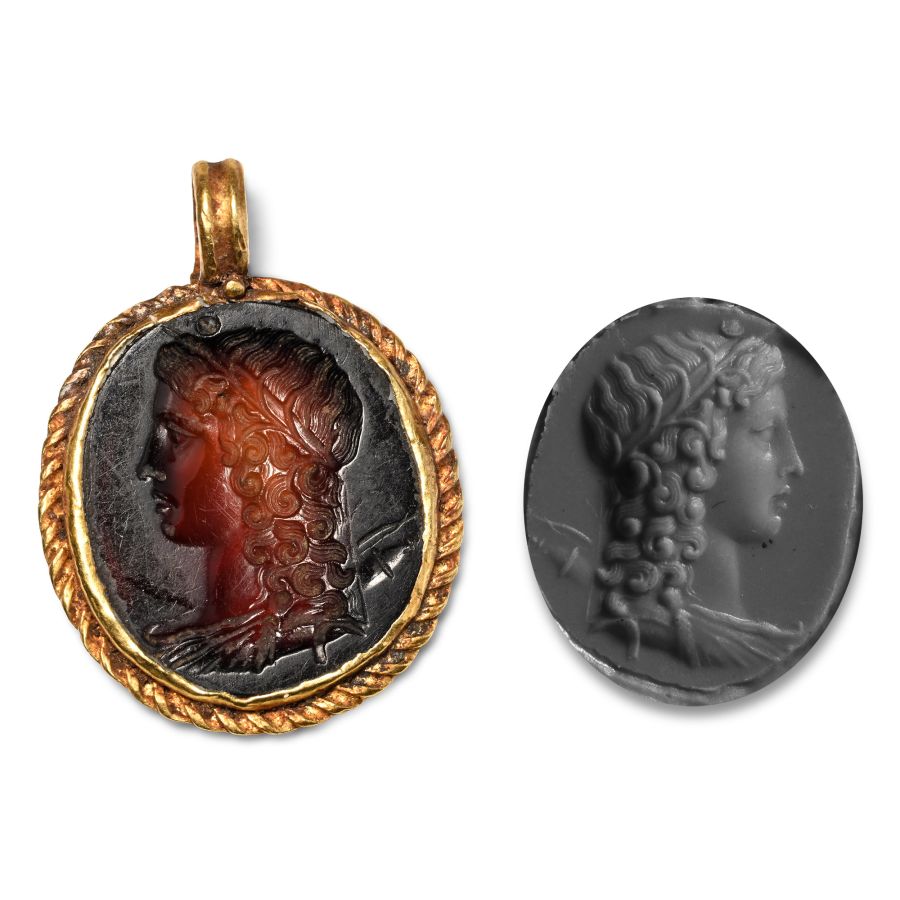
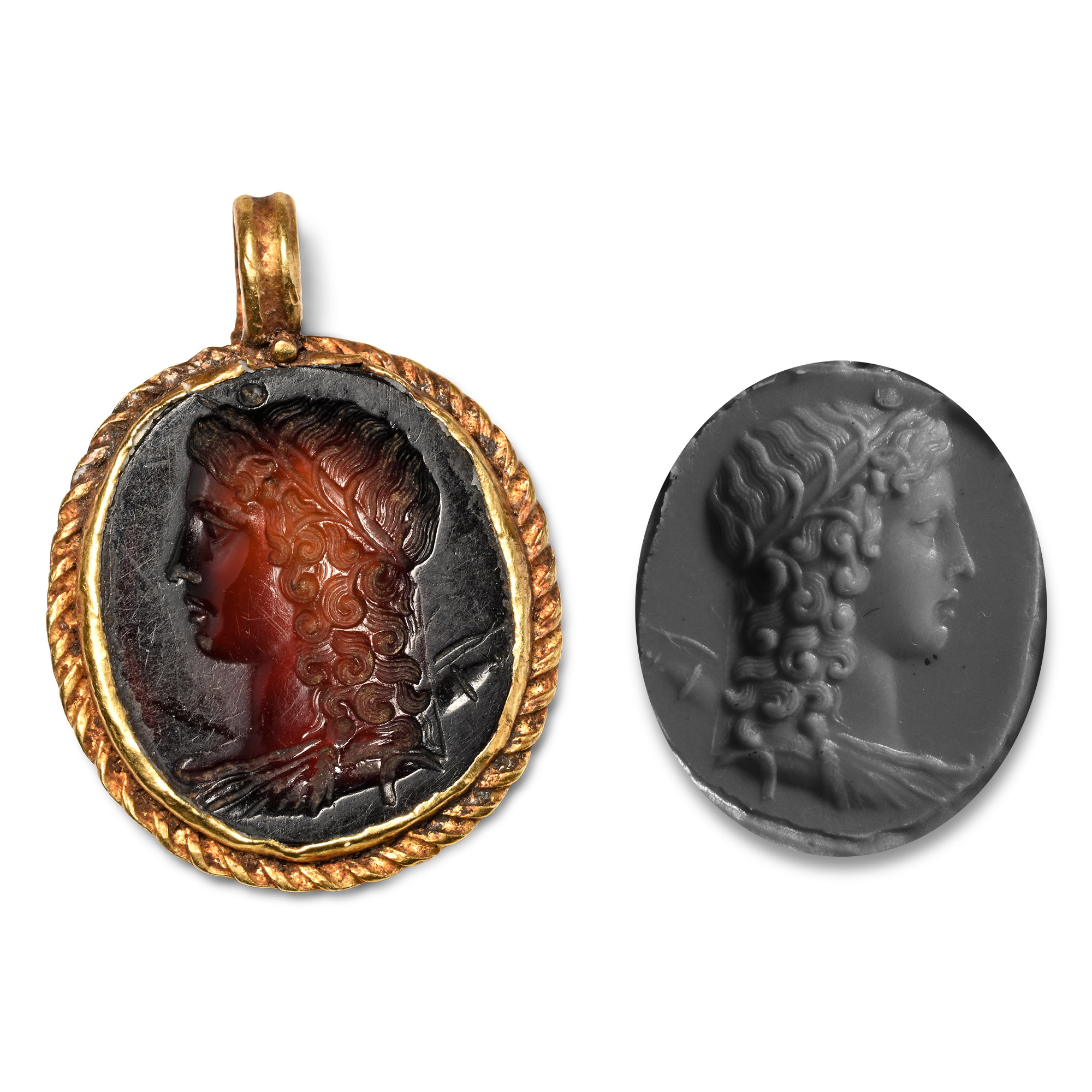
Graeco-Roman Sard Gemstone of the God Apollo in Gold Mount
2ND-1ST CENTURY B.C.
1 in. (1.66 grams, 24 mm).
With intaglio profile bust of youthful male with curly hair, wearing a headdress; set in a later Roman period gold mount with roped border and attachment loop to the top; supplied with a museum-quality impression.
ProvenancePrivate English collection, formed between the late 1970s and early 1990s.
Private collection, London, UK.
Cf. Chadour, A.B., Rings. The Alice and Louis Koch Collection, volume I, Leeds, 1994, item 222, for intaglio type.
CONDITIONTimeLine Auctions follows a vetting process to ensure the authenticity and legality of all items, reinforcing our commitment to integrity and responsible trading. Each antiquity, antique, and coin lot undergoes thorough examination by a vetting committee of at least ten external specialists, professional trade association members, scientists, and archaeologists: Our Vetting Process
AUCTIONS:
TimeLine is a leading auction house specialising in antiquities, ancient art, collectables, natural history, coins, medals, and books. Our auctions offer museums, collectors, historians, and enthusiasts the opportunity to acquire unique and historically significant pieces.
LOT 0025
Graeco-Roman Sard Gemstone of the God Apollo in Gold Mount
Sold for (Inc. bp): £13,000
-
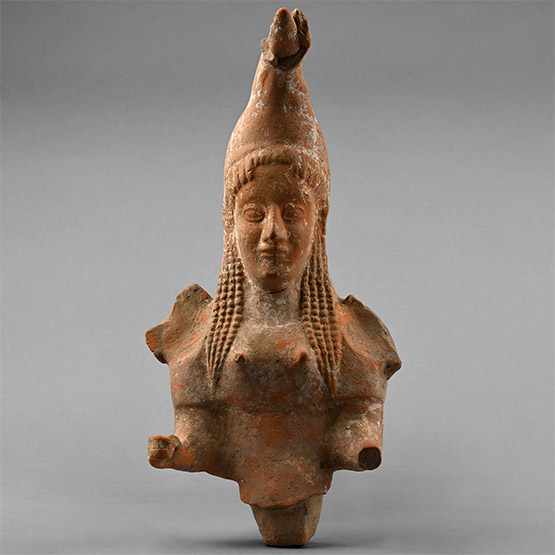
Greek Terracotta Female Antefix
Archaic, 6th-5th century B.C.Estimate: £1,800 - 2,400 (‡+bp*)
Opening Bid: £1,000
Mould-made figure of a female upper body with tall curved and conical headdress, hair dressed in braids falling to her shoulders and flanking her breasts, arms spread and right hand curled to grip a handle or sword-hilt; beneath, a tapering mounting peg for attachment to a roof. 411 grams, 26 cm
Acquired in the mid 1980s-1990s. Private collection, Switzerland, thence by descent. Private collection, since the late 1990s. Accompanied by an academic report by Dr Raffaele D'Amato. This lot has been checked against the Interpol Database of stolen works of art and is accompanied by search certificate number no.12207-222349.
The antefix belongs to the typical decorative scheme of alternating figures decorating the tiles at the ends of the eaves of the roof, constituting a serial decoration. It has the form of a female head, the details of which were defined through finely detailed plastic and polychrome painting, now lost. The head is crowned with a helmet, which can help identify her with the warrior goddess Athena. -
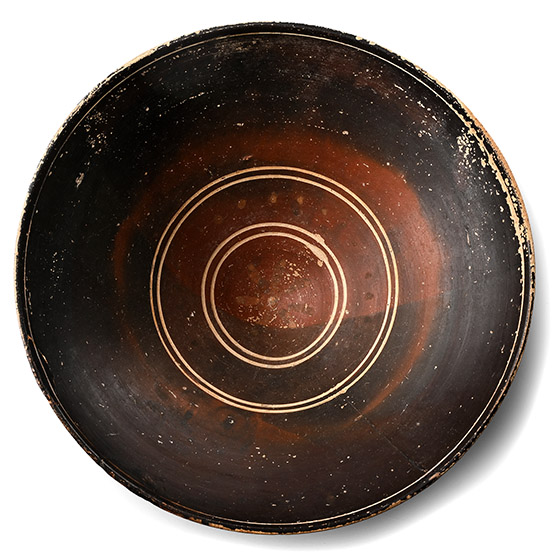
Large Greek Terracotta Deep Glazed Bowl
3rd-1st century B.C.Sold for (Inc. bp): £468
Glazed Slope-Ware vessel with narrow base, reserved concentric rings to the iner face; some restoration to rim; supplied with a display stand. 337 grams, 21.5 cm wide
Property of a private collector. with Bonhams, London, 16 May 2002, no.551. Private collection, UK. Accompanied by a copy of an Art Loss Register certificate no.S00075157. Accompanied by copies of the relevant Bonhams catalogue pages. -
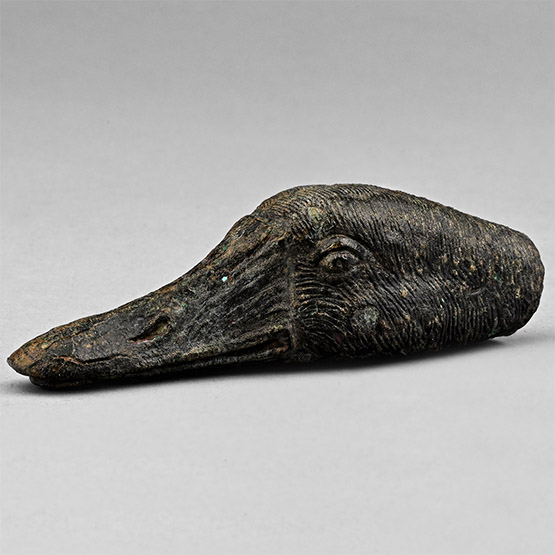
Greek Bronze Duck's Head
3rd-2nd century B.C.Sold for (Inc. bp): £1,690
Modelled in the round with realistic features, textured plumage, rounded beak. 236 grams, 10.1 cm
Acquired in the mid 1980s-1990s. Private collection, Switzerland, thence by descent. Private collection, since the late 1990s. This lot has been checked against the Interpol Database of stolen works of art and is accompanied by a search certificate number no.12378-226677.
