
Loading, please wait...
LOT 0147
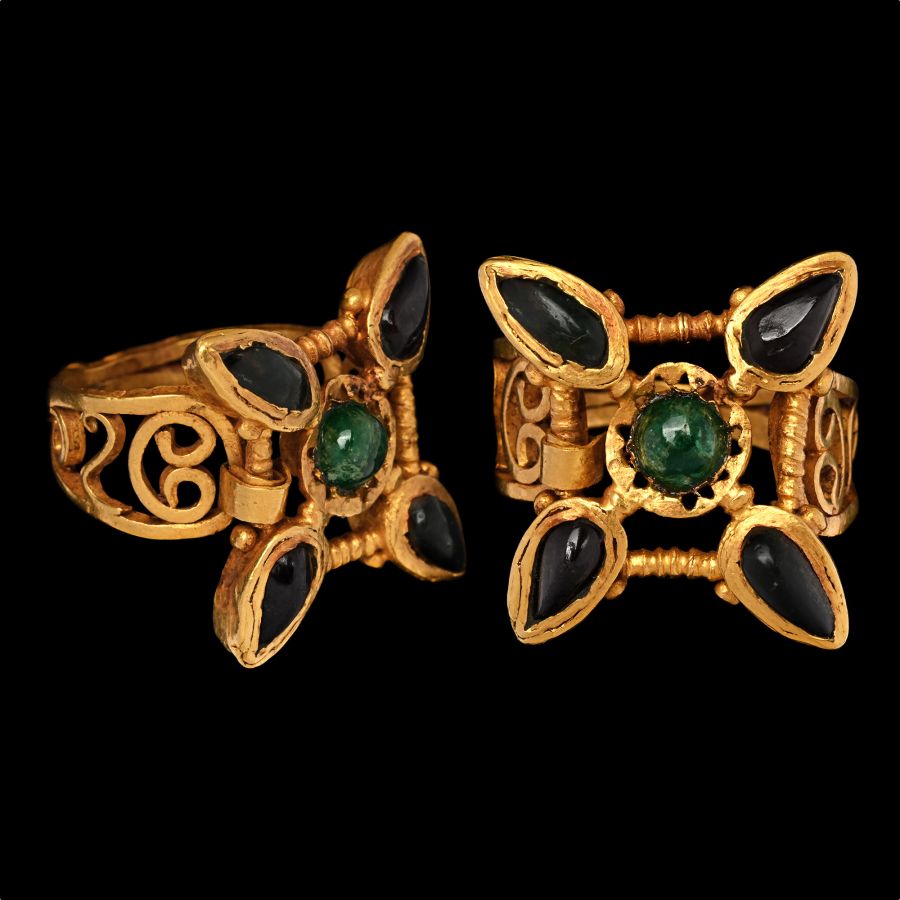
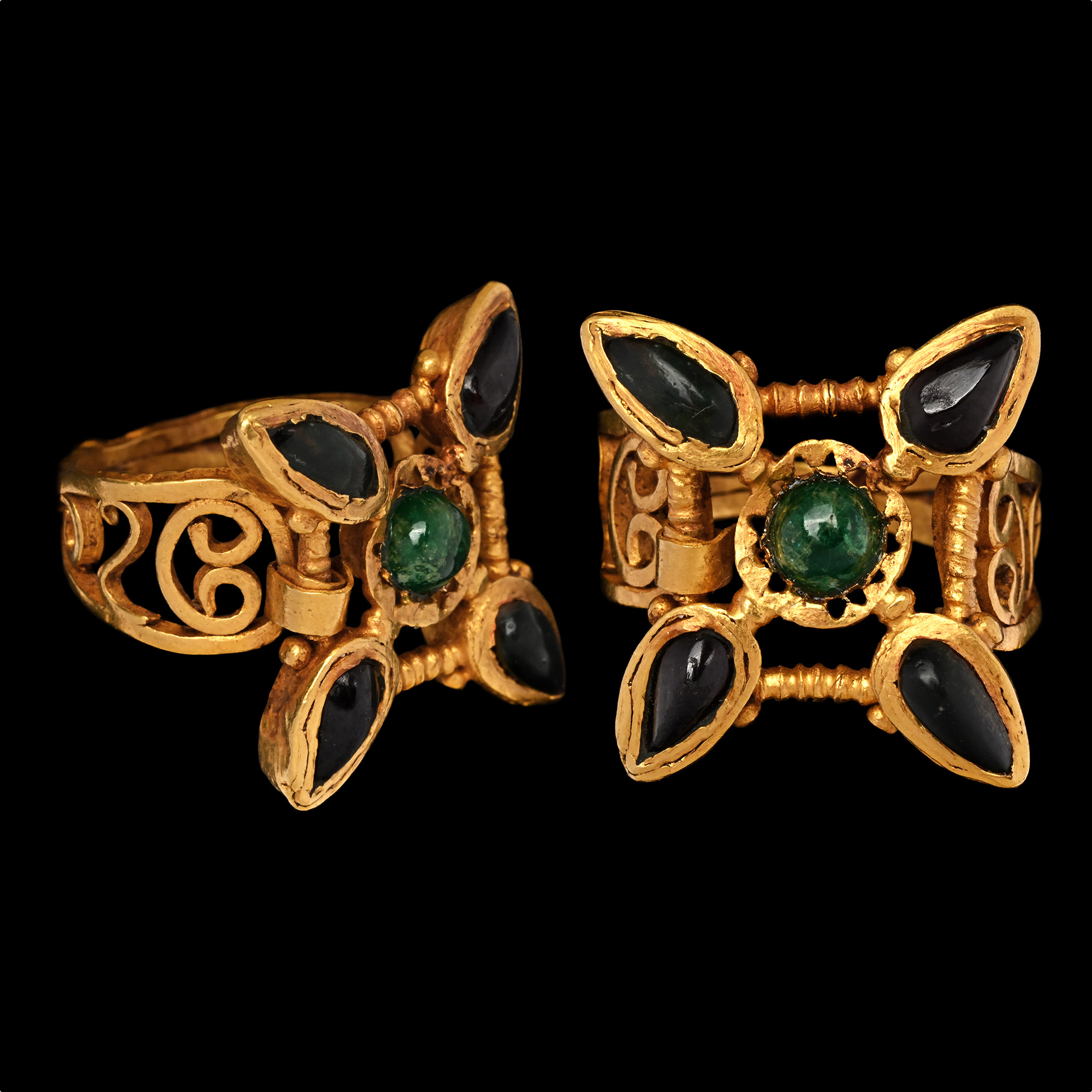
Graeco-Roman Gold Ring with Garnets and Emeralds
1ST CENTURY A.D.
3/4 in. (7.27 grams, 23.17 mm overall, 16.94 mm internal diameter (approximate size British K, USA 5 1/4, Europe 9.95, Japan 9)).
Comprising a tapering hoop formed with convergent bands filled with scrolls, granule at the junction to the reverse; beaded wire frame to the square bezel with central panel and teardrop-cell to each corner; inset cabochon to each corner cell, later green cabochon to centre; shoulder repaired in antiquity with gold strap.
Provenancewith Gorny & Mosch, Auction 119, 16 October 2002, no.3072.
Private collection, London.
This lot has been checked against the Interpol Database of stolen works of art and is accompanied by search certificate number no.12814-241422.
This lot has been cleared against the Art Loss Register database, and is accompanied by an illustrated lot declaration signed by the Head of the Antiquities Department, Dr Raffaele D'Amato.
Cf. Bedini, A.Mistera di una Fanciulla; Ori e Gioelli Roma di Marco Aurelia da Una Nuava Scoperta Archaeologica., Milan, 1995, p.50, no.19.
CONDITIONTimeLine Auctions follows a vetting process to ensure the authenticity and legality of all items, reinforcing our commitment to integrity and responsible trading. Each antiquity, antique, and coin lot undergoes thorough examination by a vetting committee of at least ten external specialists, professional trade association members, scientists, and archaeologists: Our Vetting Process
AUCTIONS:
TimeLine is a leading auction house specialising in antiquities, ancient art, collectables, natural history, coins, medals, and books. Our auctions offer museums, collectors, historians, and enthusiasts the opportunity to acquire unique and historically significant pieces.
-
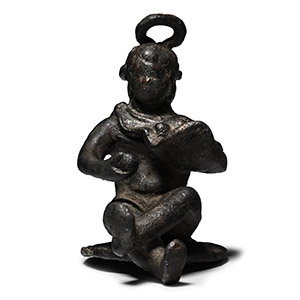
Roman Vessel Lid with Male Youth Wearing a Chlamys
1st-3rd century A.D.Sold for (Inc. bp): £520
Discoid base supporting a seated youth with legs crossed, wearing a chlamys, his left hand supporting fruit in the folds of the cloth and right hand holding one; base pierced; transverse wire to sides of the head, ring above. 366 grams, 80 mm
From the collection of a gentleman, acquired on the London art market in the 1990s. This lot is accompanied by an illustrated lot declaration signed by the Head of the Antiquities Department, Dr Raffaele D'Amato. -
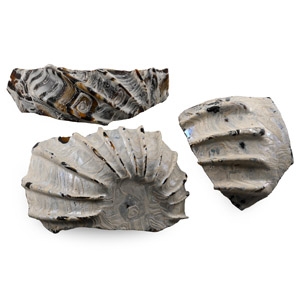
Roman Marbled Glass Fragments
2nd century A.D.Sold for (Inc. bp): £52
Including portions of patella cup, and other types. 134 grams total, 7.4-10.4 mm
Acquired on the UK art market, 1977-1979. Private collection, London. This lot is accompanied by an illustrated lot declaration signed by the Head of the Antiquities Department, Dr Raffaele D'Amato. -
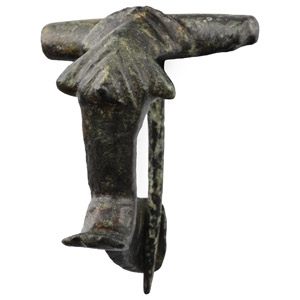
Roman Bronze Dolphin Bow Brooch
1st-2nd century A.D.Sold for (Inc. bp): £52
The bow formed as a dolphin holding a sphere in its mouth; detailing to the fins and head; pin lug, pin and catchplate to reverse. 11.9 grams, 32 mm
Ex German art market, 2000s. Acquired from an EU collector living in London. From the collection of a Surrey, UK, gentleman. This lot is accompanied by an illustrated lot declaration signed by the Head of the Antiquities Department, Dr Raffaele D'Amato.
