
Loading, please wait...
LOT 0571
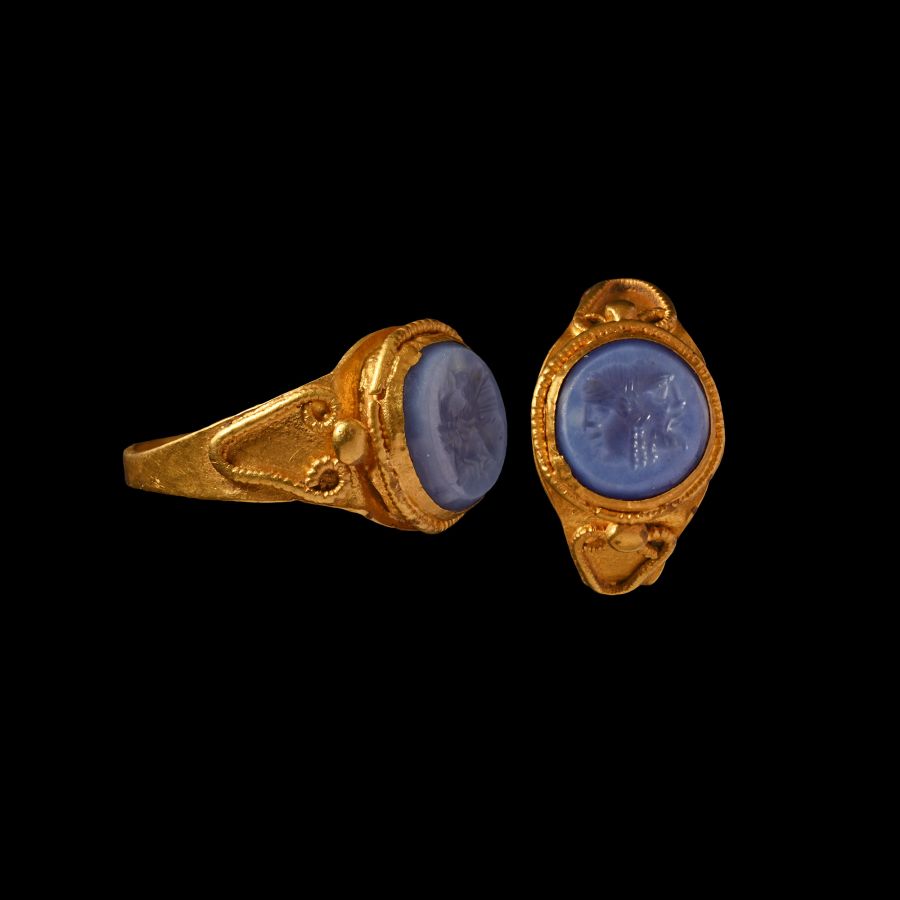
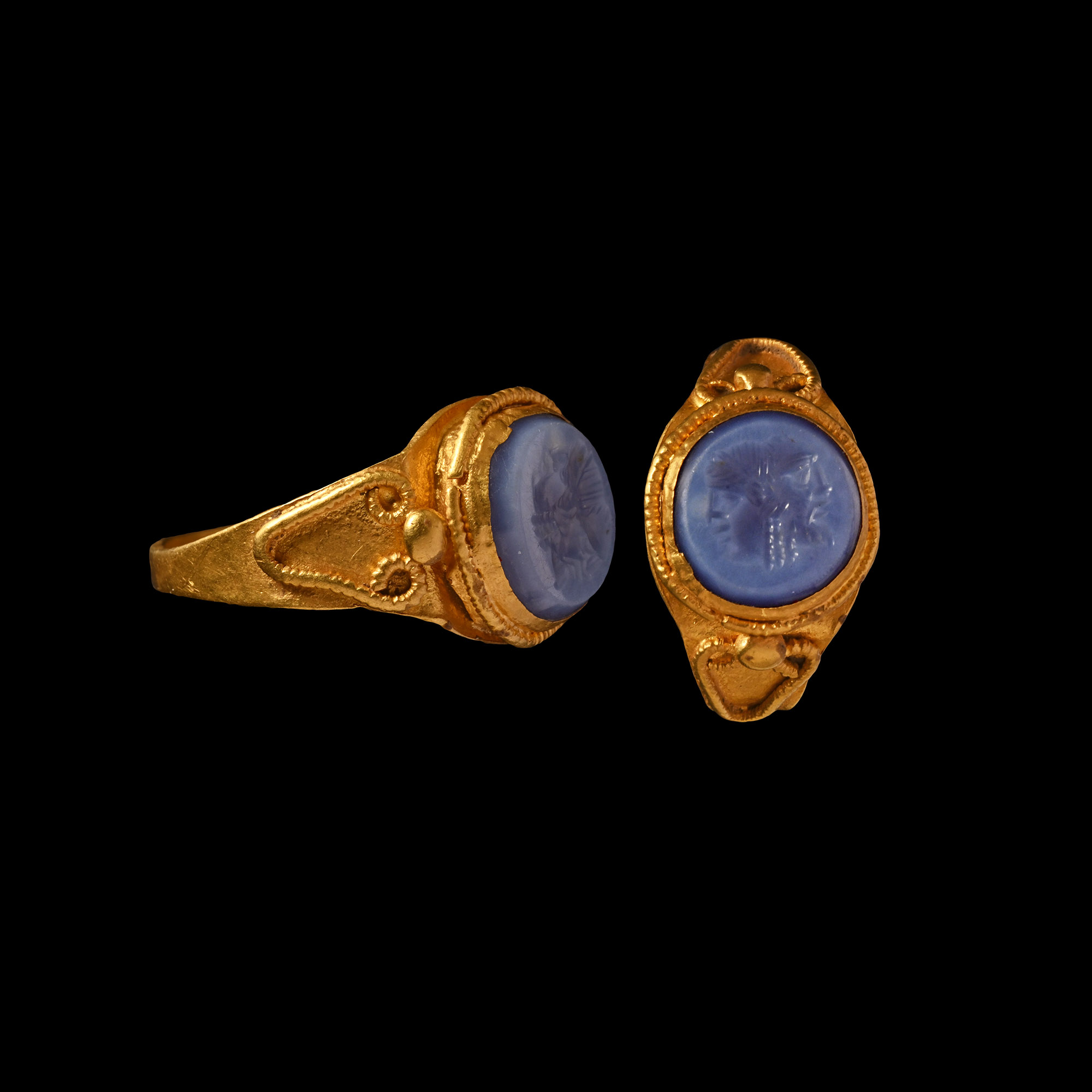
Graeco-Roman Gold Ring with Double Actor's Mask Gemstone
1ST CENTURY B.C.-1ST CENTURY A.D. AND LATER
7/8 in. (6.00 grams, 22.90 mm overall, 17.58 mm internal diameter (approximate size British O, USA 7, Europe 14.98, Japan 14)).
Hoop with applied filigree and granules to the shoulders, inset later nicolo intaglio with janiform bust of male and female heads.
ProvenanceEx German art market, 2000s.
Acquired from an EU collector living in London.
From the collection of Surrey, UK, gentleman.
This lot is accompanied by an illustrated lot declaration signed by the Head of the Antiquities Department, Dr Raffaele D’Amato.
Cf. Chadour, A.B., Rings. The Alice and Louis Koch Collection, volume I, Leeds, 1994, item 206, for type.
CONDITIONTimeLine Auctions follows a vetting process to ensure the authenticity and legality of all items, reinforcing our commitment to integrity and responsible trading. Each antiquity, antique, and coin lot undergoes thorough examination by a vetting committee of at least ten external specialists, professional trade association members, scientists, and archaeologists: Our Vetting Process
AUCTIONS:
TimeLine is a leading auction house specialising in antiquities, ancient art, collectables, natural history, coins, medals, and books. Our auctions offer museums, collectors, historians, and enthusiasts the opportunity to acquire unique and historically significant pieces.
LOT 0571
Graeco-Roman Gold Ring with Double Actor's Mask Gemstone
Sold for (Inc. bp): £2,340
-
.jpg)
Hellenistic Garnet Gemstone with Hercules Club and Lionskin
2nd century B.C.Estimate: £1,800 - 2,400 (+bp*)
Opening Bid: £1,000
Plano-convex with incuse image of spiked club and lionskin mantle, repaired. 1.8 grams, 17 mm
Acquired in the 1970s. Ex London, UK, collection. This lot has been checked against the Interpol Database of stolen works of art and is accompanied by a search certificate number no.12386-226380. This lot has been cleared against the Art Loss Register database, and is accompanied by an illustrated lot declaration signed by the Head of the Antiquities Department, Dr Raffaele D’Amato. -
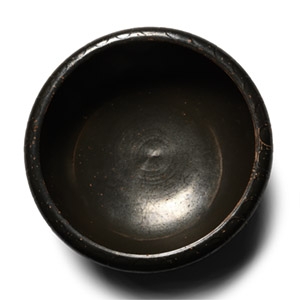
Greek Black-Glazed Terracotta Bowl with Stamped Decoration
Circa 330 B.C.Estimate: £200 - 300 (‡+bp*)
Opening Bid: £90
Flat bowl on a ring-base, convex rim decorated with a flat-profiled tongue-leaf frieze and fine groove beneath. 183 grams, 12.2 cm
with Galerie Gilgamesh, prior 2003. Accompanied by a copy of an Art Loss Register certificate no.S00035402. This lot is accompanied by an illustrated lot declaration signed by the Head of the Antiquities Department, Dr Raffaele D’Amato. -
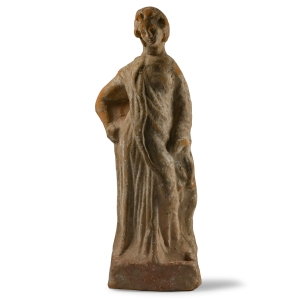
Hellenistic Terracotta Statuette of a Wreathed Young Woman
Late 4th-3rd century B.C.Estimate: £400 - 600 (‡+bp*)
Opening Bid: £180
Standing on a rectangular base, hair divided in regular stripes with voluminous locks, head slightly bowed, the bare arm resting on her right hip; the left leg is visible under the pleated undergarment chiton and slanted himation. 257 grams, 17.5 cm
Traces of white engobe and polychromy in the folds of the robe and on the base. The added chignon lost, otherwise intact.
Ex Belgian art market, 2020. This lot is accompanied by an illustrated lot declaration signed by the Head of the Antiquities Department, Dr Raffaele D’Amato.
The statuette finds comparisons among examples that can be dated between the 4th century and the middle of the 3rd century B.C. It shows some traces of the original polychromy, characterised by strongly contrasting hues, keeping in with the local style.
