
Loading, please wait...
LOT 0556
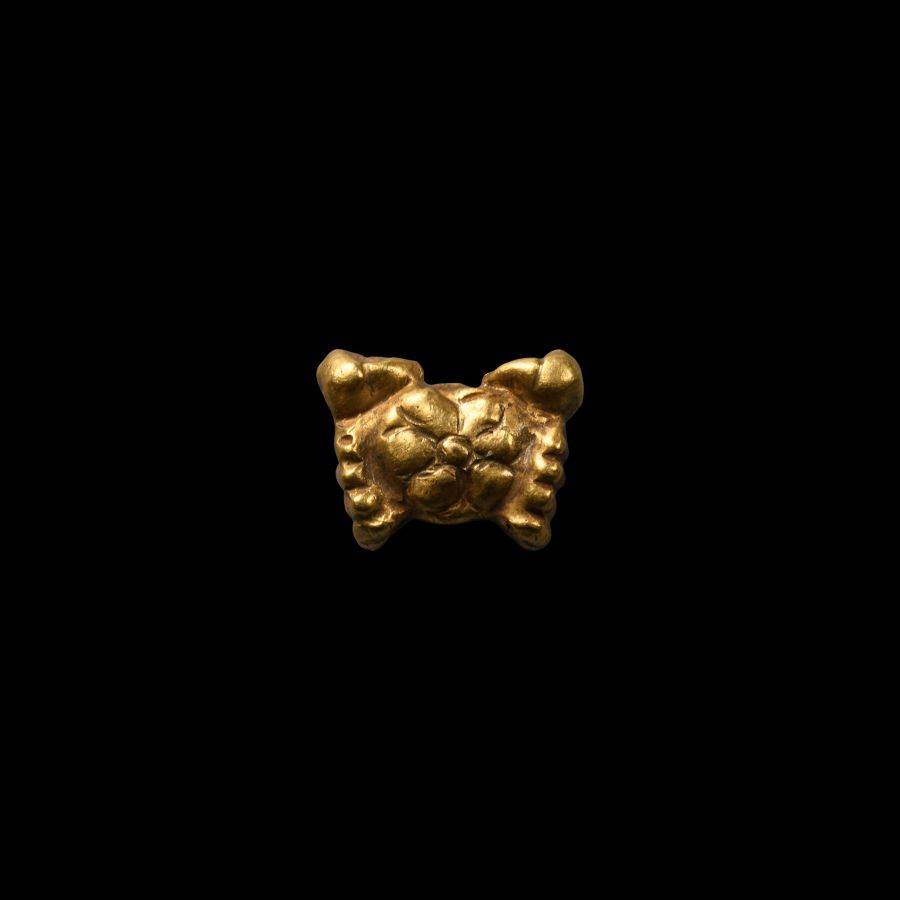
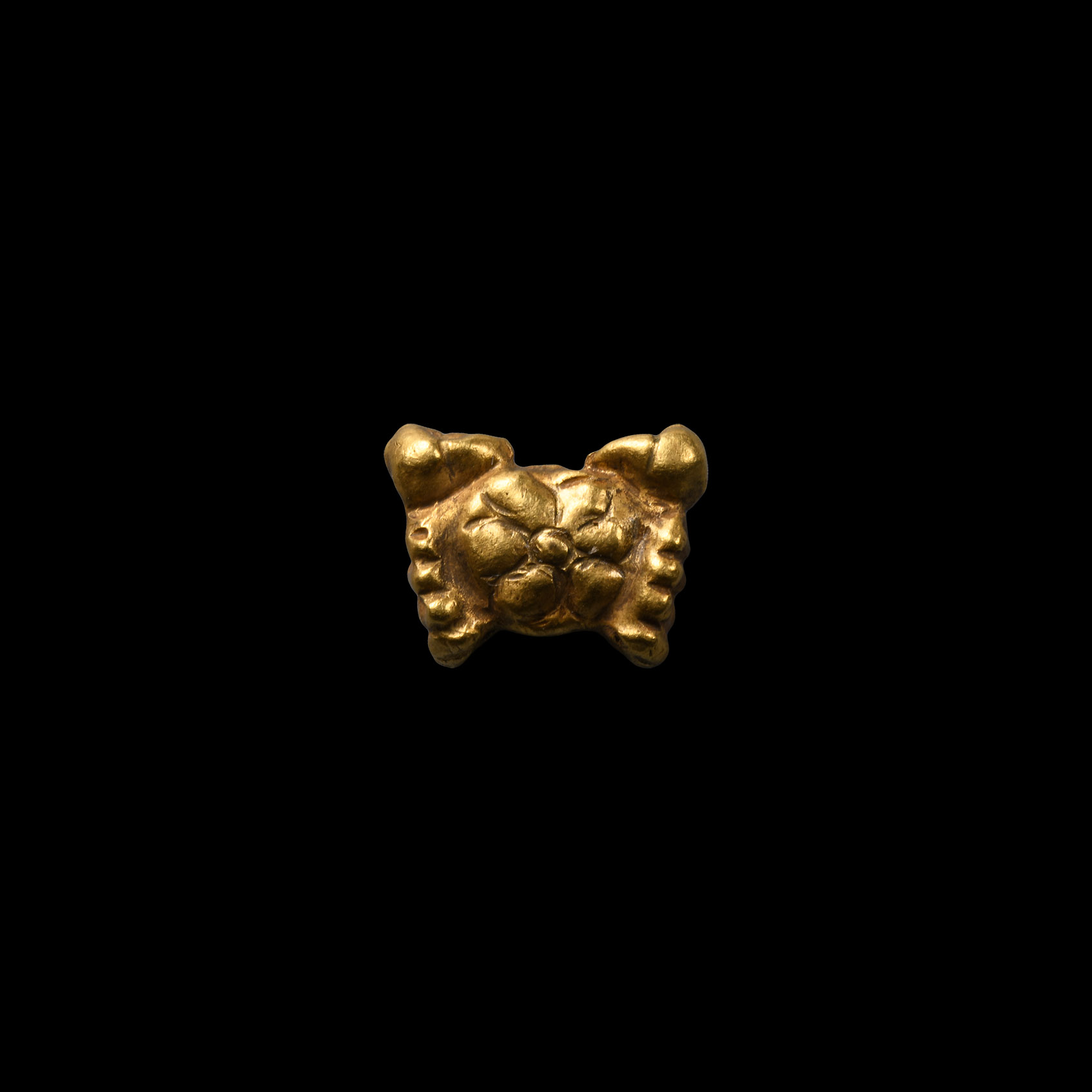
Graeco-Roman Gold Crab Amulet
2ND CENTURY B.C-1ST CENTURY A.D.
1/2 in. (0.85 grams, 11.5 mm).
A hollow-formed gold amulet of a crab with socketted claws above, pierced for attachment.
ProvenanceAcquired 1970s-1980s.
Ex UK collection.
Property of a Portsmouth, UK gentleman.
See Andrews, C., Amulets of Ancient Egypt, London, 1994, for discussion.
CONDITIONTimeLine Auctions follows a vetting process to ensure the authenticity and legality of all items, reinforcing our commitment to integrity and responsible trading. Each antiquity, antique, and coin lot undergoes thorough examination by a vetting committee of at least ten external specialists, professional trade association members, scientists, and archaeologists: Our Vetting Process
AUCTIONS:
TimeLine is a leading auction house specialising in antiquities, ancient art, collectables, natural history, coins, medals, and books. Our auctions offer museums, collectors, historians, and enthusiasts the opportunity to acquire unique and historically significant pieces.
-
.jpg)
Hellenistic Gold Amphora Pendant Inlaid with Gemstones
2nd-1st century B.C.Sold for (Inc. bp): £1,430
A gold amphora-shaped pendant composed of strip-twist volute handles, spool-shaped neck, piriform body and plinth style foot, body decorated with deep geometric cells inlaid with vibrant lapis lazuli, turquoise and possibly glass paste; suspension loop over mouth; accompanied by a custom-made display stand. 6.96 grams, 33 mm (16 grams total, 49 mm including stand)
Fine condition.
with Sotheby's, New York, 12 June 2001, lot 230 (US$10,000-$15,000). Property of a London gentleman. Accompanied by copies of the relevant Sotheby's catalogue pages. -
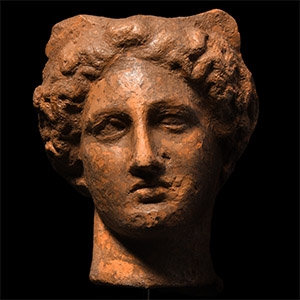
Greek Terracotta Head of a Woman
3rd-2nd century B.C.Estimate: £2,000 - 3,000 (‡+bp*)
Opening Bid: £1,000
A terracotta bust of a woman with elaborate band of curls to the brow; spout or hole to the rear of the head; mounted on a custom-made display stand with old lot sticker to base. 675 grams total, 19 cm high including stand
Private European collection. with Genève Enchères, 12th December 2017, lot 861. This lot has been checked against the Interpol Database of stolen works of art and is accompanied by search certificate no.11612-199036. -
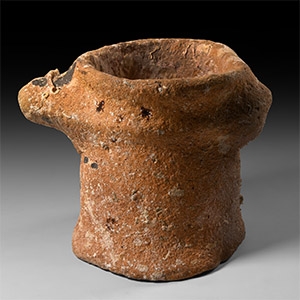
Greek Cypriot Amphora Neck
Circa 400 B.C.Sold for (Inc. bp): £46
A ceramic amphora neck of broadly cylindrical form with one everted and one rolled rim, integral conical knop to the lip and a shallower, oval knop to the opposite face. 595 grams, 13 cm wide
From an old UK collection. From the private collection of Alf Baxendale (1941-2016) part 2, keen Egyptologist, member of the Egyptology Society, trustee of the Amarna Trust; thence by descent. Accompanied by an identification display card. Accompanied by a copy of his obituary published in Horizon, The Amarna Project and Amarna Trust newsletter, Issue 18, 2017, p.21, by Barry John Kemp, CBE, FBA, Professor Emeritus of Egyptology at the University of Cambridge and directing excavations at Amarna in Egypt.
