
Loading, please wait...
LOT 0543
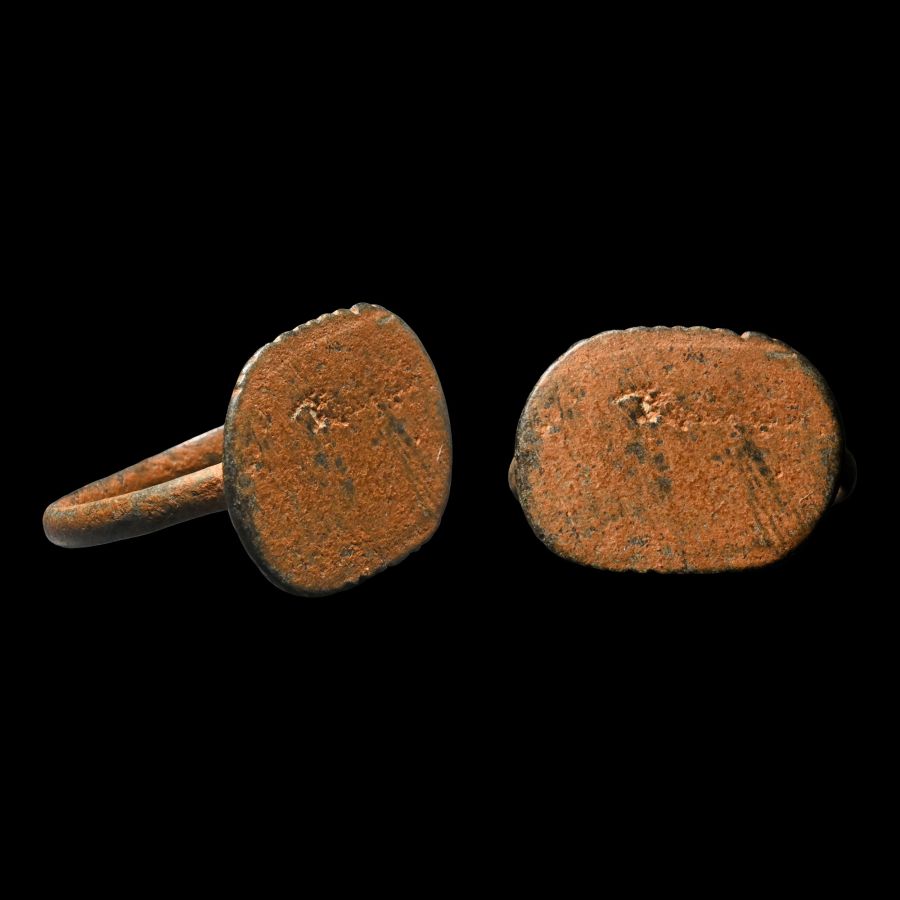
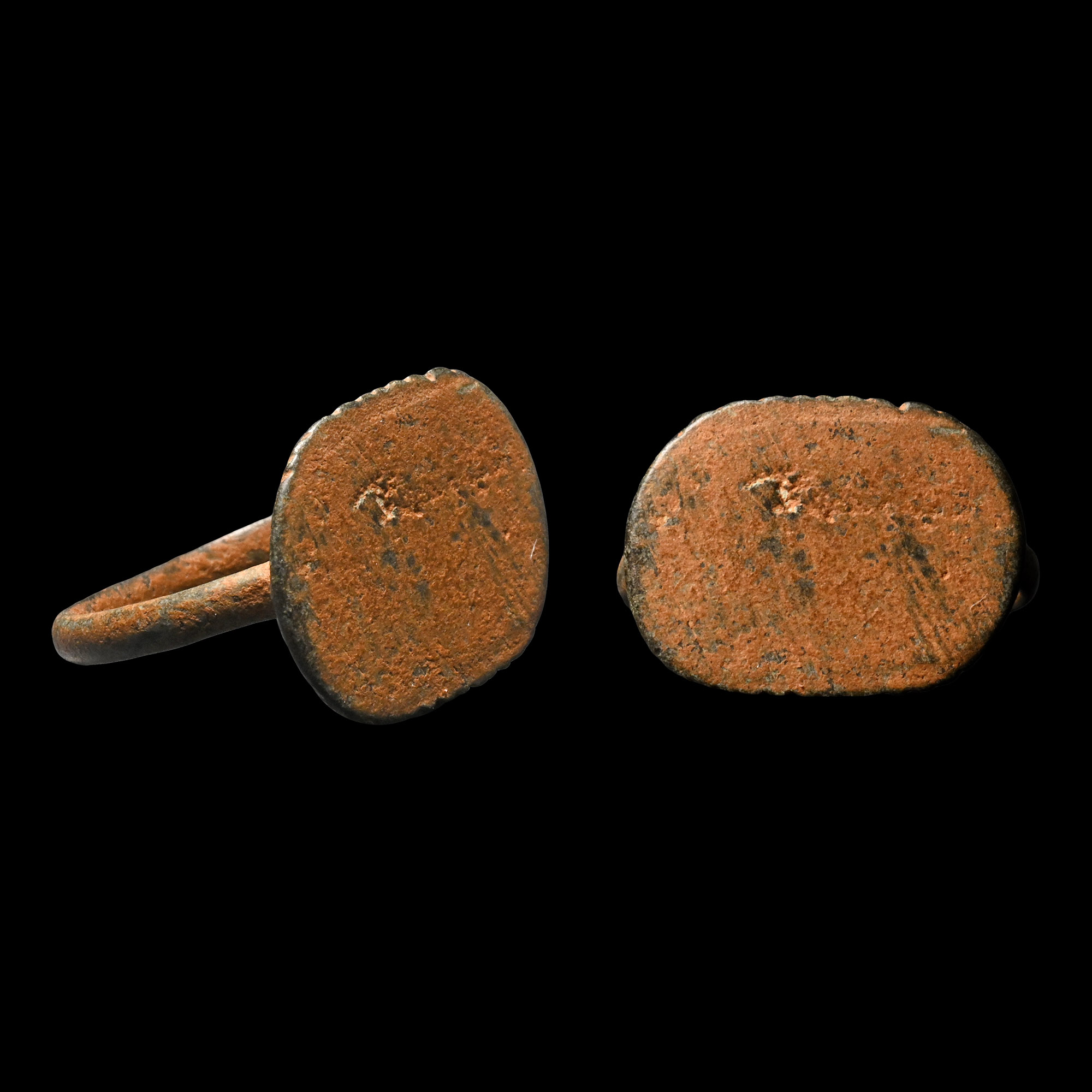
Graeco-Roman Bronze Ring
1ST CENTURY B.C.-1ST CENTURY A.D. OR LATER
1 in. (5.06 grams, 23.24 mm overall, 20.01 mm internal diameter (approximate size British Q, USA 8, Europe 17.49, Japan 16)).
Comprising a slender hoop and a large oval bezel with a piecrust edge. [No Reserve]
ProvenanceAcquired on the UK art market in 2013
Property of a West Northamptonshire, UK, gentleman.
TimeLine Auctions follows a vetting process to ensure the authenticity and legality of all items, reinforcing our commitment to integrity and responsible trading. Each antiquity, antique, and coin lot undergoes thorough examination by a vetting committee of at least ten external specialists, professional trade association members, scientists, and archaeologists: Our Vetting Process
AUCTIONS:
TimeLine is a leading auction house specialising in antiquities, ancient art, collectables, natural history, coins, medals, and books. Our auctions offer museums, collectors, historians, and enthusiasts the opportunity to acquire unique and historically significant pieces.
-
.jpg)
Eastern Greek Parcel-Gilt Bowl with Inscription
Hellenistic, late 2nd-early 1st century B.C.Estimate: £6,000 - 8,000 (‡+bp*)
Opening Bid: £3,000
Broad and shallow with thick rolled rim; parcel-gilt band to the inner face below the rim of running scrolls on a pounced field; to the centre, a hexafoil reserved on a pounced field with border of running scrolls; pointillé cursive Aramaic inscription to the outer face. 413 grams, 20.6 cm wide
Private collection, London, 1990s or earlier. with Gorny & Mosch, 22 June 2007, no.37. with Christie's, New York, 5 December 2012, no.52. Accompanied by copies of the relevant Gorny & Mosch and Christie's catalogue pages. Accompanied by an academic report by Dr Raffaele D'Amato. This lot has been checked against the Interpol Database of stolen works of art and is accompanied by search certificate number no.13217-250131.
The bowl is related to a large group of Hellenistic silver vessels of similar shape, some with Aramaic inscriptions on the exterior beneath the rim, all thought to be of eastern origin, produced within the Seleucid Empire. Here, the Aramaic inscription, now mostly unreadable, reports the name of the maker and the weight of the bowl as 118 zuzim. -
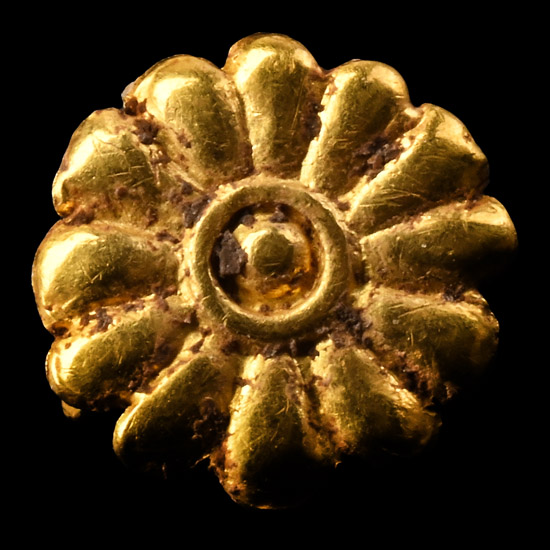
Greek Gold Floral Mount
4th-2nd century B.C.Sold for (Inc. bp): £91
Repoussé mount of a twelve-petalled flower, two loops on the underside. 0.24 grams, 8.25 mm
From the private collection of a European gentleman (1942-2024), formed since the 1970s. -
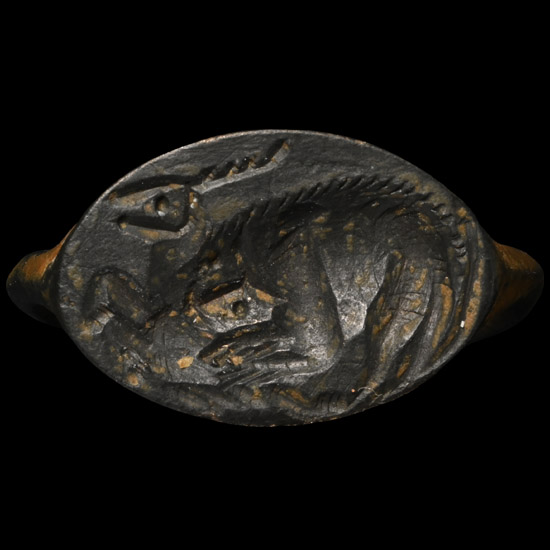
Greek Bronze Ring with Recumbent Stag
5th-4th century B.C.Estimate: £300 - 400 (+bp*)
Opening Bid: £150
Ellipsoid bezel with intaglio motif of a fallen stag attacked by a predator. 6.07 grams, 25.89 mm overall, 20.88 x 17.71 mm internal diameter (approximate size British R, USA 8 1/2, Europe 18 3/4, Japan 18)
UK private collection before 2000. Acquired on the UK art market. Private collection, London, UK.
