
Loading, please wait...
LOT 0491
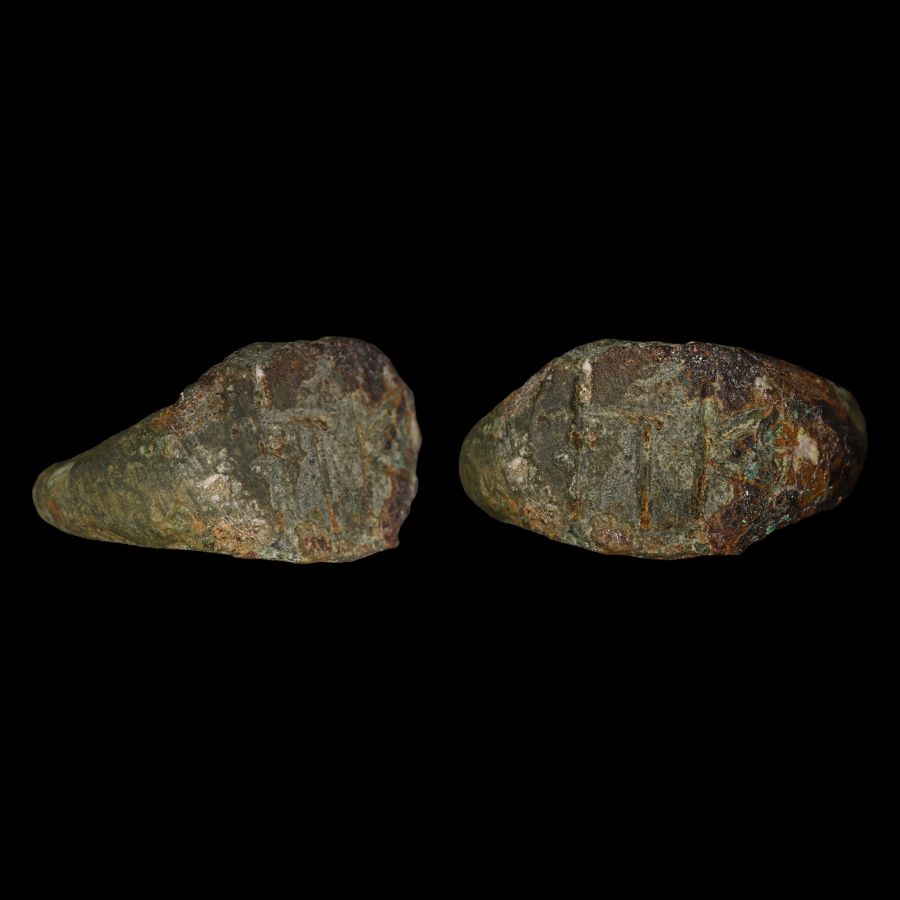
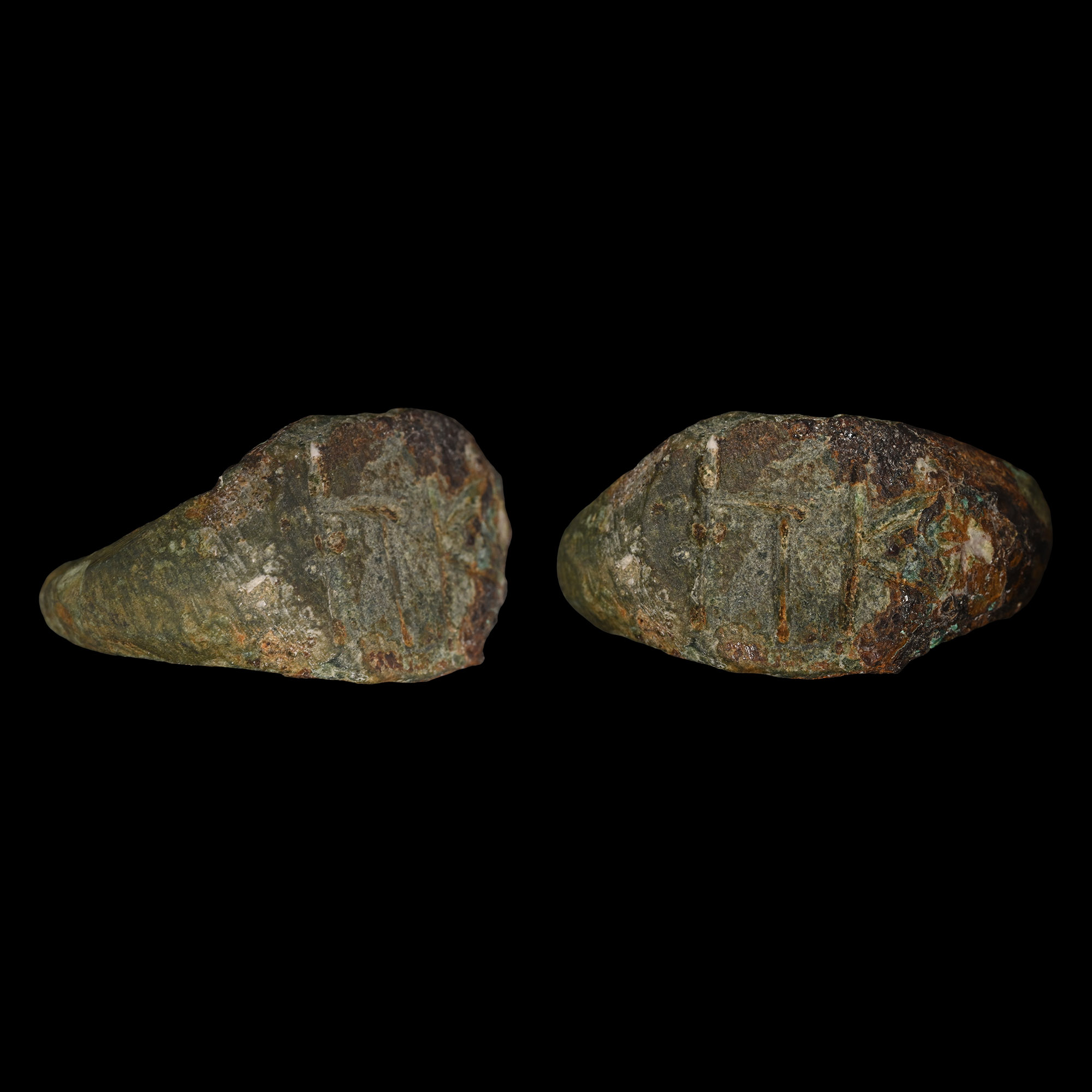
Graeco-Roman Bronze Ring with Inscription
1ST CENTURY B.C.-1ST CENTURY A.D.
1 in. (9.03 grams, 26.58 mm overall, 18.68 x 16.06 mm internal diameter (approximate size British M, USA 6, Europe 12.46, Japan 12)).
A substantial ring with expanding shoulders, a large oval bezel with 'ΠK'. [No Reserve]
ProvenanceFrom the private collection of a European gentleman (1942-2024), formed since the 1970s.
CONDITIONTimeLine Auctions follows a vetting process to ensure the authenticity and legality of all items, reinforcing our commitment to integrity and responsible trading. Each antiquity, antique, and coin lot undergoes thorough examination by a vetting committee of at least ten external specialists, professional trade association members, scientists, and archaeologists: Our Vetting Process
AUCTIONS:
TimeLine is a leading auction house specialising in antiquities, ancient art, collectables, natural history, coins, medals, and books. Our auctions offer museums, collectors, historians, and enthusiasts the opportunity to acquire unique and historically significant pieces.
-
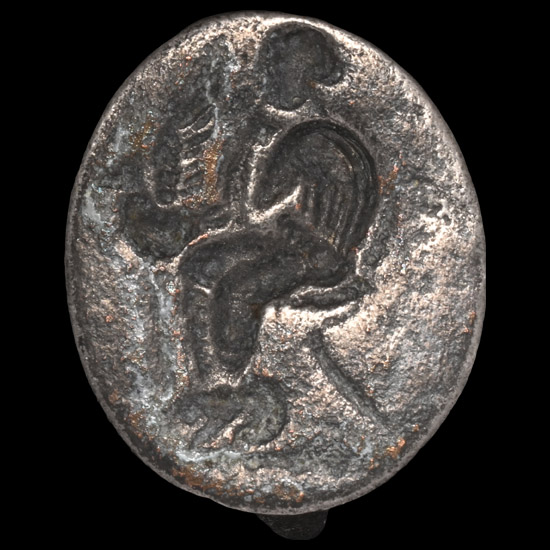
Greek Silver Ring with Seated Goddess Holding a Dove
Hellenistic, 4th-2nd century B.C.Sold for (Inc. bp): £260
Featuring a round-section hoop and a large oval bezel with a seated goddess holding a dove with open wings. 6.35 grams, 23.20 mm overall, 19.55 x 12.60 mm internal diameter (approximate size British I, USA 4 1/4, Europe 7.44, Japan 7)
From the private collection of a European gentleman (1942-2024), formed since the 1970s. -
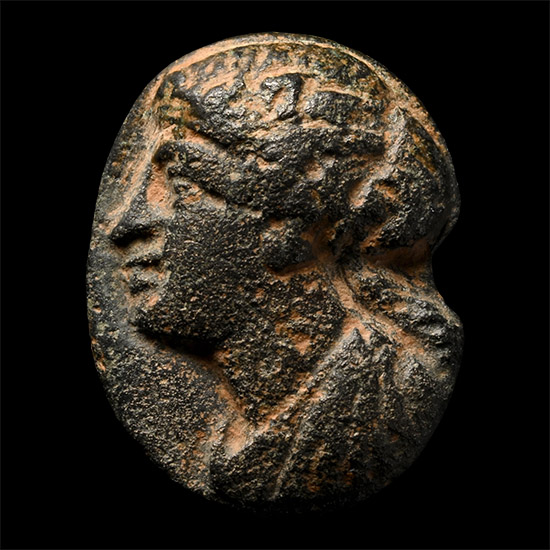
Greek Bronze Ring Bezel with Image of a Ptolemaic Queen
Hellenistic, 3rd-2nd century B.C.Sold for (Inc. bp): £104
Elliptical bezel with high-relief profile bust. 7.26 grams, 22 mm
Acquired on UK art market. Property of a Middlesex gentleman. -
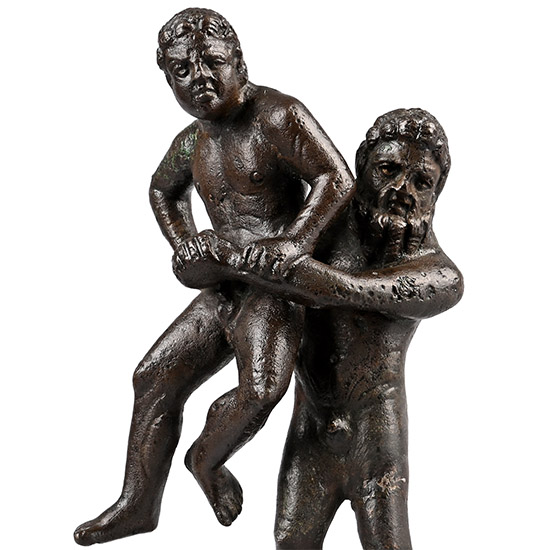
Greek Bronze Hercules and Antaeus Statue Group
Hellenistic, 3rd-1st century B.C.Estimate: £10,000 - 14,000 (‡+bp*)
Opening Bid: £4,900
Dynamic scene of two nude wrestlers, the giant Antaeus and Hercules, Hercules lifting Antaeus off the ground with his arms, while Antaeus is trying to pry his arms open to regain contact with Mother Earth, which would restore his strength; set on a custom-made display stand. 1.01 kg total, 20.3 cm high including stand
Mallams Oxford. From a UK private collection since the 1970s. This lot has been checked against the Interpol Database of stolen works of art and is accompanied by search certificate number no.13333-258242.
Here, the giant Antaeus is depicted with the more common dimensions of the hero, Hercules. Antaeus was a giant, the son of Neptune and Gaia. Antaeus would challenge all passers-by to wrestling matches and remained invincible as long as he remained in contact with his mother, the Earth. As in Greek wrestling, like its modern equivalent, he typically attempted to force opponents to the ground, and he always won, killing them. He built a temple to his father using the skulls of his defeated opponents. Antaeus fought Hercules as he was on his way to the Garden of Hesperides as his Eleventh Labour. Hercules realised that he could not beat Antaeus by throwing or pinning him. Instead, he held him aloft and then crushed him to death in a bear hug. The scene is famously depicted on a Greek krater dating to the sixth century BC and now in the Louvre, and was a popular subject for Renaissance artists. The episode in which Hercules defeats Antaeus is mentioned in Ovid's Metamorphoses.
