
Loading, please wait...
LOT 0541
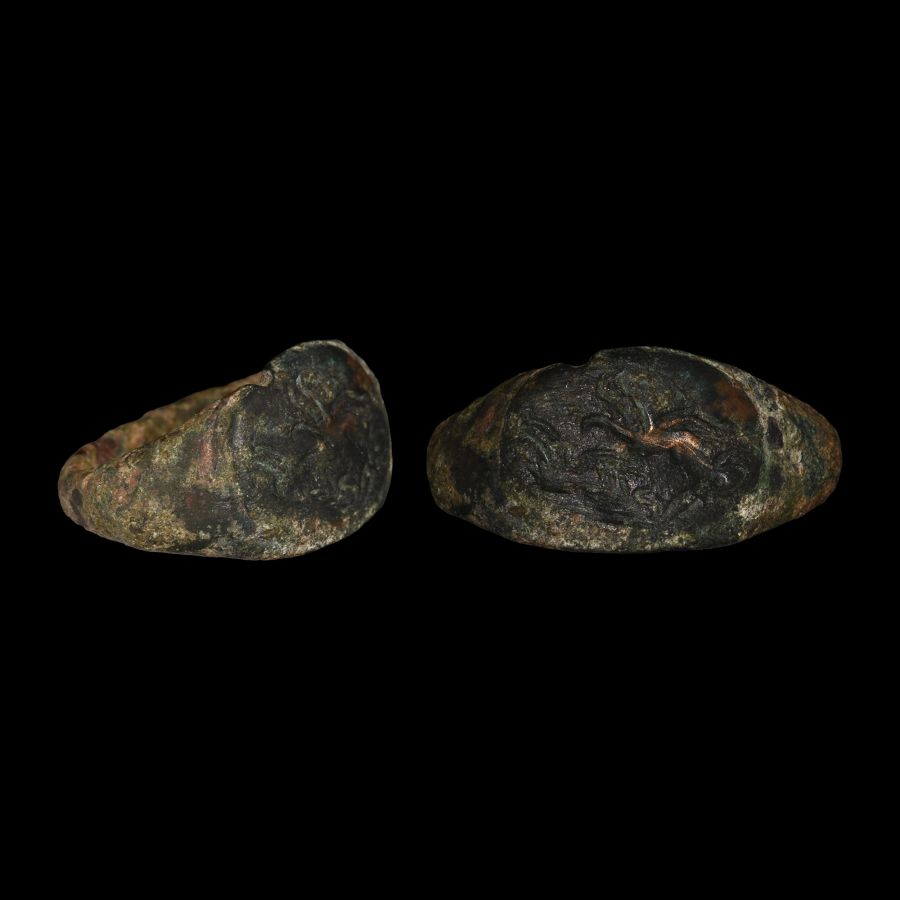
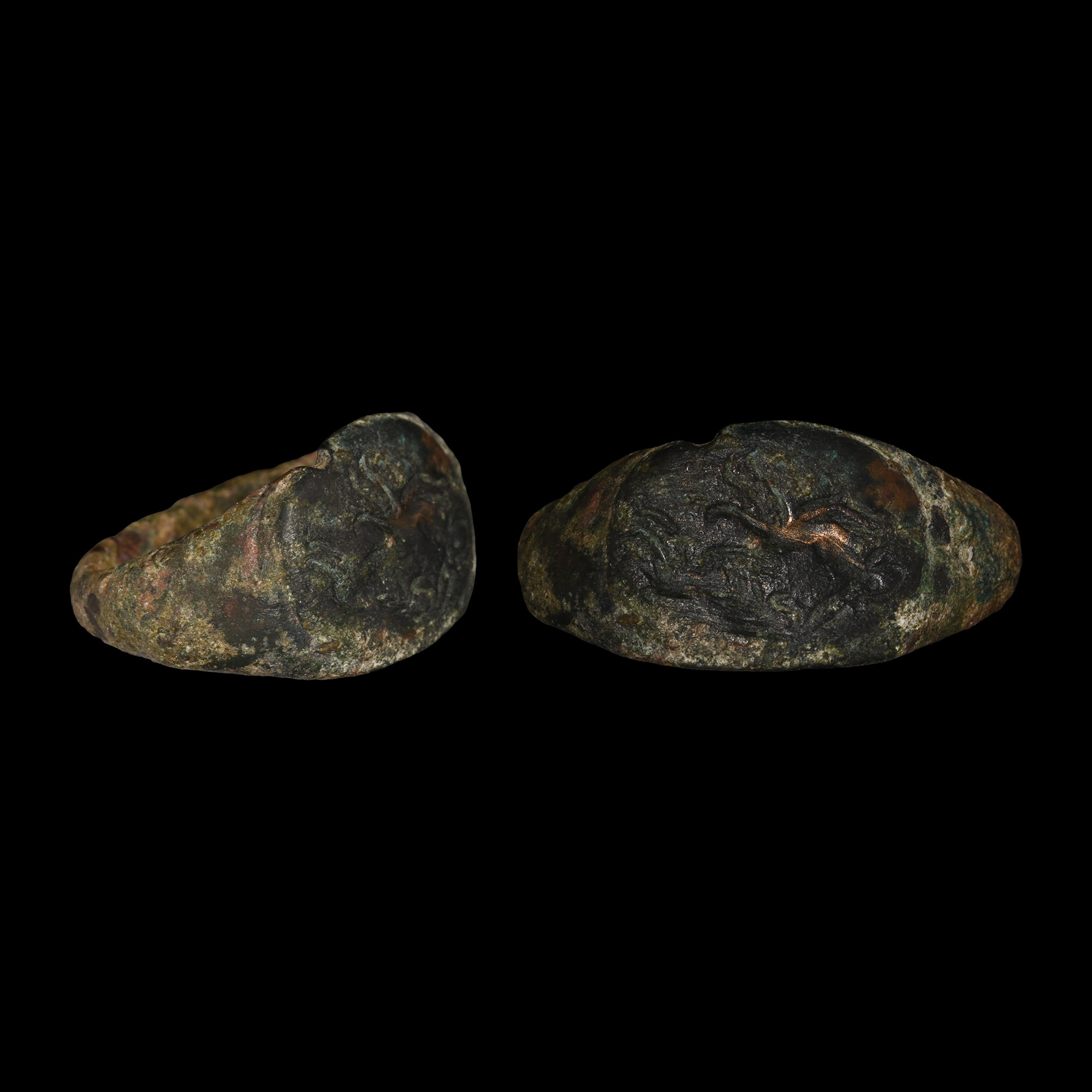
Graeco-Roman Bronze Ring with Dogs
1ST CENTURY B.C.-1ST CENTURY A.D.
1 in. (7.92 grams, 27.25 mm overall, 19.49 x 16.83 mm internal diameter (approximate size British N, USA 6 1/2, Europe 13.72, Japan 13)).
Featuring a D-section hoop with expanding angled shoulders, an oval bezel with a dynamic scene of two racing hounds. [No Reserve]
ProvenanceFrom the private collection of a European gentleman (1942-2024), formed since the 1970s.
CONDITIONTimeLine Auctions follows a vetting process to ensure the authenticity and legality of all items, reinforcing our commitment to integrity and responsible trading. Each antiquity, antique, and coin lot undergoes thorough examination by a vetting committee of at least ten external specialists, professional trade association members, scientists, and archaeologists: Our Vetting Process
AUCTIONS:
TimeLine is a leading auction house specialising in antiquities, ancient art, collectables, natural history, coins, medals, and books. Our auctions offer museums, collectors, historians, and enthusiasts the opportunity to acquire unique and historically significant pieces.
-
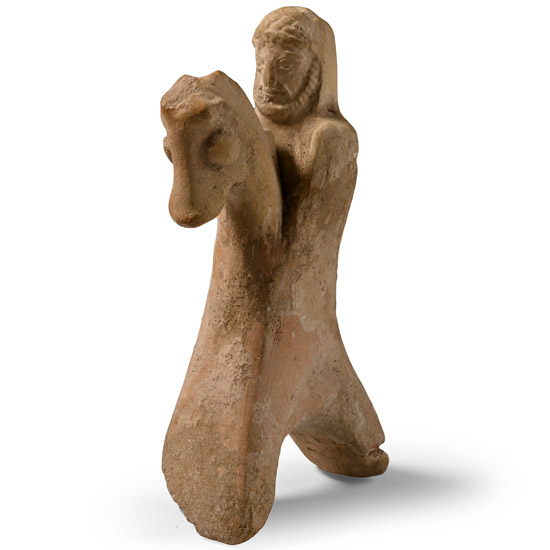
Parthian Terracotta Horse and Warrior Rider
2nd century B.C.-1st century A.D.Sold for (Inc. bp): £143
Formed as a horse with a tall neck and splayed legs, a bearded rider figure to the rear; a marriage. 95 grams, 10.7 cm
From the collection of a Cambridge, UK, gentleman, by direct descent from his father, who acquired the items in London in circa 1960. -
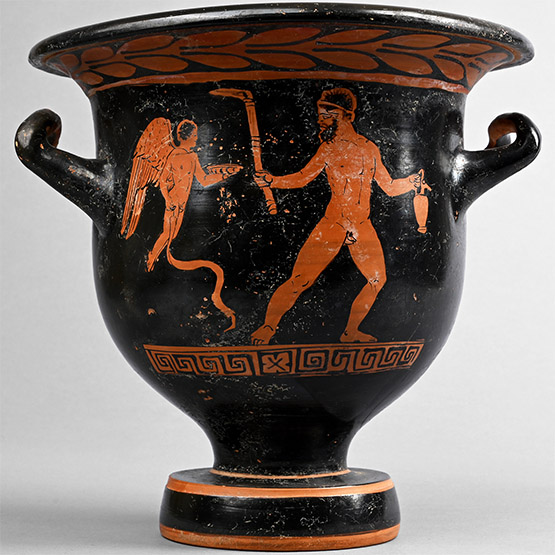
Greek Red-Figure Bell Krater with Satyr and Eros
Apulia, circa 450-400 B.C.Sold for (Inc. bp): £3,120
With laurel-leaf wreath beneath the flared rim, band of meander ornament as a baseline; Side A: striding satyr with torch and oinochoe followed by Eros holding a scroll behind; Side B: woman wearing a himation in active pose with sphere advancing towards a tendril. 814 grams, 20 cm
Acquired on the art market between the late 1990s and mid-2000s. Estate of the late Barry Paul Buxton (1944-2024), Oakham, Rutland. Acquired on the UK art market, 2025. Accompanied by an academic report by Dr Raffaele D'Amato. This lot has been checked against the Interpol Database of stolen works of art and is accompanied by search certificate no.13070-249284.
Often, the iconography of an 'elevated' mythological subject was applied to members of Dionysos' retinue. Here we have three typical examples of them: a satyr, an Eros, and a woman, all three behaving according to Bacchic ecstasies. -
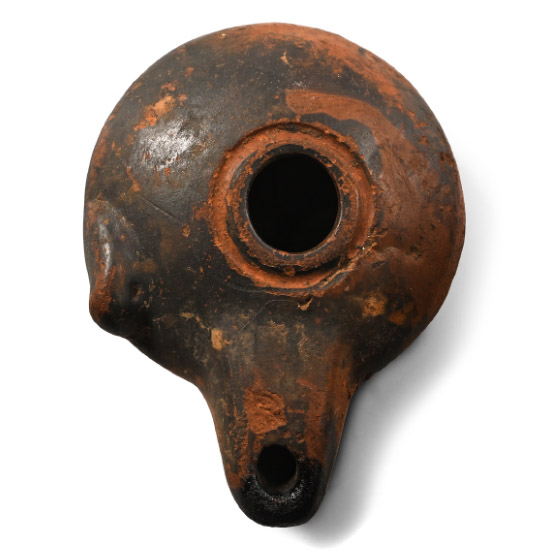
Greek Terracotta Oil Lamp
Hellenistic, circa 3rd-2nd century B.C.Sold for (Inc. bp): £59
Rounded body with large central filler hole and pointed lug on the shoulder, the rim with a low-relief ovolo decoration, elongated nozzle with scooped nozzle; low basal ring. 103 grams, 99 mm
From a UK collection formed in the 1980s. Property of an Essex, UK, gentleman.
