Loading, please wait...
LOT 0586
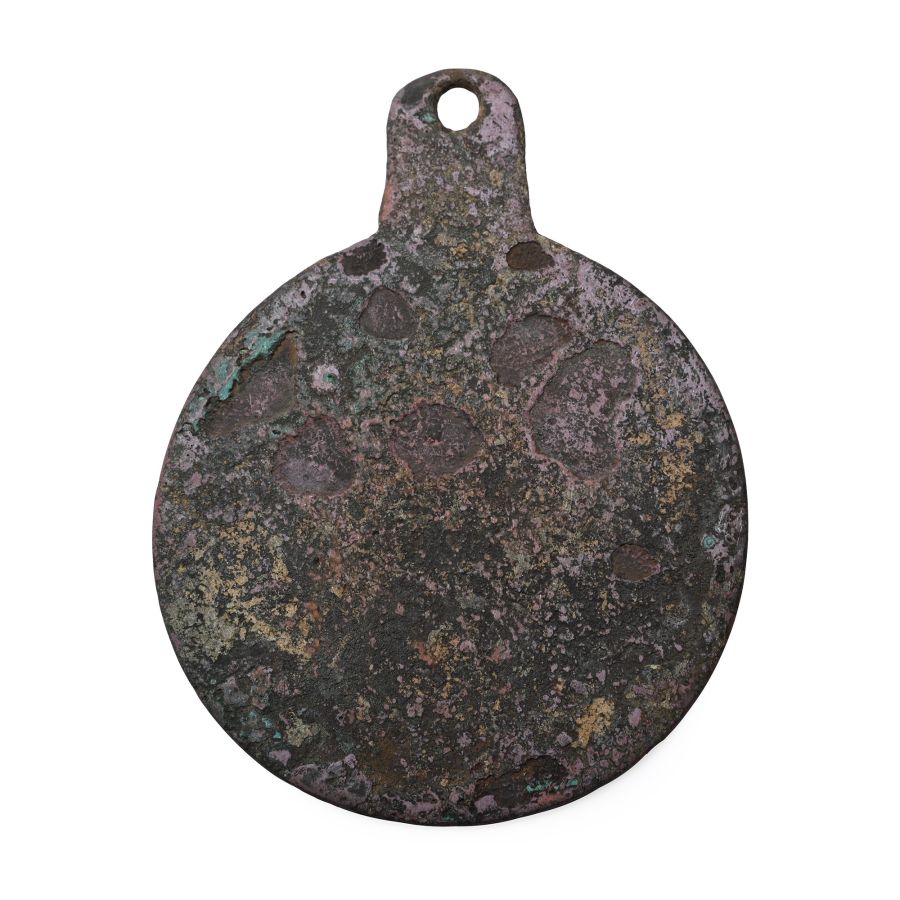
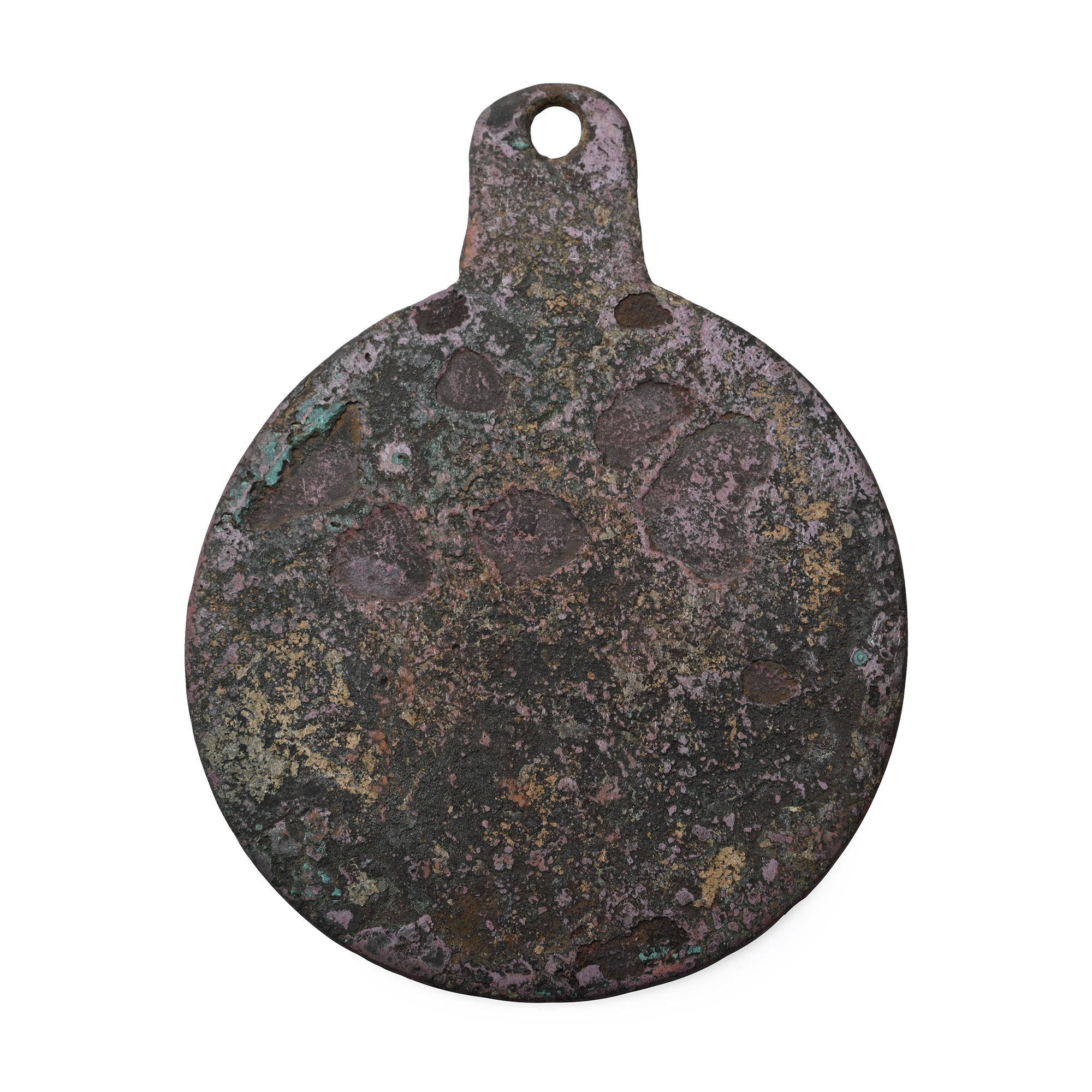
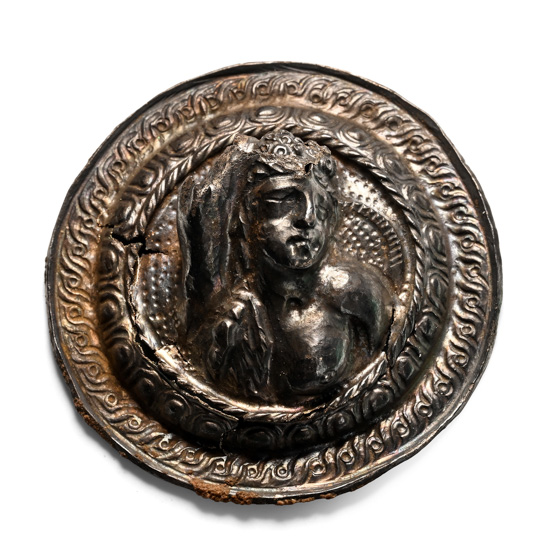
Graeco-Roman Bronze Mirror
1ST CENTURY B.C.-1ST CENTURY A.D.
5 1/8 in. (150 grams, 13 cm).
Discoid flat-section body with a tongue-shaped, pierced handle. [No Reserve]
ProvenanceLondon, UK, art market, 1980s.
Private collection, London, UK.
TimeLine Auctions follows a vetting process to ensure the authenticity and legality of all items, reinforcing our commitment to integrity and responsible trading. Each antiquity, antique, and coin lot undergoes thorough examination by a vetting committee of at least ten external specialists, professional trade association members, scientists, and archaeologists: Our Vetting Process
AUCTIONS:
TimeLine is a leading auction house specialising in antiquities, ancient art, collectables, natural history, coins, medals, and books. Our auctions offer museums, collectors, historians, and enthusiasts the opportunity to acquire unique and historically significant pieces.
-
Graeco-Roman Sard Gemstone of the God Apollo in Gold Mount
2nd-1st century B.C.Sold for (Inc. bp): £13,000
With intaglio profile bust of youthful male with curly hair, wearing a headdress; set in a later Roman period gold mount with roped border and attachment loop to the top; supplied with a museum-quality impression. 1.66 grams, 24 mm
Private English collection, formed between the late 1970s and early 1990s. Private collection, London, UK. -
Greek Fragmentary Terracotta Red-Figure Hydria
Paestan or Apulian, 4th century B.C.Estimate: £4,500 - 6,500 (‡+bp*)
Opening Bid: £2,500
Comprising the upper two thirds of the vessel; on the shoulder a facing woman's head with diadem and half-veiled face; rosettes to left and right, with suspended ribbons and dots; vine motif around the body with floral ornaments; to the reverse, palmettes and vines; band of laurel with rosettes around the neck and wavy band at the mouth; reassembled from various fragments with three large areas of restoration, only the beginnings of the handles preserved; mounted on a custom-made stand. 1.95 kg, 31 cm (2.6 kg total, 47.5 cm high including stand)
Ex Herbert A. Cahn, Basel, 1990s. This lot has been checked against the Interpol Database of stolen works of art and is accompanied by search certificate number no.12475-228738.
The face-veiling gesture is a known marriage rite; the diadem may suggest that she is intended to represent Persephone. Alternatively, the veiled woman might be a dancer as many terracotta figurines of dancing women are shown with face-coverings. However, the floral ornaments could indicate a funeral or sepulchral context. -
Bronze Military Standard Finial of an Ibex
Transcaucasia, 13th-6th century B.C.Estimate: £8,000 - 10,000 (+bp*)
Opening Bid: £4,000
Wth a rounded body and prominent raised neck, a tubular muzzle with stylised eyes and ears and a small, slightly open mouth; a ring with a chain and a large carnelian sphere beneath the chin; a wide incised groove above the front legs, perhaps intended to represent muscles; a long slit beneath the abdomen; standing on a rectangular platform with a pin for insertion to a wooden shaft; accompanied by a custom-made display stand. 643 grams total, ibex: 15 cm high
Acquired in Vienna, Austria, in the 1990s. Collection of N.M., former Israeli Ambassador to Austria (1998–2000). Private collection, London. Accompanied by an academic report by Dr Raffaele D’Amato. This lot has been checked against the Interpol Database of stolen works of art and is accompanied by search certificate number no.13039-247908.
In Scythian art, the ibex was often depicted in dynamic ‘animal style’ symbolising life, strength, and perhaps cosmic struggles, potentially linked to seasonal cycles or fertility, showing its sacred status as a totem animal alongside mouflons. The realistically depicted posture of the animal testifies to the ancient masters' keenness of observation and of their skill in rendering the character of the animal in metal. The posture recalls more archaic (7th-6th century B.C.) animal style art found in the Tagar finials.