
Loading, please wait...
LOT 0553
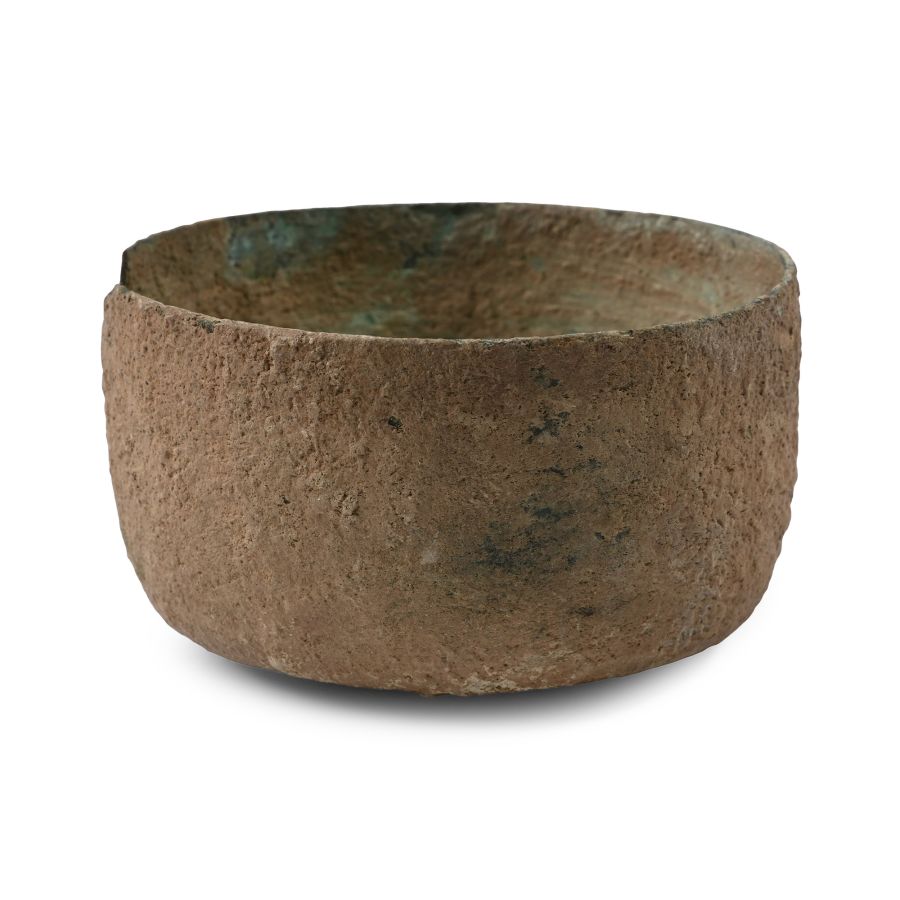
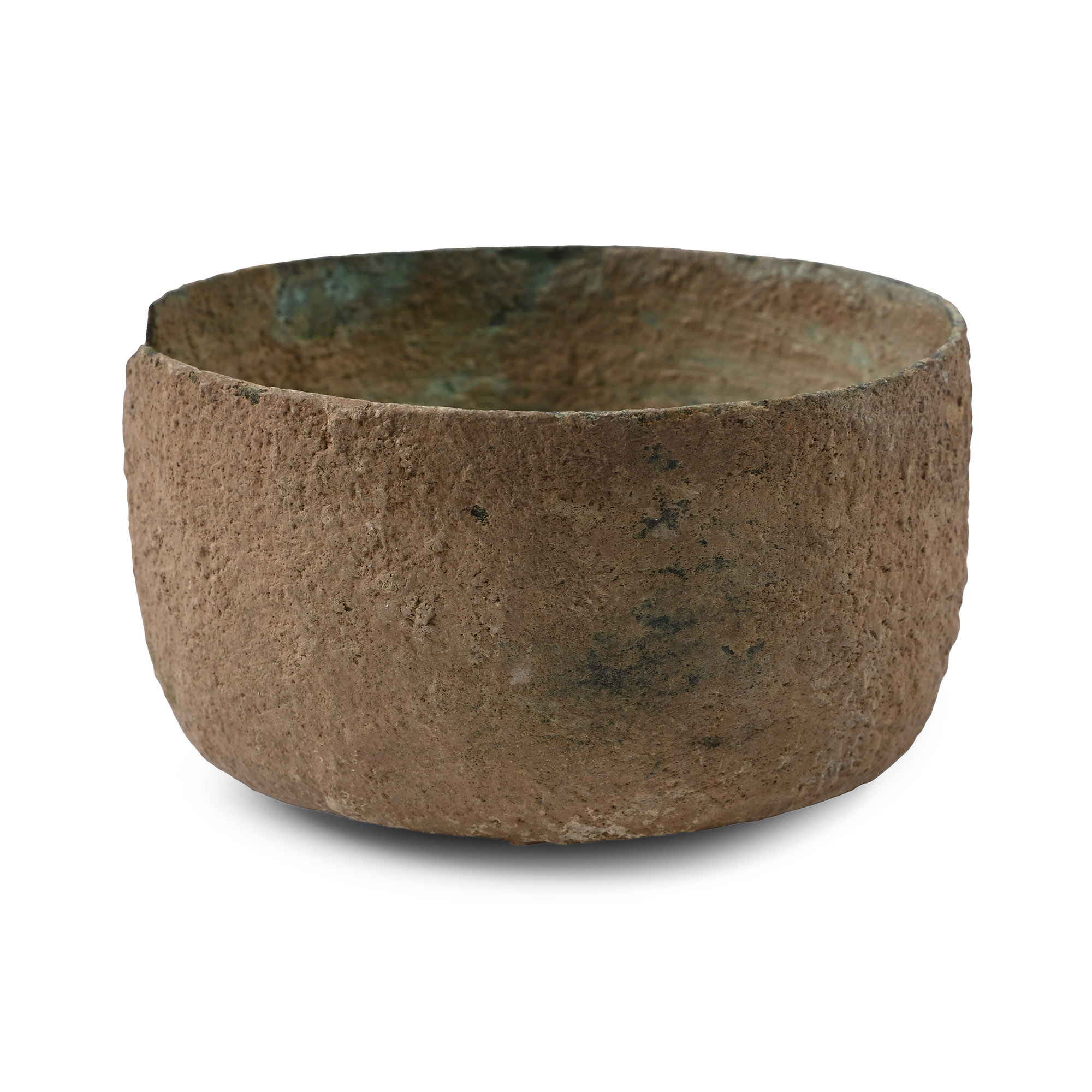
Graeco-Roman Bronze Cup
2ND CENTURY B.C.-1ST CENTURY A.D.
3 5/8 in. (143 grams, 93 mm).
Drum-shaped body with a slightly convex base. [No Reserve]
ProvenanceEx London, UK, collections, 1990s-2000s.
This lot is accompanied by an illustrated lot declaration signed by the Head of the Antiquities Department, Dr Raffaele D'Amato.
Cf. similar cup in Istenič, J., Roman Stories from the crossroads,Ljubljana, 2015, p.63.
FootnotesThe small cup could belong to the typology of drinking vessels called mastos or cymbè. This denomination seems to have been derived from the inhabitants of the island of Paphos, with reference to the simple spherical vessels. Pollux mentions these vessels together with other cups, the phiale and the kumbion.
CONDITIONTimeLine Auctions follows a vetting process to ensure the authenticity and legality of all items, reinforcing our commitment to integrity and responsible trading. Each antiquity, antique, and coin lot undergoes thorough examination by a vetting committee of at least ten external specialists, professional trade association members, scientists, and archaeologists: Our Vetting Process
AUCTIONS:
TimeLine is a leading auction house specialising in antiquities, ancient art, collectables, natural history, coins, medals, and books. Our auctions offer museums, collectors, historians, and enthusiasts the opportunity to acquire unique and historically significant pieces.
-
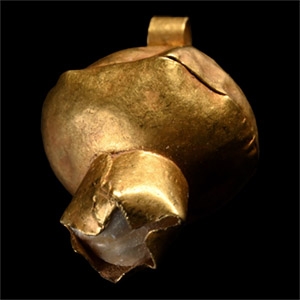
Greek Gold Pomegranate-Shaped Pendant
Circa 5th-3rd century B.C.Sold for (Inc. bp): £156
Formed of sheet-gold with applied loop, a small pearl enclosed within the calyx. 0.97 grams, 16 mm
From the collection of a late Japanese collector, 1970s. This lot is accompanied by an illustrated lot declaration signed by the Head of the Antiquities Department, Dr Raffaele D'Amato.
Fruit were generally considered to be a symbol of sensuality, temptation and fertility; the giving and accepting of fruit may be regarded as a symbolic sexual act, or at least a prelude to marriage. It follows naturally that the pomegranate, with its innumerable fleshy seeds symbolising life and fecundity, was an attribute of Aphrodite. -
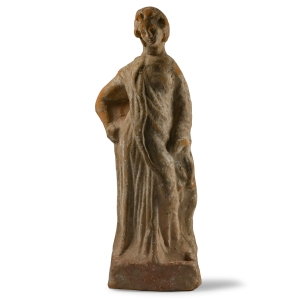
Hellenistic Terracotta Statuette of a Wreathed Young Woman
Late 4th-3rd century B.C.Sold for (Inc. bp): £286
Standing on a rectangular base, hair divided in regular stripes with voluminous locks, head slightly bowed, the bare arm resting on her right hip; the left leg is visible under the pleated undergarment chiton and slanted himation. 257 grams, 17.5 cm
Traces of white engobe and polychromy in the folds of the robe and on the base. The added chignon lost, otherwise intact.
Ex Belgian art market, 2020. This lot is accompanied by an illustrated lot declaration signed by the Head of the Antiquities Department, Dr Raffaele D’Amato. This lot is accompanied by an illustrated lot declaration signed by the Head of the Antiquities Department, Dr Raffaele D'Amato.
The statuette finds comparisons among examples that can be dated between the 4th century and the middle of the 3rd century B.C. It shows some traces of the original polychromy, characterised by strongly contrasting hues, keeping in with the local style. -
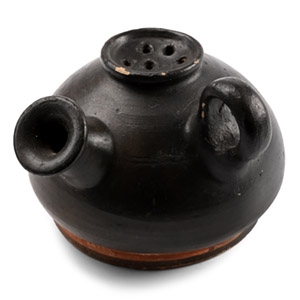
Greek Black-Glazed Guttos with Strainer
South Italic, circa 4th century B.C.Sold for (Inc. bp): £169
Discoid in plan with trumpet-shaped spout and one loop handle; strainer to centre. 130 grams, 10 cm
From the private collection of a Canadian gentleman living in Essex, UK, formed since the 1920s-circa 1990. Property of an Essex lady until the late 1990s; thence by descent. From the private collection of an Essex gentleman since the late 1990s. This lot is accompanied by an illustrated lot declaration signed by the Head of the Antiquities Department, Dr Raffaele D'Amato.
