
Loading, please wait...
LOT 0097
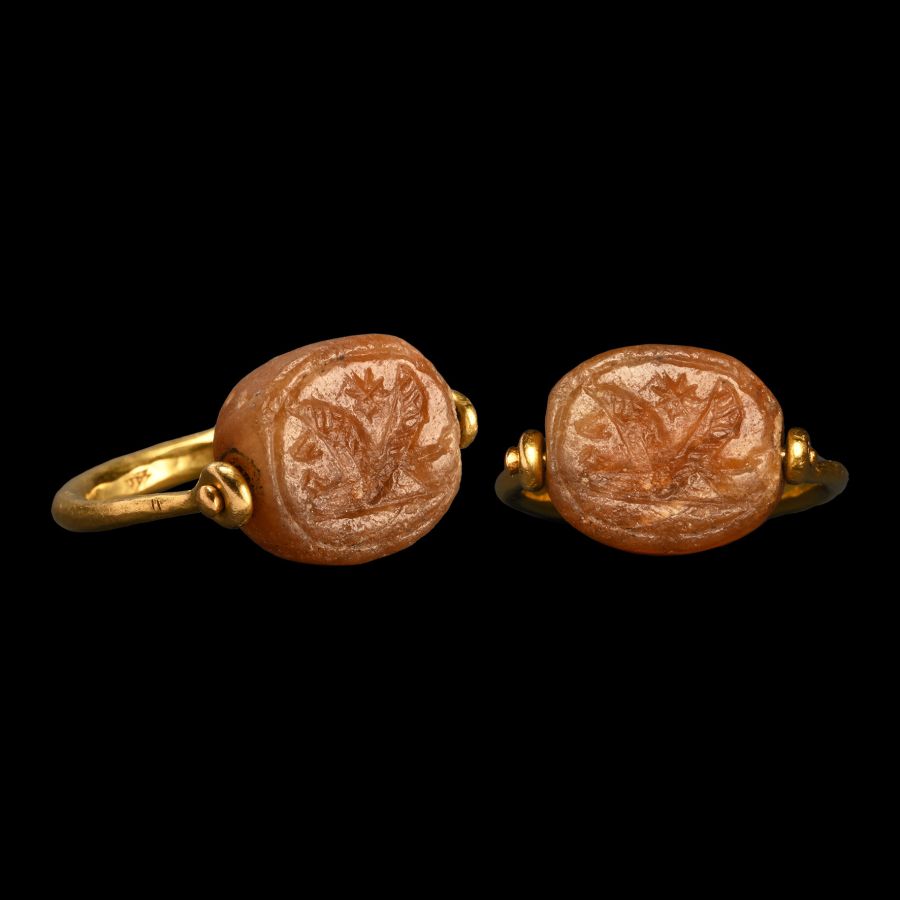
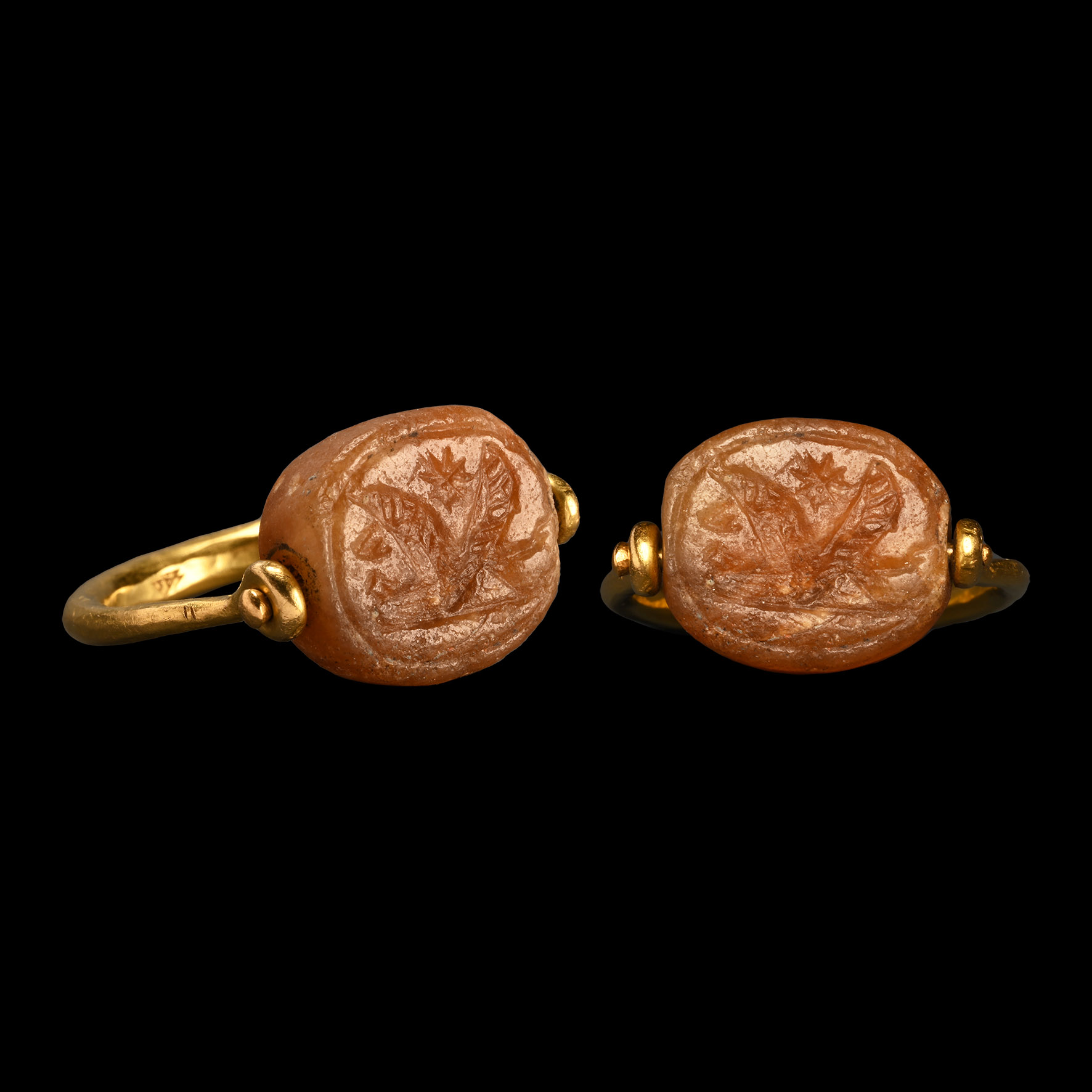
Graeco-Phoenician Stone Scaraboid with Winged Beast in Gold Swivel Ring
CIRCA 7TH-5TH CENTURY B.C.
1 1/8 in. (7.68 grams, 30.50 mm overall, 20.15 mm internal diameter (approximate size British T 1/2, USA 9 3/4, Europe 21.89, Japan 21)).
The scaraboid engraved to one face with a winged creature facing left, possibly a gryphon, a star in the field above; set in a later gold ring with round cross-section and stamped maker's mark in a triangular cartouche; articulate swivel. [No Reserve]
ProvenanceCollected since the 1970s.
Ex Everitt collection, acquired by descent 2017.
TimeLine Auctions follows a vetting process to ensure the authenticity and legality of all items, reinforcing our commitment to integrity and responsible trading. Each antiquity, antique, and coin lot undergoes thorough examination by a vetting committee of at least ten external specialists, professional trade association members, scientists, and archaeologists: Our Vetting Process
AUCTIONS:
TimeLine is a leading auction house specialising in antiquities, ancient art, collectables, natural history, coins, medals, and books. Our auctions offer museums, collectors, historians, and enthusiasts the opportunity to acquire unique and historically significant pieces.
LOT 0097
Graeco-Phoenician Stone Scaraboid with Winged Beast in Gold Swivel Ring
Sold for (Inc. bp): £546
-
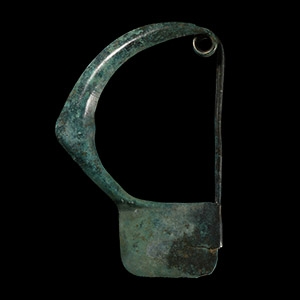
Greek Geometric Period Bow Brooch
8th-7th century B.C.Sold for (Inc. bp): £169
Keeled bow with central bulb, integral pin and large, square catch plate. 55 grams, 95 mm
From the family collection of a Surrey gentleman since before 1960.
The function of this type of fibula was utilitarian and decorative: they were used for woollen clothing (Herodotus V, 87) and they have been found in houses, tombs and as votive offerings in sanctuaries. This typology was introduced in South Italy by the Greeks, and was widespread in the Magna Graecia. Like all female fibulae, it functioned as a clothing fastener, usually worn as a pair on each shoulder. -
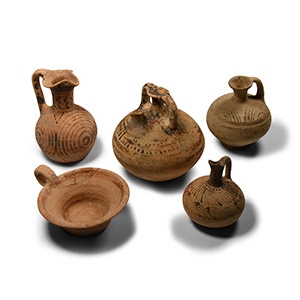
Mycenaean Terracotta Vessel Collection
12th-11th century B.C.Sold for (Inc. bp): £1,820
Comprising: a stirrup jar; trefoil jug; a jar; juglet and handled dish or cup; all decoratively painted with geometric designs; some repairs. 693 grams total, 8.3-12.6 cm
with Sotheby's, 13 December 1990, lot 217. -
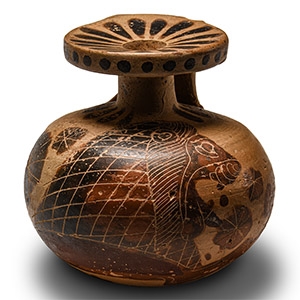
Corinthian Black-Figure Aryballos with a Lion
Circa 600 B.C.Sold for (Inc. bp): £3,900
The squat oil flask with slender neck and broad everted rim, painted with rosette petals around the mouth and base, spots encircling the rim, horizontal stipes to the strap handle, vegetal motifs and the forequarters of a roaring lion to one face of the body. 41.7 grams, 55 mm
Acquired from Dr. Jean Lauffenburger, circa 1980. Private collection, Europe. This lot has been checked against the Interpol Database of stolen works of art and is accompanied by search certificate number no.11850-206480.
