
Loading, please wait...
LOT 0548
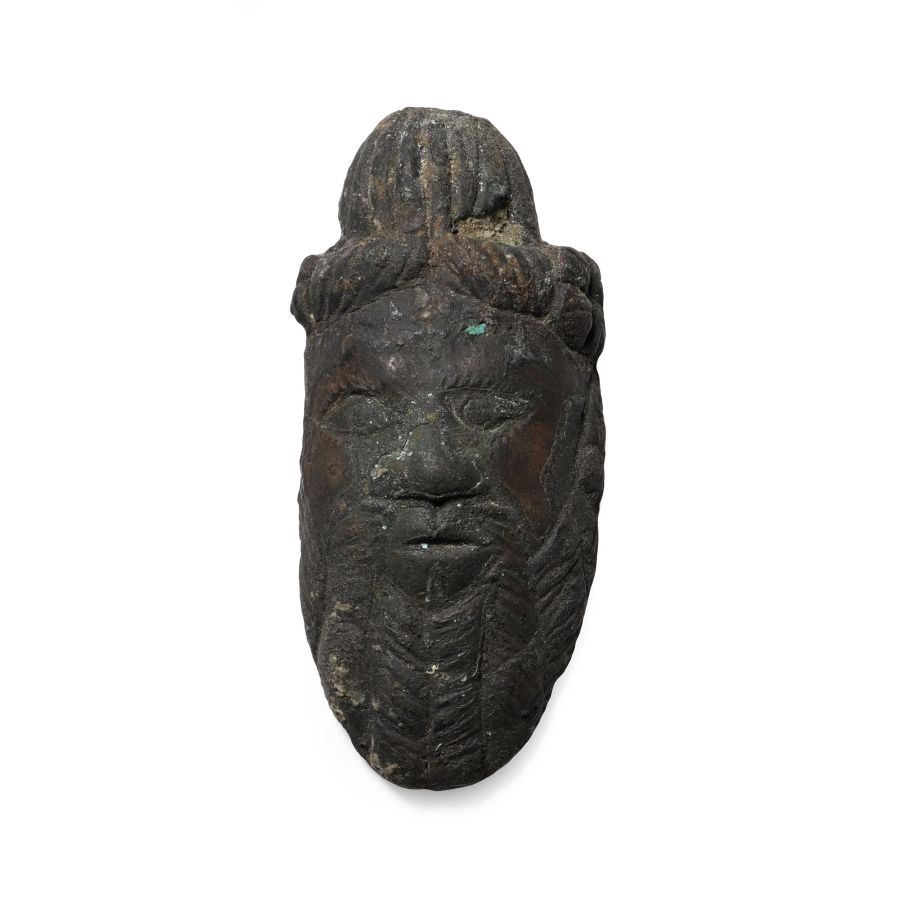
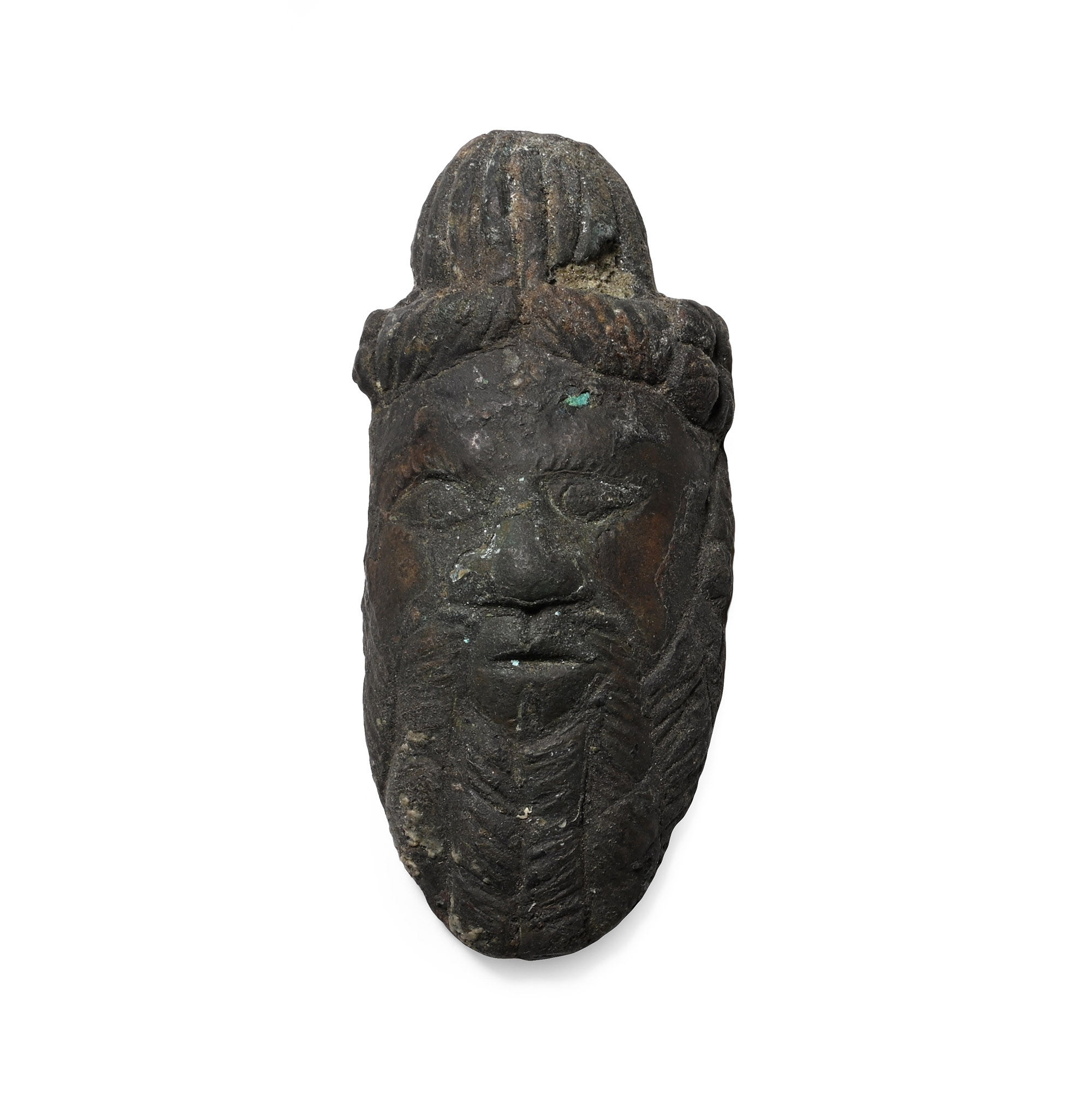
Graeco-Phoenician Bronze Mask
CIRCA 6TH CENTURY B.C.
2 7/8 in. (58 grams, 66 mm).
An oval convex mount depicting a mature man with a carefully arranged full beard, bushy eyebrows and a wide nose, with two rosettes on the brow. [No Reserve]
ProvenanceFrom the private collection of a European gentleman (1942-2024), formed since the 1970s.
CONDITIONTimeLine Auctions follows a vetting process to ensure the authenticity and legality of all items, reinforcing our commitment to integrity and responsible trading. Each antiquity, antique, and coin lot undergoes thorough examination by a vetting committee of at least ten external specialists, professional trade association members, scientists, and archaeologists: Our Vetting Process
AUCTIONS:
TimeLine is a leading auction house specialising in antiquities, ancient art, collectables, natural history, coins, medals, and books. Our auctions offer museums, collectors, historians, and enthusiasts the opportunity to acquire unique and historically significant pieces.
-
.jpg)
Greek Solid Gold Earring Pair
4th-2nd century B.C.Estimate: £3,000 - 4,000 (‡+bp*)
Opening Bid: £1,500
Each a thick braided hoop with a collar of twisted filigree and a lion's mask finial. 18.43 grams total, 27 mm each
Private London collection, 1980s. Private collection, acquired on the British art market in 1993. This lot has been checked against the Interpol Database of stolen works of art and is accompanied by search certificate number no.13185-249263.
The earrings belong to the hoop-type earrings, in which animal and human heads form the terminal as small miniature sculptures modelled in the round. The heads were attached to collars made from a single piece of gold. The group is characterised by lion heads. -
.jpg)
Eastern Greek Marble Figure of Aphrodite, the Goddess of Love and Beauty
1st century B.C.-1st century A.D.Sold for (Inc. bp): £5,200
Carved in the round figure of the goddess standing nude with one hand raised and the other on her pudendum, her hair gathered into a chignon with lateral bunches on the crown and with voids to allow for the suspension of small gold earrings; putto at her left knee; left hand partly absent; remounted on a socle base. 1.2 kg, 32.7 cm
Acquired in the 1992. Private collection, Switzerland, thence by descent. Private collection, since the late 1990s. This lot has been checked against the Interpol Database of stolen works of art and is accompanied by a search certificate number no.12860-241669.
Aphrodite, the Greek goddess of love and beauty, was one of the most widely worshipped deities in the ancient world, particularly across the eastern Greek regions of Asia Minor. In these areas, her image often blended traditional Greek ideals with local influences, giving rise to distinctive regional styles. Marble figures such as this would have served not only as works of art but also as expressions of devotion, reflecting both personal piety and broader cultural values surrounding beauty, fertility, and desire. The enduring popularity of Aphrodite’s image speaks to her central role in daily life, where she was invoked not just in matters of love, but also in marriage, prosperity, and well-being. -
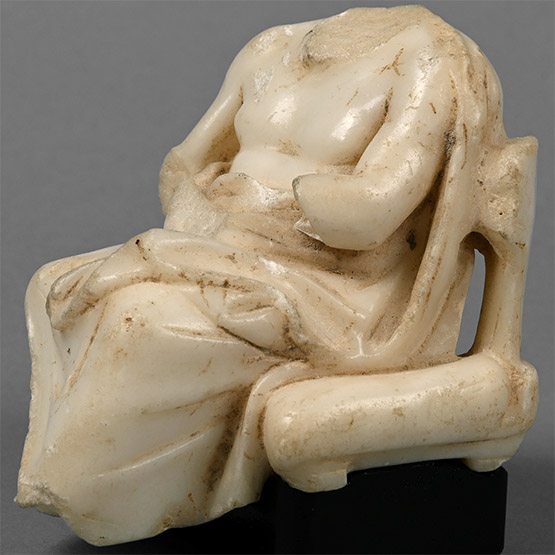
Greek Marble Figure of a Seated God or Philosopher
Hellenistic, 3rd-1st century B.C.Estimate: £15,000 - 20,000 (‡+bp*)
Opening Bid: £7,500
Carved in the round male figure in a seated pose wearing a loosely draped pallium on the shoulders and lower body, legs crossed at the knees; openwork frame to the chair with deep undercuts; mounted on a custom-made stand. 563 grams total, 86 mm high including stand
Formerly in a private collection, London. European private collection, acquired in 2002. Accompanied by a copy of an Art Loss Register certificate, 8 June 2004. This lot has been checked against the Interpol Database of stolen works of art and is accompanied by search certificate number no.13210-249309.
The statuette could represent Zeus or Chronos, based on similarities with two statues in the Vatican Museums and two statues in the Thebes Museum. The god is depicted seated, with his torso exposed, and his left hand, which normally holds the sceptre in statues of seated Zeus, is instead stretched out across his legs.
