
Loading, please wait...
LOT 0518
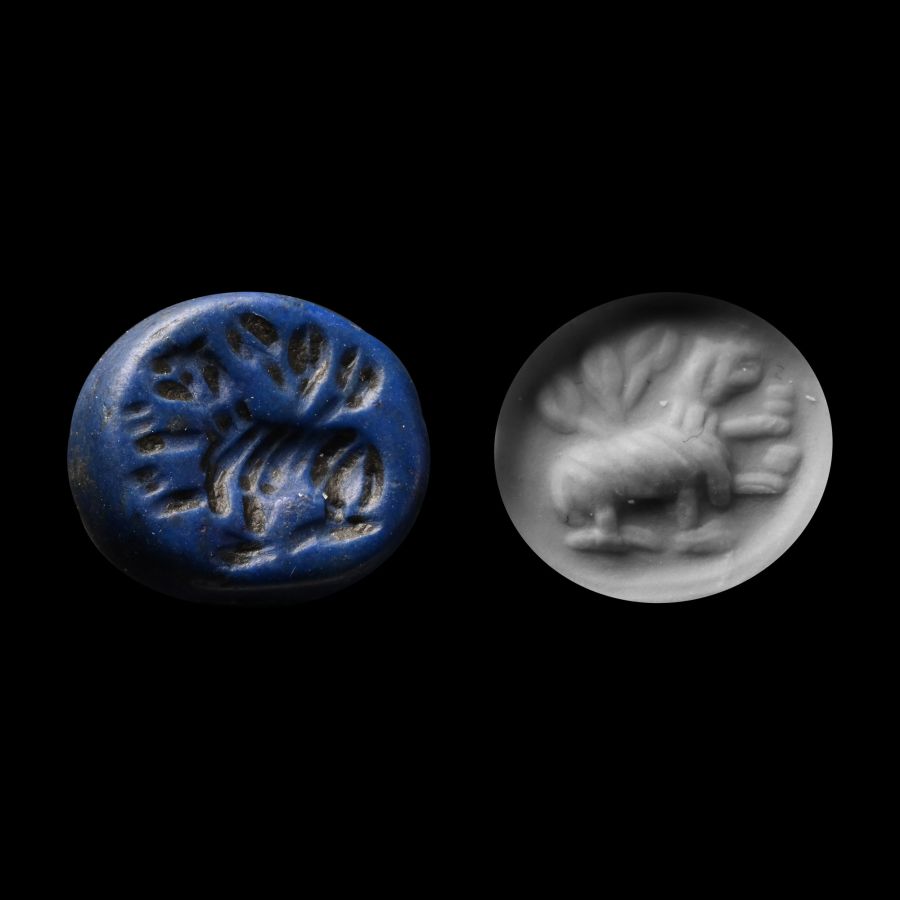
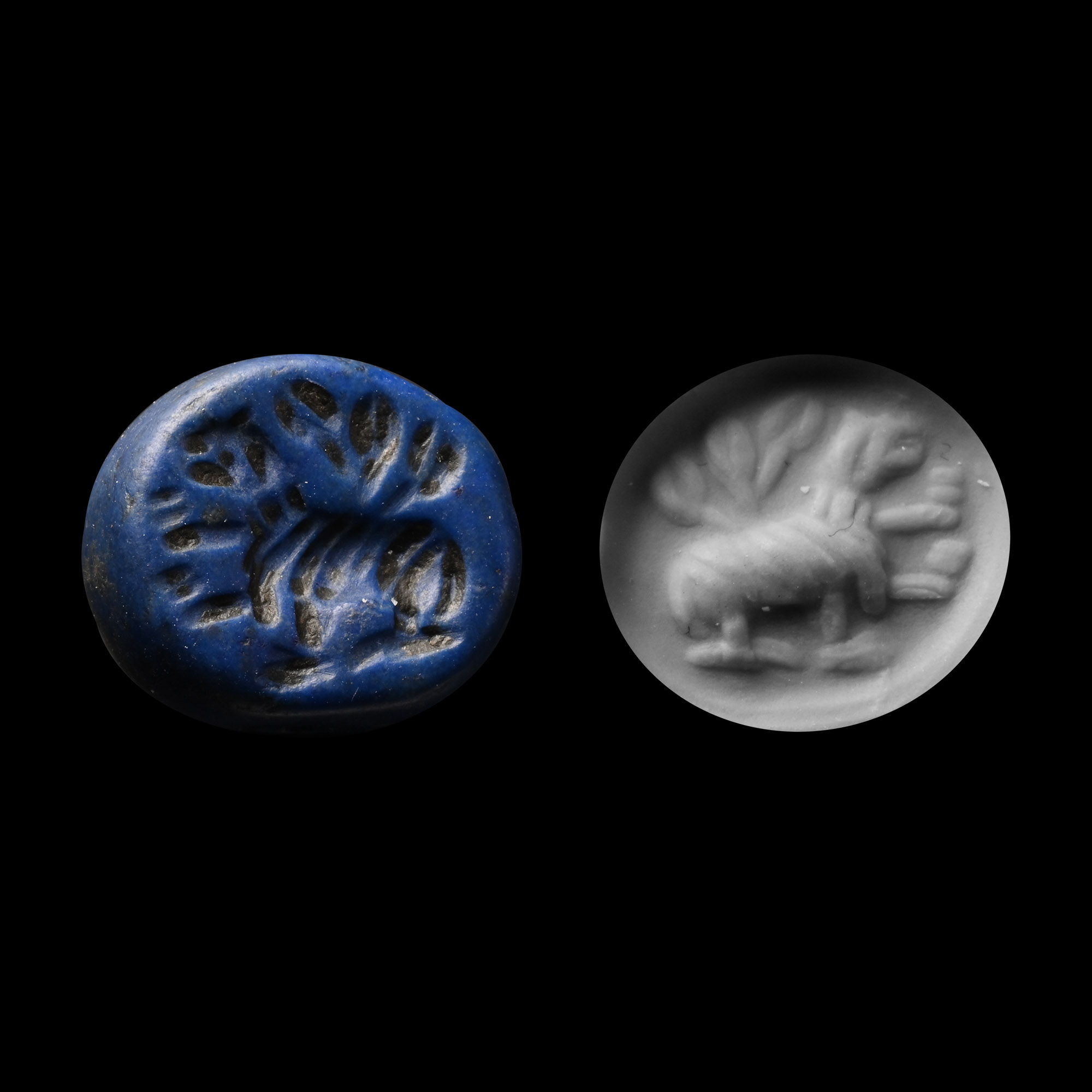
Graeco-Persian Lapis Lazuli Stamp Seal with Lion
5TH CENTURY B.C.
1/2 in. (1.9 grams, 12 mm).
Plano-convex with intaglio scene to underside, sheep in profile beside a tree; supplied with a museum-quality impression and old dealer's label with impression. [No Reserve]
ProvenanceFrom the private collection of P. Chapman, collected from the 1970s.
This lot is accompanied by an illustrated lot declaration signed by the Head of the Antiquities Department, Dr Raffaele D’Amato.
TimeLine Auctions follows a vetting process to ensure the authenticity and legality of all items, reinforcing our commitment to integrity and responsible trading. Each antiquity, antique, and coin lot undergoes thorough examination by a vetting committee of at least ten external specialists, professional trade association members, scientists, and archaeologists: Our Vetting Process
AUCTIONS:
TimeLine is a leading auction house specialising in antiquities, ancient art, collectables, natural history, coins, medals, and books. Our auctions offer museums, collectors, historians, and enthusiasts the opportunity to acquire unique and historically significant pieces.
-
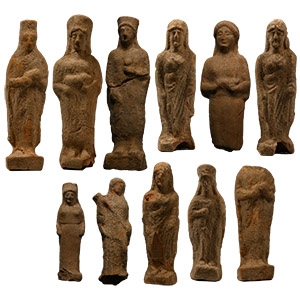
Greek Terracotta Female Figures
6th-5th century B.C.Sold for (Inc. bp): £1,690
Group of mould-made terracotta figurines comprising: three head protomes with polos or diadem; three standing figures; five seated figures; some with restoration, minor losses. 2.39 kg total, 13.5-20.8 cm
Ex M.M., 1960s. with Herbert A.Cahn, Basel. This lot is accompanied by an illustrated lot declaration signed by the Head of the Antiquities Department, Dr Raffaele D’Amato. -
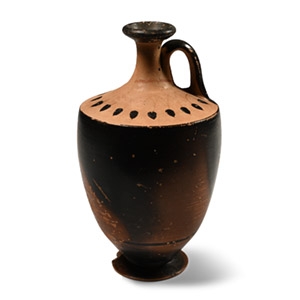
Greek Attic Black-Glazed Lekythos
5th-4th century B.C.Sold for (Inc. bp): £520
Ovoid body with black sidewall, deep shoulder with radiating lotus buds, trumpet-shaped mouth and strap handle; with old record card 'Black-Ground Lekythos. Attic. inverted lotus buds. C.5th-4th B.C. (similar to RC7928 Tarquinia) / 01. (14.12.82) Sotheby's H.13.5 Sh 7.4 B 4.3 cm.'. 134 grams, 13.3 cm
with Sotheby's, London, 14 December 1982, lot 389. Collection of the late Sir Clinton Charles Donald Cory (1937-2022), 5th Baronet of Coryton. Private collection, UK. Accompanied by an old handwritten collector's ticket, and copies of the relevant Sotheby's catalogue pages. This lot is accompanied by an illustrated lot declaration signed by the Head of the Antiquities Department, Dr Raffaele D’Amato.
Sir Clinton Charles Donald Cory was a lifelong connoisseur with a deep appreciation for objets d’art and antiquities, particularly Attic pottery and numismatics. He took great pleasure in meticulously cataloguing and archiving his collection. The selection of pottery, glass, and stone fragments will be presented across twenty-four lots, many of which boast provenance from renowned dealerships and auction houses, including Charles Ede, Sotheby’s, and Bonhams. -
.jpg)
Hellenistic Silver Child's Bracelet
1st century B.C.-1st century A.D.Sold for (Inc. bp): £286
Decorated on the central round bezel with the head of a youth surrounded by a laurel wreath; external face decorated with pattern of alternating lozenges, lines and S-shaped motifs; twisted closure at the back. 4.80 grams, 8 mm
Ex property of a London lady; from her family collection formed in the 1970s. Property of a Bedfordshire, UK, private collector. Accompanied by an illustrated collector's identification tag. This lot is accompanied by an illustrated lot declaration signed by the Head of the Antiquities Department, Dr Raffaele D’Amato.
