
Loading, please wait...
LOT 0097
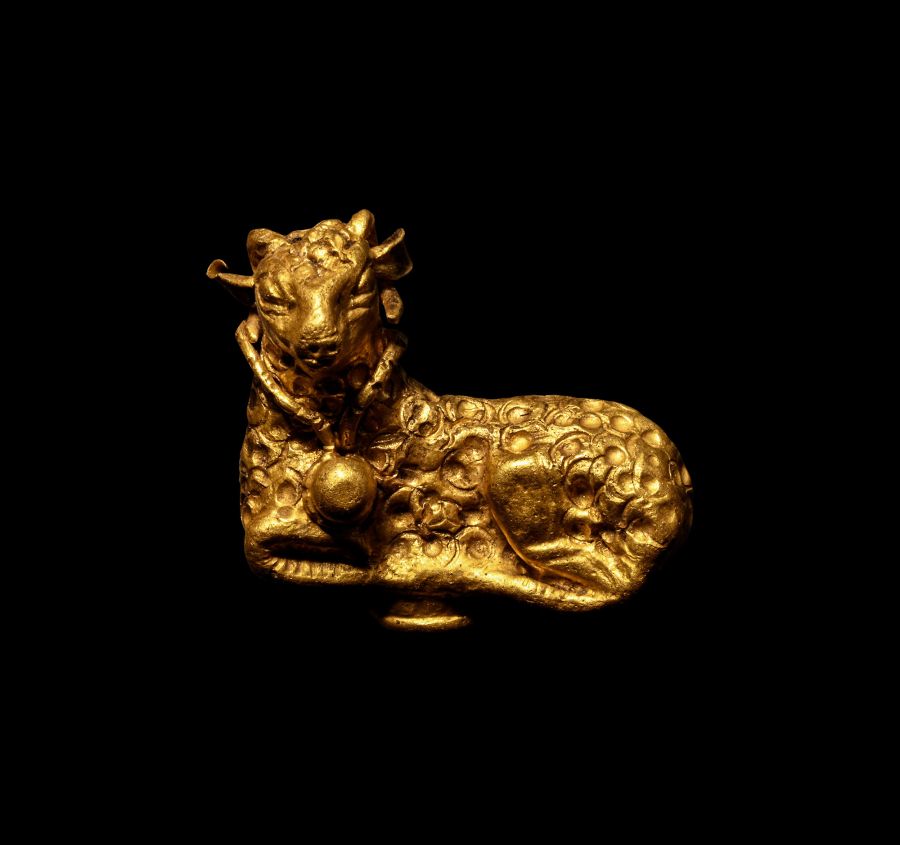
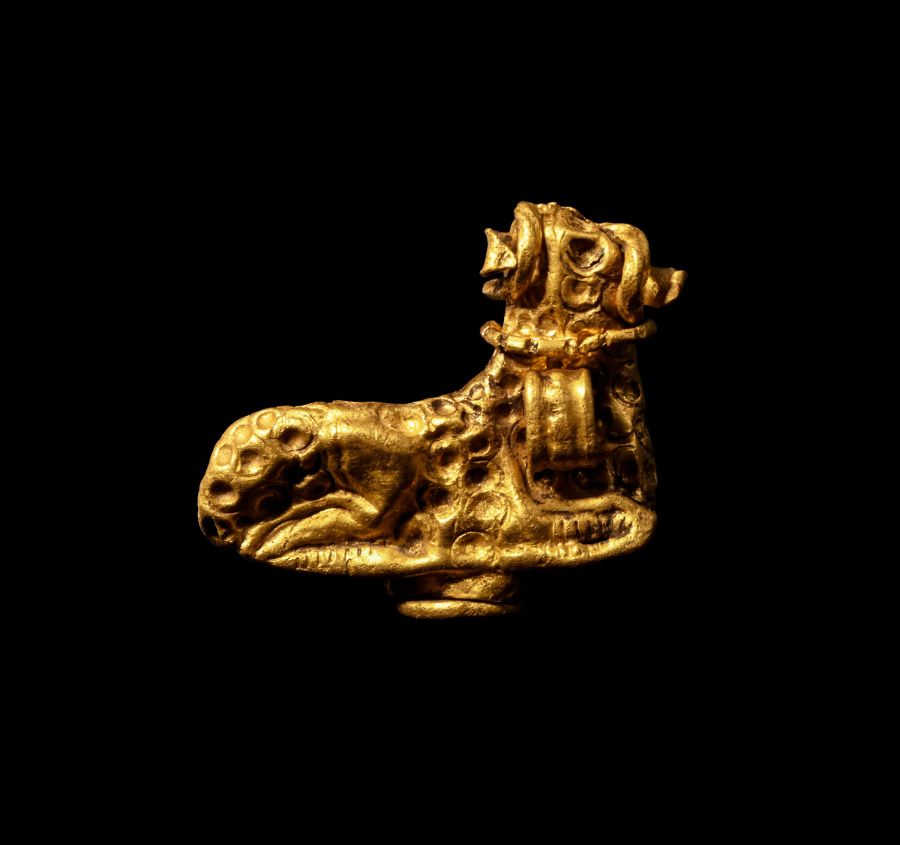
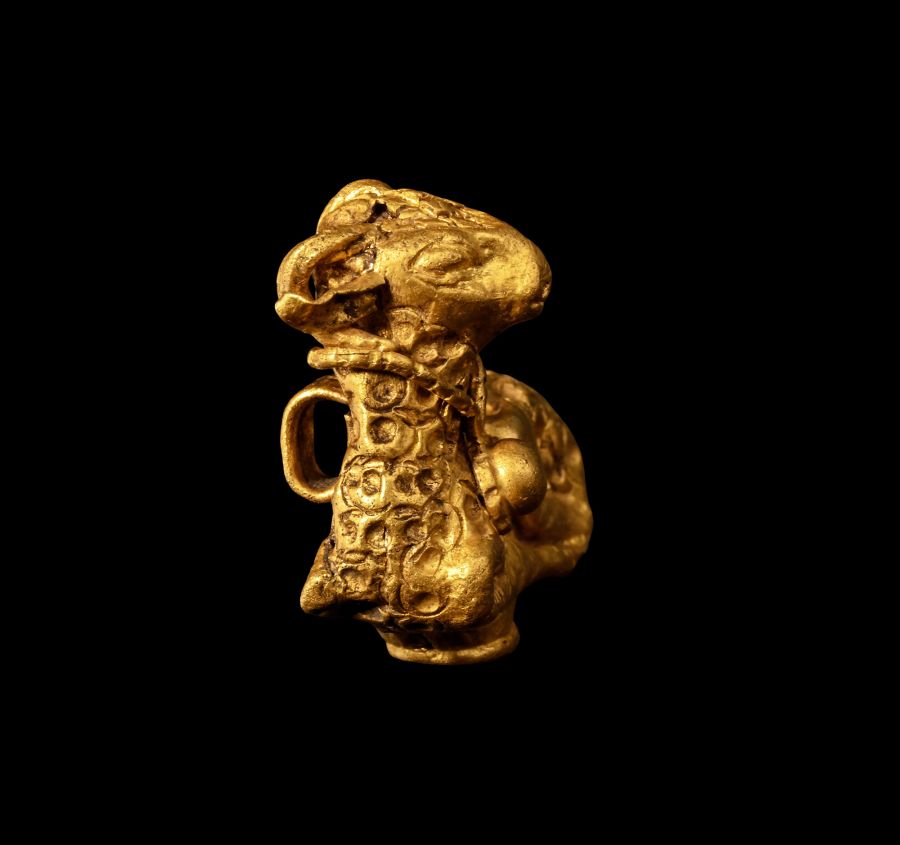
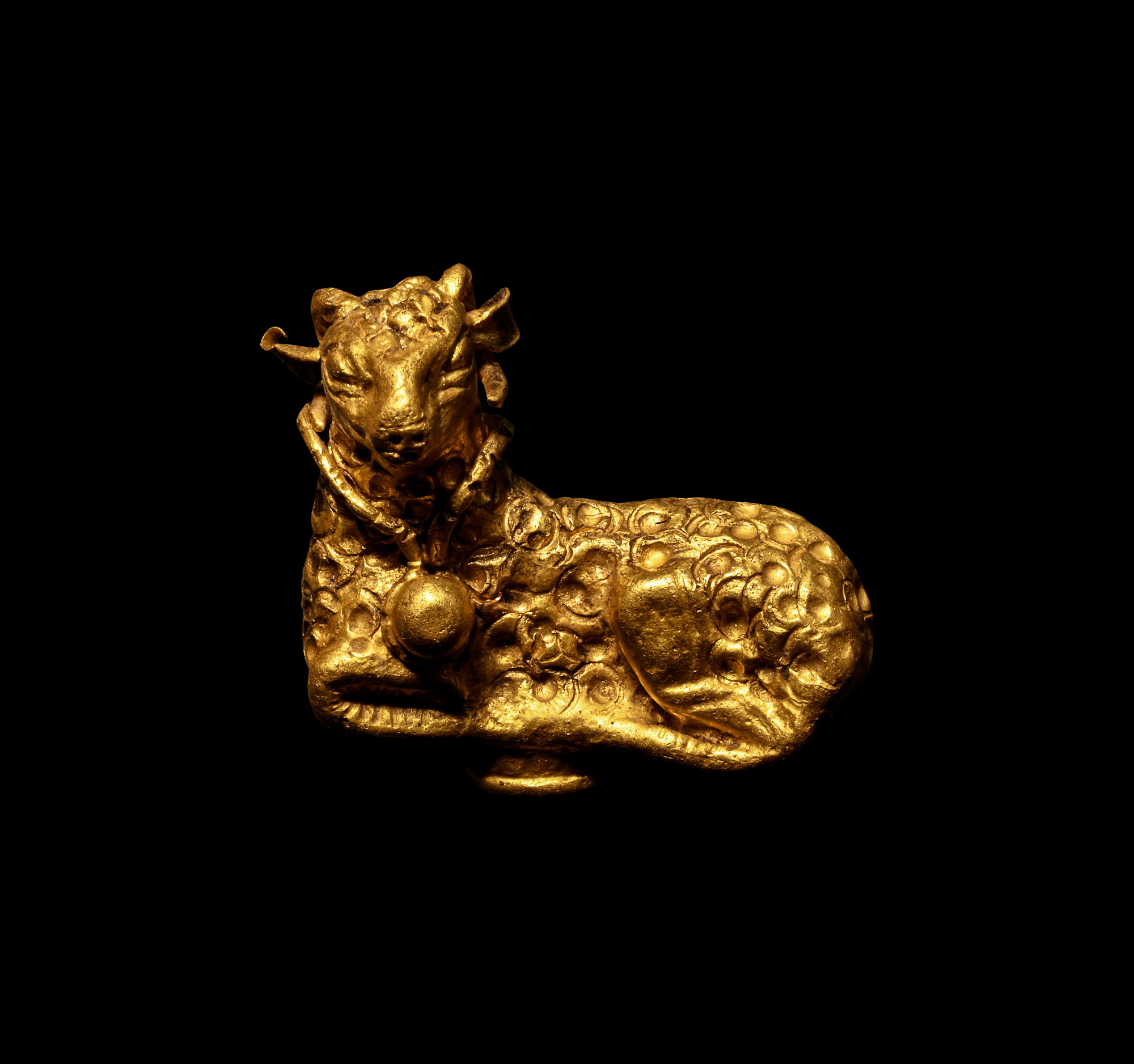
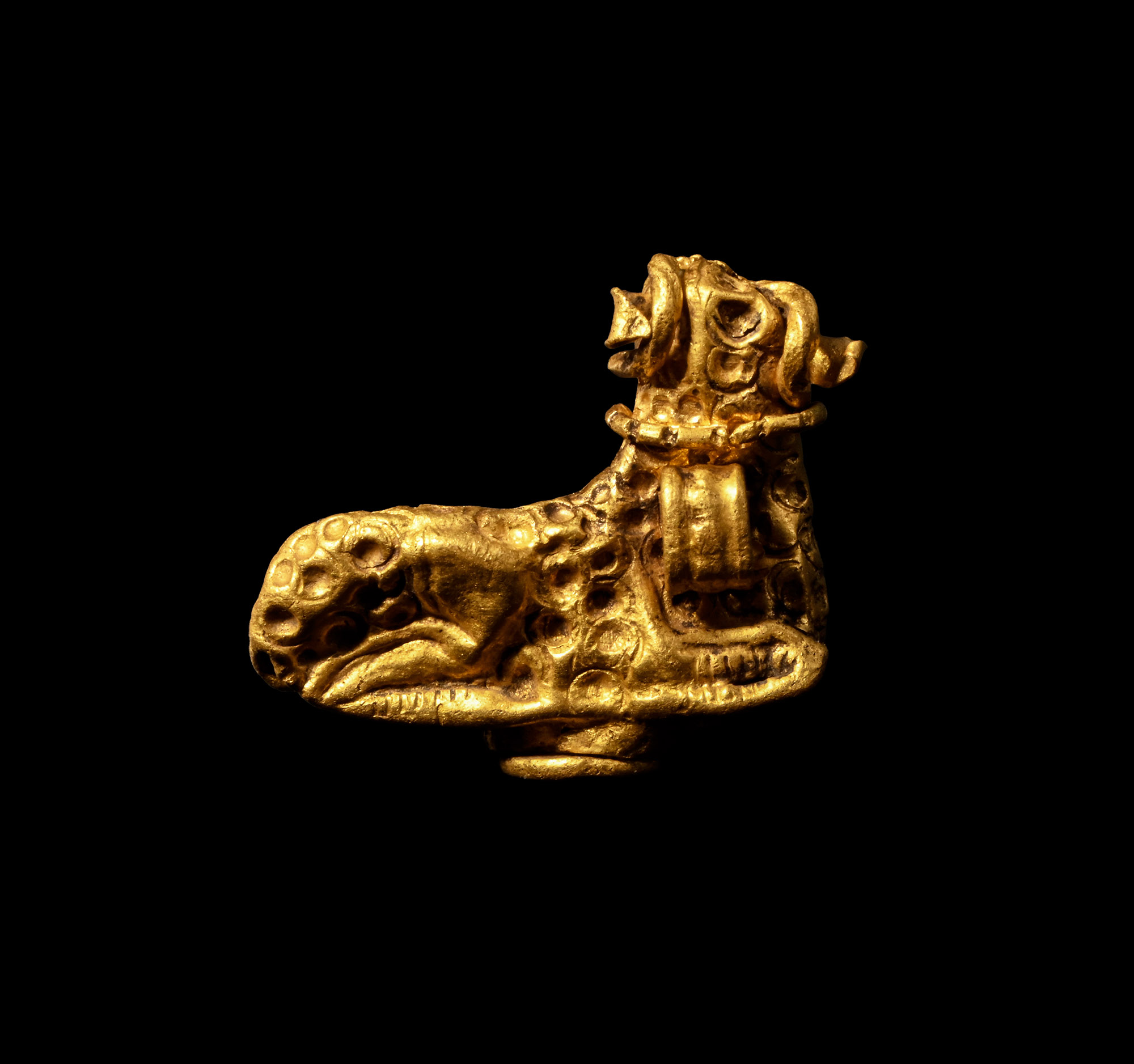
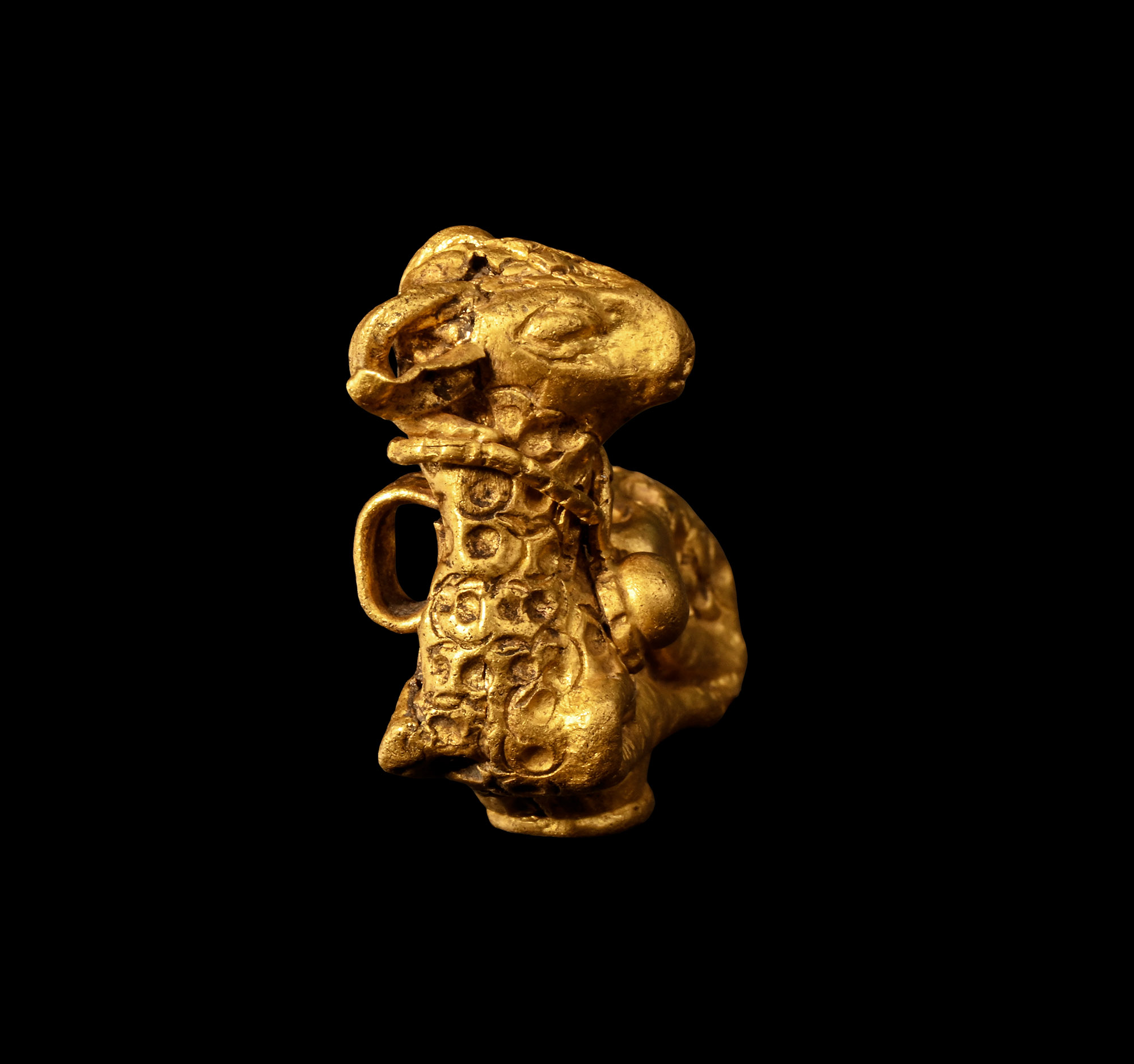
Graeco-Persian Gold Ram-Shaped Amulet
3RD-2ND CENTURY B.C.
1 1/8 in. (12.87 grams, 30 mm).
Modelled in the round in the form of a ram lying with its legs folded beneath the body, head turned with hooked horns, collar to the neck with a large pellet pendant; ribbed suspension loop behind the shoulders, mounting lug beneath the trunk.
ProvenancePrivate collection, acquired on the European art market in 2002.
Accompanied by a copy of an Art Loss Register certificate, 8 June 2004.
This lot has been checked against the Interpol Database of stolen works of art and is accompanied by search certificate number no.13204-249215.
Cf. a ram bangle from Crimea in Pinckernelle, K., The iconography of Ancient Greek and Roman Jewellery, Glasgow, 2007, fig.12.
FootnotesThe ram, a male symbol, was associated with various divinities. Turned into a ram as a child by Zeus, and a common sacrifice to the god, the ram was a symbol of Dionysus, which he shared with Aphrodite. Ram heads and pendants frequently occur in jewellery. In the animal kingdom, Eros favours the cockerel and the ram, both of which are indicative of sexual potency.
CONDITIONTimeLine Auctions follows a vetting process to ensure the authenticity and legality of all items, reinforcing our commitment to integrity and responsible trading. Each antiquity, antique, and coin lot undergoes thorough examination by a vetting committee of at least ten external specialists, professional trade association members, scientists, and archaeologists: Our Vetting Process
AUCTIONS:
TimeLine is a leading auction house specialising in antiquities, ancient art, collectables, natural history, coins, medals, and books. Our auctions offer museums, collectors, historians, and enthusiasts the opportunity to acquire unique and historically significant pieces.
LOT 0097
Graeco-Persian Gold Ram-Shaped Amulet
Estimate £12,000 - 17,000€13,920 - 19,720 (for guidance only)$16,200 - 22,950 (for guidance only)
Opening Bid
£6,000 (EUR 6,960; USD 8,100) ‡+BP*
-
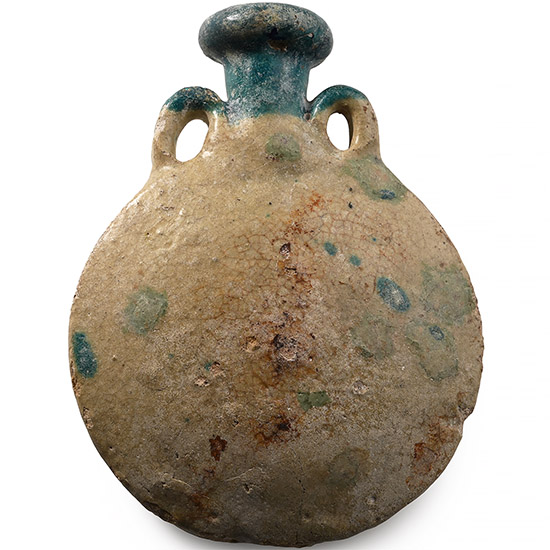
Parthian Blue Glazed Flask
1st century B.C.-1st century A.D.Estimate: £800 - 1,000 (+bp*)
Opening Bid: £400
With a flattened discoid body and a short neck with flared mouth, two applied handles. 560 grams, 19.7 cm
Ex London, UK gallery, 1971-early 2000s. Private collection, London. -
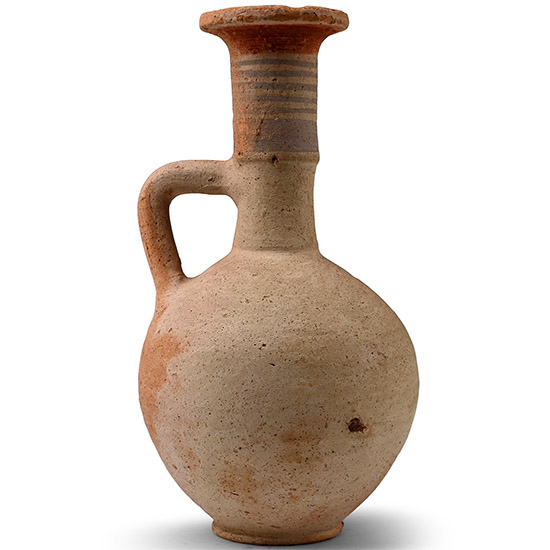
Cypro-Archaic Terracotta Jug
Cyprus, 7th century B.C.Estimate: £400 - 600 (‡+bp*)
Opening Bid: £180
Spherical body on a low ring foot, long tubular neck and wide rim, painted horizontal lines on the neck, and an applied round-section handle 365 grams, 18 cm
From the Swedish painter Lasse Johnson (1899-1992), acquired 1972. Thereafter, offered by Maud Johnson-Vuilleumier to her cousin M.N.F.Pellation (1921-2005) in 1992; thence by descent. -
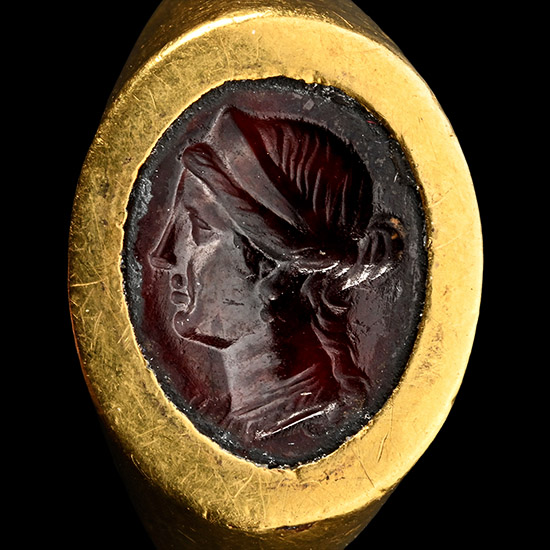
Greek Gold Ring with Garnet Gemstone with Portrait
Hellenistic, circa 1st century B.C.Estimate: £3,000 - 4,000 (+bp*)
Opening Bid: £1,400
Hollow-formed ellipsoid-section bezel and D-section hoop; inset intaglio portrait bust in profile of a young female with her hair dressed in a chignon. 4.44 grams, 22.75 mm overall, 18.40 x 16.38 mm internal diameter (approximate size British N, USA 6 1/2, Europe 13.72, Japan 13)
Private collection, 1980s. Acquired on the UK art market. Private collection, London, UK. This lot has been checked against the Interpol Database of stolen works of art and is accompanied by search certificate no.13486-262459.
The prototypes of this ring date back to the 3rd-2nd centuries B.C., as shown by dated examples from Hellenistic graves in Taranto. The type was still in use in the early centuries of the Roman era.
