
Loading, please wait...
LOT 1323
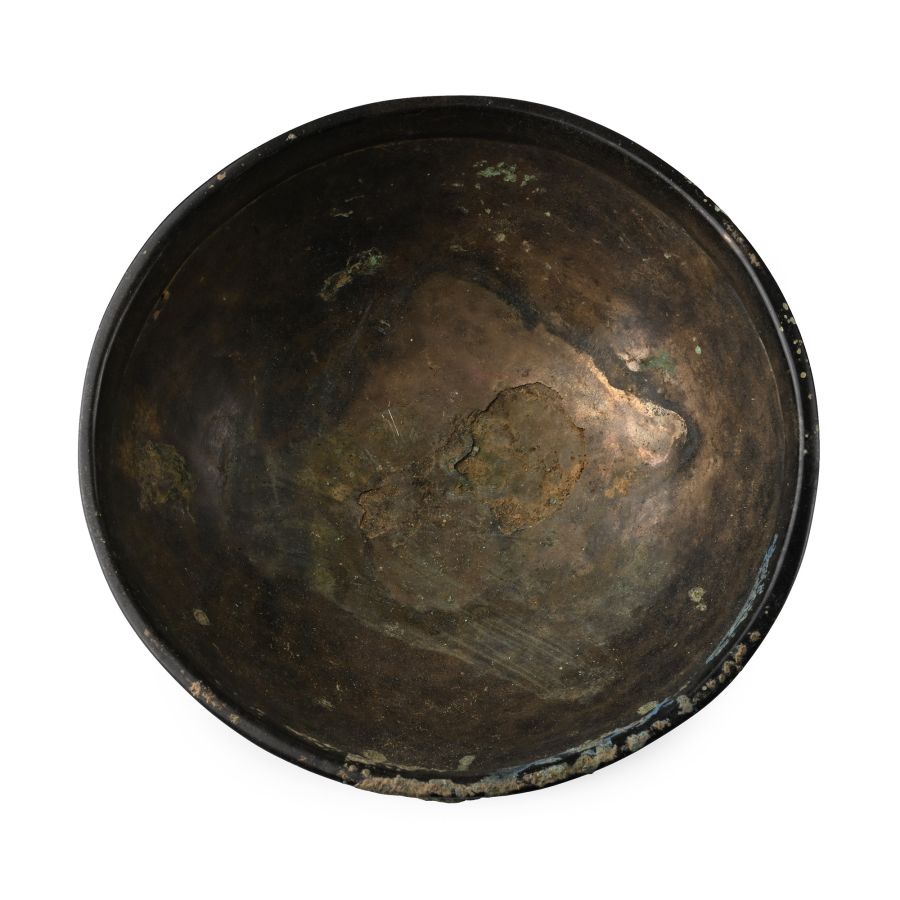
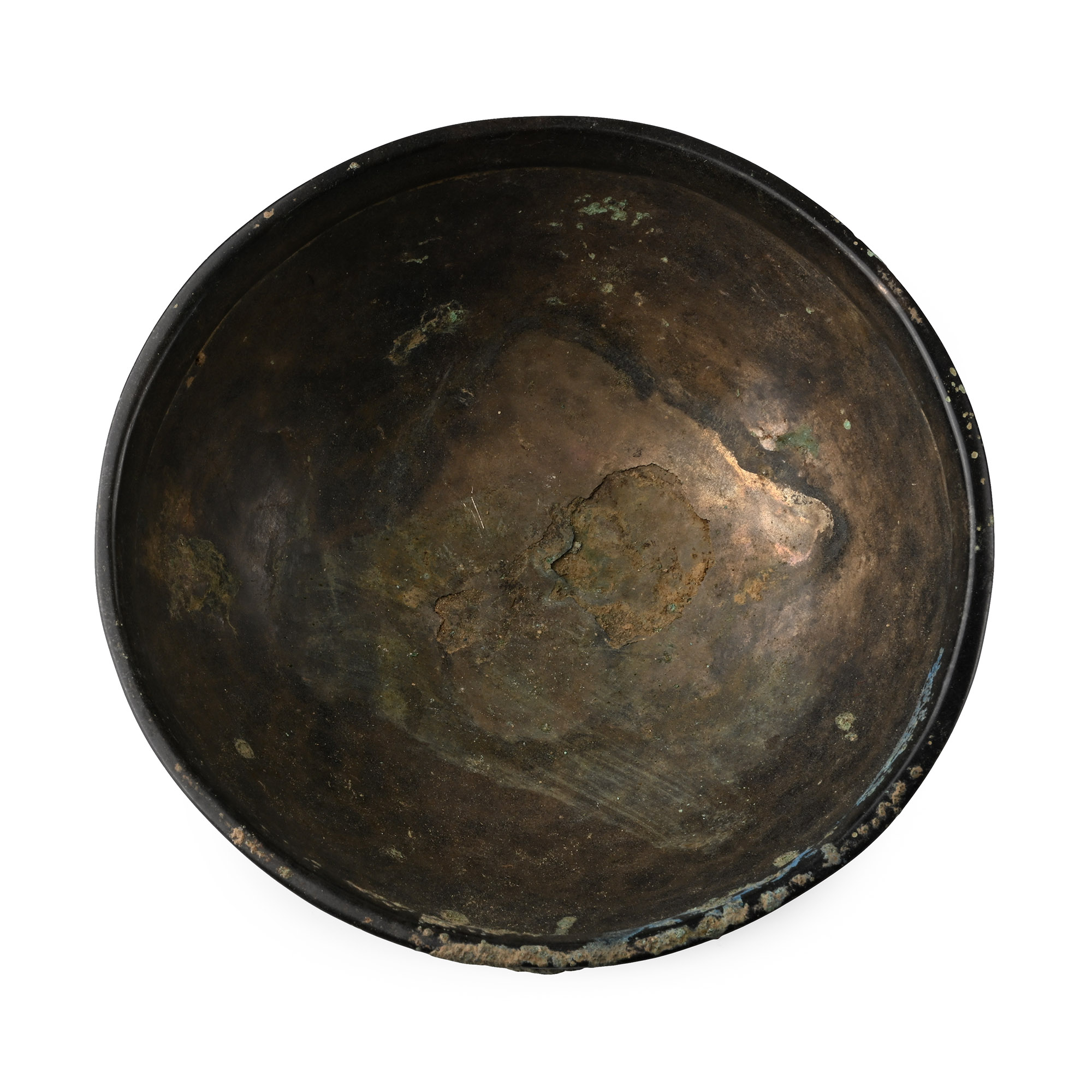
Graeco-Persian Bronze Vessel
2ND CENTURY B.C.-1ST CENTURY A.D.
5 1/8 in. (365 grams, 13.2 cm wide).
With broad base and carination below the rim. [No Reserve]
ProvenanceEx London, UK, collection, 1990-2000.
This lot has been cleared against the Art Loss Register database, and is accompanied by an illustrated lot declaration signed by the Head of the Antiquities Department, Dr Raffaele D'Amato.
TimeLine Auctions follows a vetting process to ensure the authenticity and legality of all items, reinforcing our commitment to integrity and responsible trading. Each antiquity, antique, and coin lot undergoes thorough examination by a vetting committee of at least ten external specialists, professional trade association members, scientists, and archaeologists: Our Vetting Process
AUCTIONS:
TimeLine is a leading auction house specialising in antiquities, ancient art, collectables, natural history, coins, medals, and books. Our auctions offer museums, collectors, historians, and enthusiasts the opportunity to acquire unique and historically significant pieces.
-
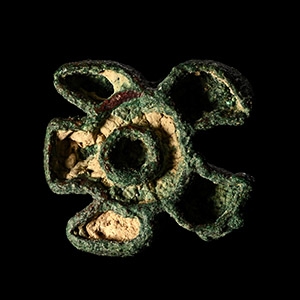
West Central Asian Bronze Stamp Seal with Horned Beast
Circa 2300-2000 B.C.Estimate: £100 - 140 (+bp*)
Opening Bid: £50
Zoomorphic stamp with loop handle to the reverse; accompanied by an old scholarly note, typed and signed by W.G. Lambert, late Professor of Assyriology, University of Birmingham, 1970-1993, which states: 'Stamp Seal of Bronze. 27.5x35x13 mm. This bears the shape of what is depicted. The face is flat and compartmented, and the back is flat also with look of sheet metal for suspension. The design shows the face of a horned quadruped frontally, with drooping ears and stout horns, but with one big central eye. This comes from west central Asia and dates to c. 2300-2000 B.C. It is a rare design and in good condition.' 12.5 grams, 31 mm
Acquired in the late 1980s-early 1990s. Ex property of a West London businessman. Academically researched and catalogued by the late Professor Lambert in the early 1990s. This lot has been cleared against the Art Loss Register database, and is accompanied by an illustrated lot declaration signed by the Head of the Antiquities Department, Dr Raffaele D'Amato. -
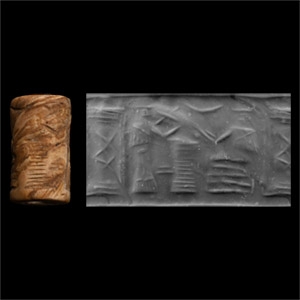
Early Akkadian Shell Cylinder Seal with Unclassified Snake God
Circa 2300-2200 B.C.Sold for (Inc. bp): £416
With figures and fire altar, restrung pair of red stone beads, old handwritten label '1649'; accompanied by a copy of an old scholarly note, typed and signed by W.G. Lambert, late Professor of Assyriology, University of Birmingham, 1970-1993, which states: 'Cylinder Seal of Fawn Fossil Shell, 35 x 20.5 mm. On the right sits a snake god: human body above the waist, curling snake below, with one hand extended. Facing him stands a god in long robe with bottom fringe, also extending one hand. Between them is a fire altar. Behind each god is a sideboard for holding food and drink ready to consume. There is a lunar crescent in the sky. This is an Akkadian seal from Mesopotamia or Western Iran, c. 2300-2200 B.C. The snake god is not yet identified from texts, but is a fascinating item of Akkadian mythology.'; accompanied by a museum-quality impression. 30 grams, 35 mm
Armand Trampitsch, Glyptique Archéologie, Paris, Hôtel Drouot, 13-14 May 1992, no.23 [Part]. Accompanied by a copy of a scholarly note, typed and signed by Professor Wilfrid George Lambert in 1992. This lot has been cleared against the Art Loss Register database, and is accompanied by an illustrated lot declaration signed by the Head of the Antiquities Department, Dr Raffaele D'Amato. -
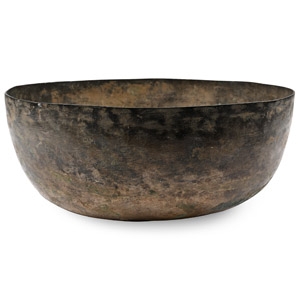
Post Sasanian Bronze Vessel
7th-9th century A.D.Sold for (Inc. bp): £59
Squat in profile with broad base. 495 grams, 22 cm wide
Ex London, UK, collection, 1990-2000. This lot has been cleared against the Art Loss Register database, and is accompanied by an illustrated lot declaration signed by the Head of the Antiquities Department, Dr Raffaele D'Amato.
