
Loading, please wait...
LOT 1314
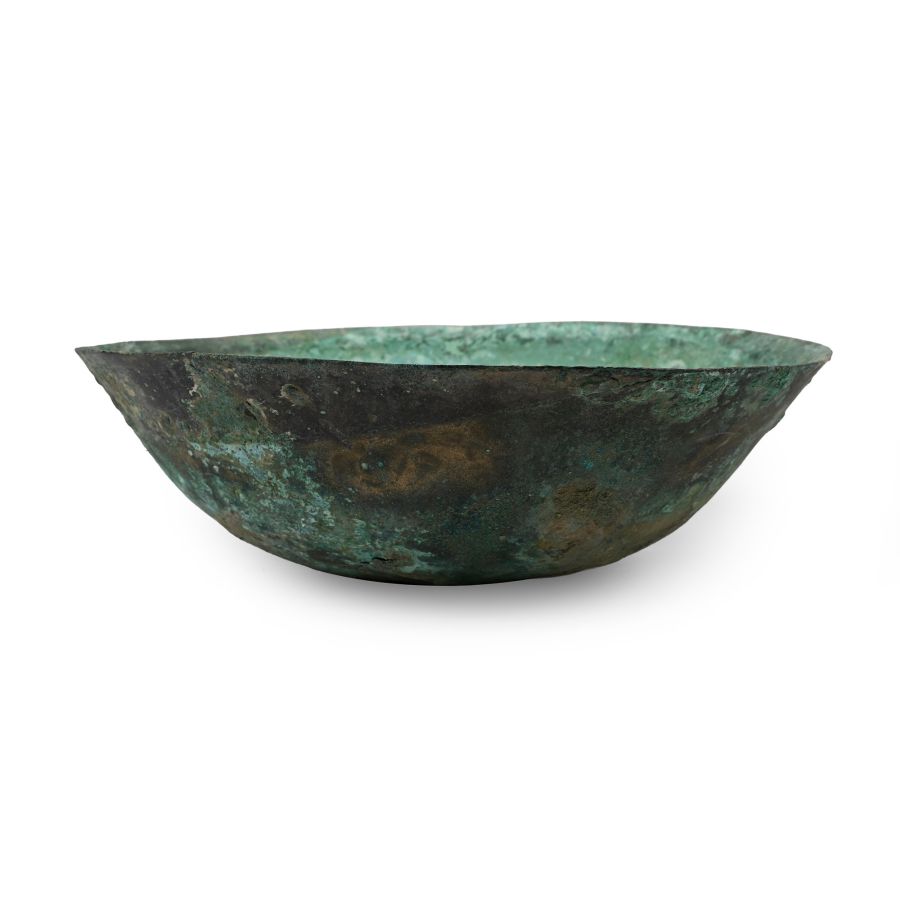
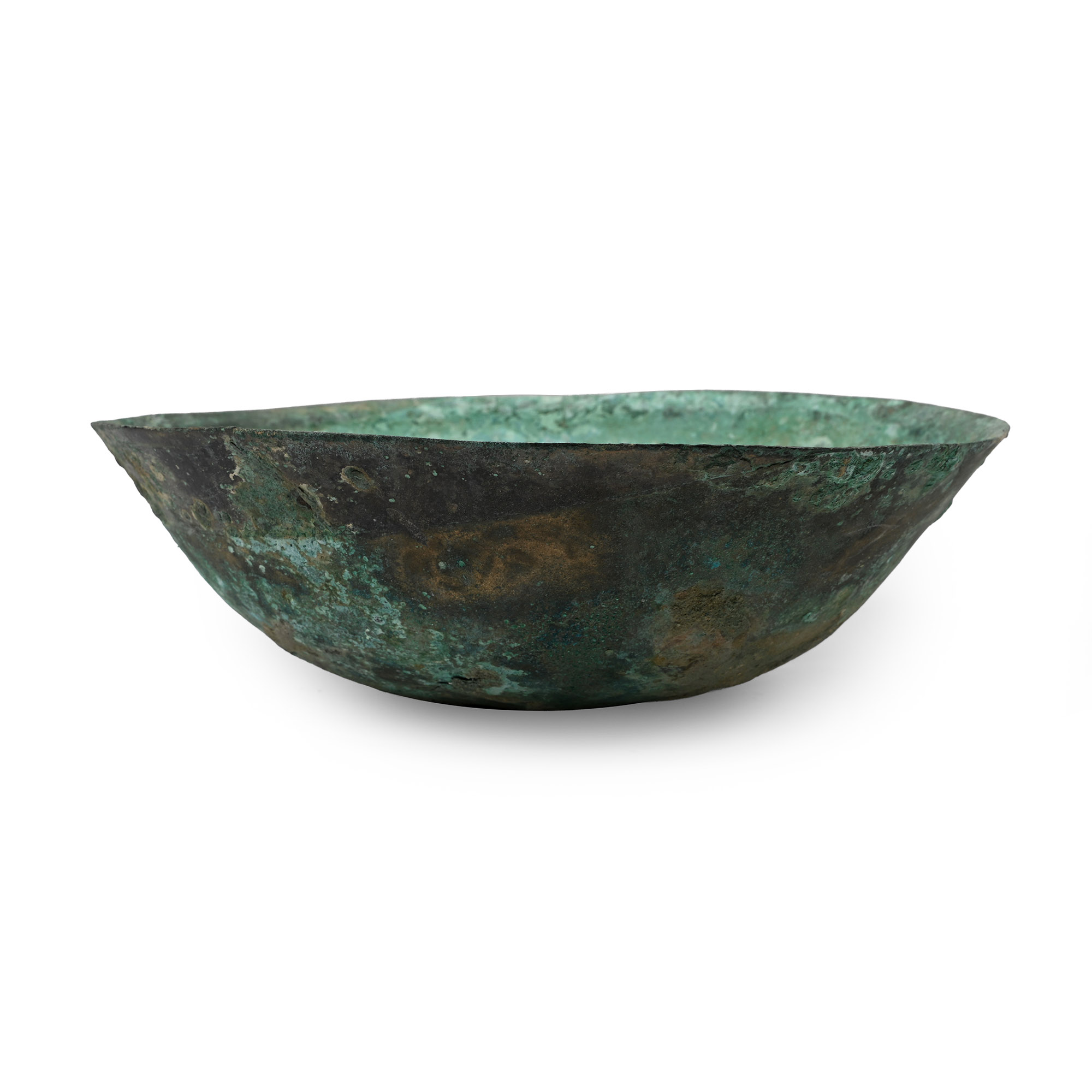
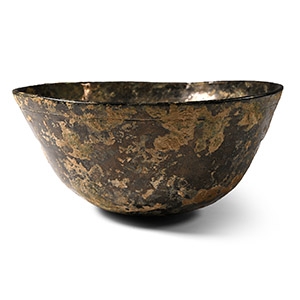
Graeco-Persian Bronze Bowl
2ND CENTURY B.C.-1ST CENTURY A.D.
8 3/8 in. (389 grams, 21.3 cm wide).
Broad with a slightly everted rim. [No Reserve]
ProvenanceEx London, UK, collection, 1990-2000.
This lot has been cleared against the Art Loss Register database, and is accompanied by an illustrated lot declaration signed by the Head of the Antiquities Department, Dr Raffaele D'Amato.
TimeLine Auctions follows a vetting process to ensure the authenticity and legality of all items, reinforcing our commitment to integrity and responsible trading. Each antiquity, antique, and coin lot undergoes thorough examination by a vetting committee of at least ten external specialists, professional trade association members, scientists, and archaeologists: Our Vetting Process
AUCTIONS:
TimeLine is a leading auction house specialising in antiquities, ancient art, collectables, natural history, coins, medals, and books. Our auctions offer museums, collectors, historians, and enthusiasts the opportunity to acquire unique and historically significant pieces.
-
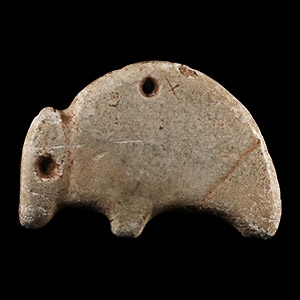
Large Sumerian Animal Amulet
3rd millennium B.C.Estimate: £400 - 600 (+bp*)
Opening Bid: £222
Carved bifacial amuletic pendant of an ox with incised detailing, sockets for inlaid eyes, suspension hole at shoulder. 62 grams, 74 mm
From the collection of a gentleman, acquired on the London art market in the 1990s. This lot has been cleared against the Art Loss Register database, and is accompanied by an illustrated lot declaration signed by the Head of the Antiquities Department, Dr Raffaele D'Amato. -

Luristan Bronze Vessel
Circa 950 B.C.Sold for (Inc. bp): £98
With flattened base and everted rim, two circumferential bands on the body. 248 grams, 95 mm wide
Ex London, UK, collections, 1990s-2000s. This lot has been cleared against the Art Loss Register database, and is accompanied by an illustrated lot declaration signed by the Head of the Antiquities Department, Dr Raffaele D'Amato.
The people of Luristan were mainly nomadic, constantly moving in summer and winter pastures, and needed metal utensils. Therefore, in addition to weapons, these excellent metal workers produced, in considerable numbers, light and elegant bronze vases and cups. -
Luristan Bronze Bowl
Circa 1000 B.C.Sold for (Inc. bp): £98
Of a rounded profile with rounded base, circumferential groove beneath the rim. 365 grams, 15.7 cm
Ex London, UK, collections, 1990s-2000s. This lot has been cleared against the Art Loss Register database, and is accompanied by an illustrated lot declaration signed by the Head of the Antiquities Department, Dr Raffaele D'Amato.
In the Ancient East this was a form of vessel very common at every period. Such bronze dishes with a lip were, however, extremely rare. The specimens kept in Brussels and Berlin Museums, without lips, were also found in Luristan, but are of Mesopotamian manufacture.
