
Loading, please wait...

LOT 0429
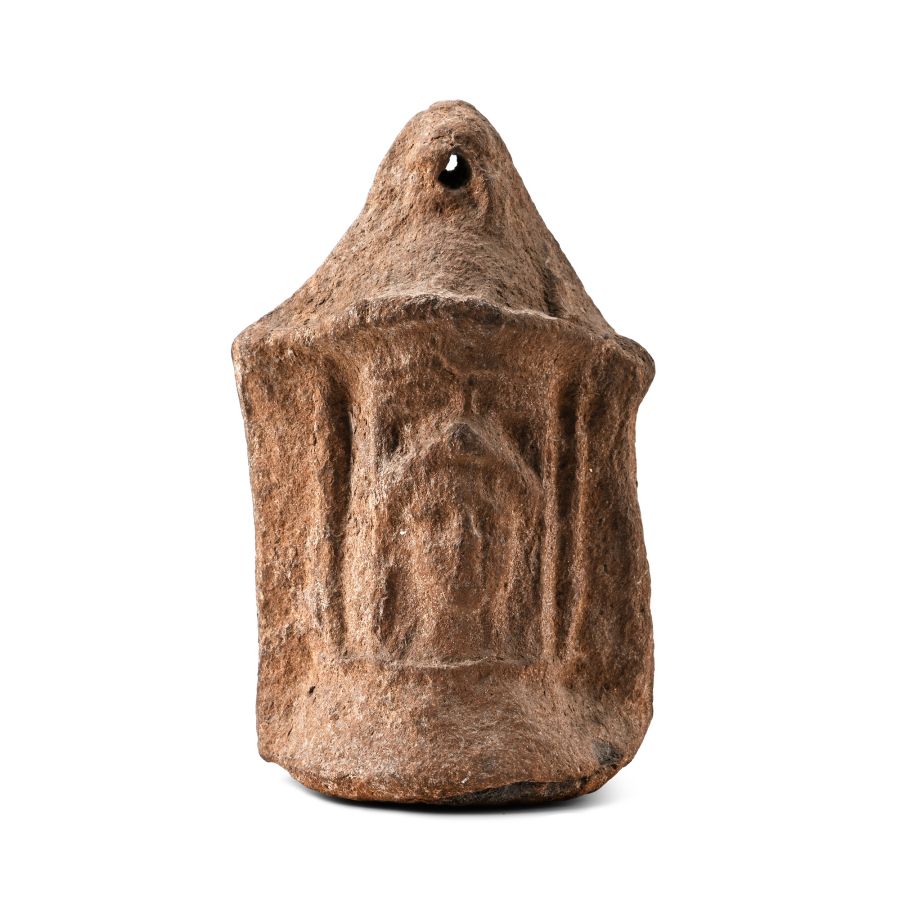
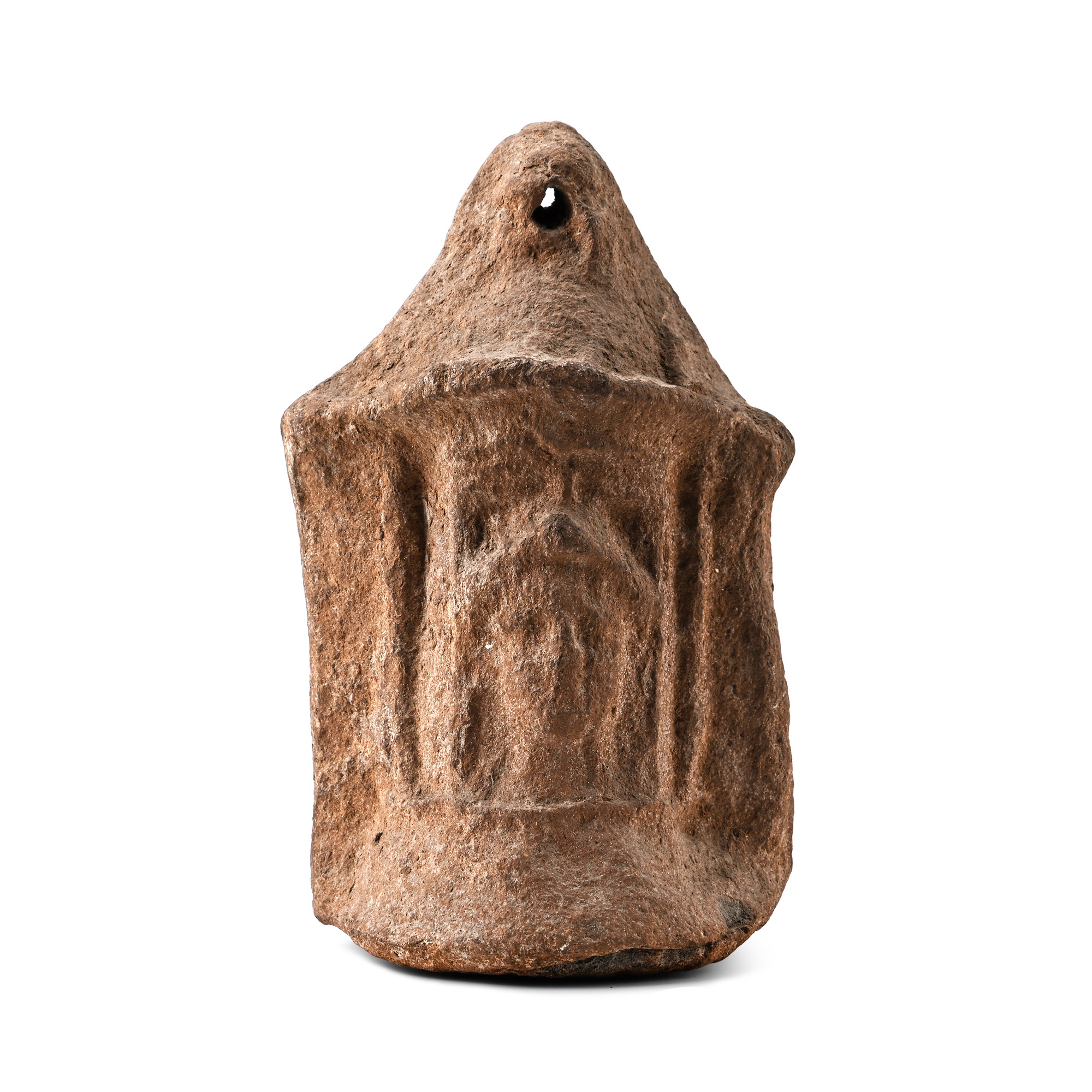
Graeco-Egyptian Terracotta Hanging Shrine with Face of Athena
ROMAN PERIOD, CIRCA 2ND-3RD CENTURY A.D.
4 3/8 in. (158 grams, 11.2 cm).
Tubular type with the facing head of Athena on the obverse, void on the reverse. [No Reserve]
ProvenanceEx E.B.W. Chapplelow collection, January 1958.
Certificate of antiquity no.668 of Blanchard's Egyptian Museum, Cairo.
From the private collection of Peter Clayton, FCILIP, Dip, Arch, FSA, FRNS, Hemel Hempstead, Hertfordshire, UK; formed since the late 1950s.
Accompanied by an old handwritten information card by Peter Clayton, collection no.14.
Cf. Fjeldhagen, M., Graeco-Roman Terracottas from Egypt. Ny Carlsberg Glyptotek, Copenhagen, 1995, pp. 96-97, nos. 77-78, for examples of hanging shrine-like lanterns with moulded Athena heads; Weber, W. Die ägyptisch-griechischen Terrakotten, Berlin, 1914, pl. 41, for various hanging terracottas.
FootnotesHanging shrine-like terracottas often served as lanterns for night-time lamp festivals of the syncretic Romano-Egyptian goddess Athena-Neith, as shown in this example by the large, possibly soot-stained, opening at the back. This object type is characteristic of the so-called 'Fayum terracottas', as large numbers of terracotta figurines were recovered from the Fayum Oasis.
CONDITIONTimeLine Auctions follows a vetting process to ensure the authenticity and legality of all items, reinforcing our commitment to integrity and responsible trading. Each antiquity, antique, and coin lot undergoes thorough examination by a vetting committee of at least ten external specialists, professional trade association members, scientists, and archaeologists: Our Vetting Process
AUCTIONS:
TimeLine is a leading auction house specialising in antiquities, ancient art, collectables, natural history, coins, medals, and books. Our auctions offer museums, collectors, historians, and enthusiasts the opportunity to acquire unique and historically significant pieces.
LOT 0429
Graeco-Egyptian Terracotta Hanging Shrine with Face of Athena
Estimate £200 - 300€230 - 350 (for guidance only)$270 - 410 (for guidance only)
Opening Bid
£5 (EUR 6; USD 7) +BP*
-
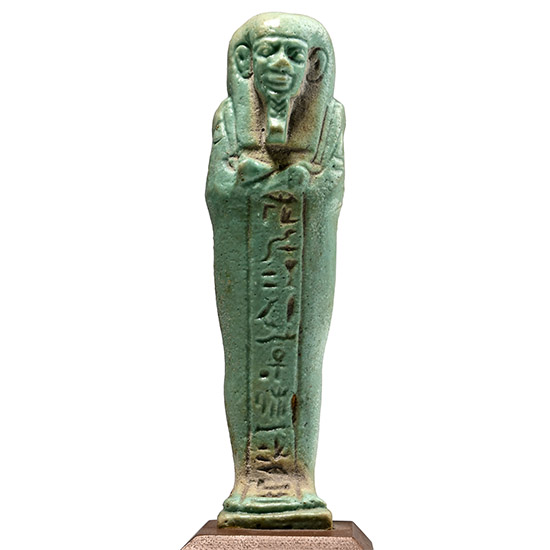
Egyptian Blue Glazed Faience Shabti of Djed-Bastet-Iuef-Ankh
Late Period, 664-332 B.C.Estimate: £400 - 600 (+bp*)
Opening Bid: £5
Mummiform figure standing on a square plinth, wearing a long lappet wig, a false beard, and fine facial detailing, with crossed arms, the left hand holding a pick and the right a hoe, with the cord of a seed bag suspended from the bag; a plain dorsal pillar; the lower front bearing a vertical panel containing an impressed hieroglyphic text reading: 'The Osiris, Djed-Bastet-iuef-ankh, born to Iset-ir-dis'; mounted on a display stand. 99 grams total, 13.1 cm including stand
Acquired from Richardson, February 1965, for £2.00. From the private collection of Peter Clayton, FCILIP, Dip, Arch, FSA, FRNS, Hemel Hempstead, Hertfordshire, UK; formed since the late 1950s. Accompanied by an old handwritten information card by Peter Clayton, collection no.112. -
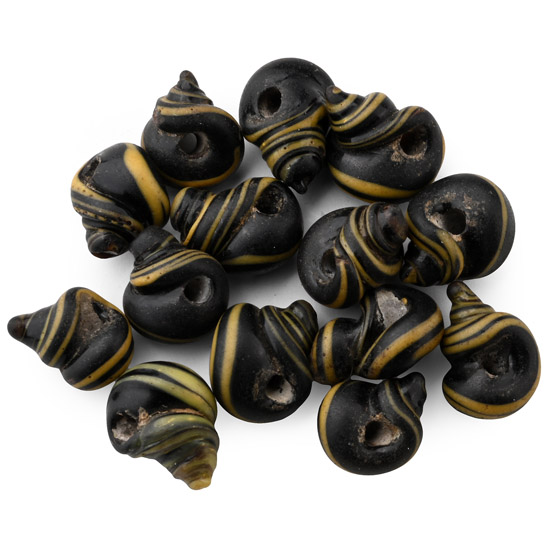
Egyptian Snail-Shaped Ribbon Mosaic Glass Bead Group
Roman Period, 30 B.C.-323 A.D.Estimate: £100 - 140 (+bp*)
Opening Bid: £5
Comprising black-and-yellow mosaic glass beads shaped like snails. 10.4 grams total, 10-11 mm
Excavated from Egypt in 1914. From the private collection of Mr David Sams and his wife Elizabeth Kate Sams, gentry and amateur archaeologists who travelled to Egypt in 1914 with their daughter Ethel. Mr Sams and his wife led digging expeditions from which these items come from the family estate of Mr and Mrs Sams, by direct descent to their granddaughter. -
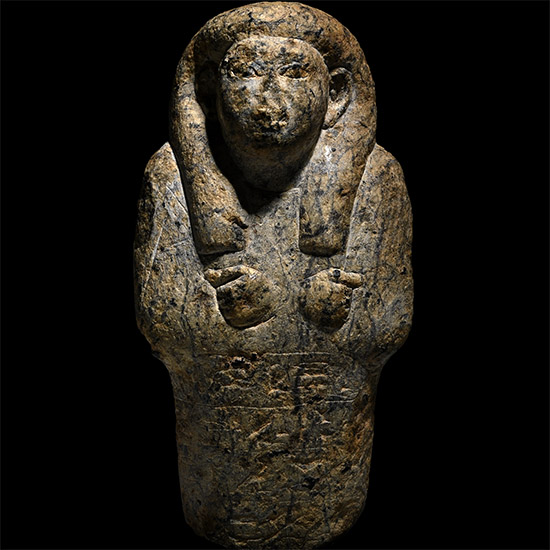
Egyptian Yellow and Black Serpentine Hieroglyphic Shabti
25th-26th Dynasty, circa 650-525 B.C.Estimate: £1,500 - 2,000 (+bp*)
Bids: 1 | Current Bid: £5
Fragment of a mummiform shabti wearing a heavy tripartite wig, with crossed hands on the chest holding faintly incised agricultural implements; four lightly incised horizontal lines of hieroglyphic text on the lower body; mounted on a custom-made stand. 455 grams total, 13.3 cm including stand
From the private collection of Peter Clayton, FCILIP, Dip, Arch, FSA, FRNS, Hemel Hempstead, Hertfordshire, UK; formed since the late 1950s.
Hardstone shabtis appear in the burials of certain high officials in the late 25th and early 26th Dynasties, after which faience became the predominant material for all shabti statuettes.
