
Loading, please wait...
LOT 1190
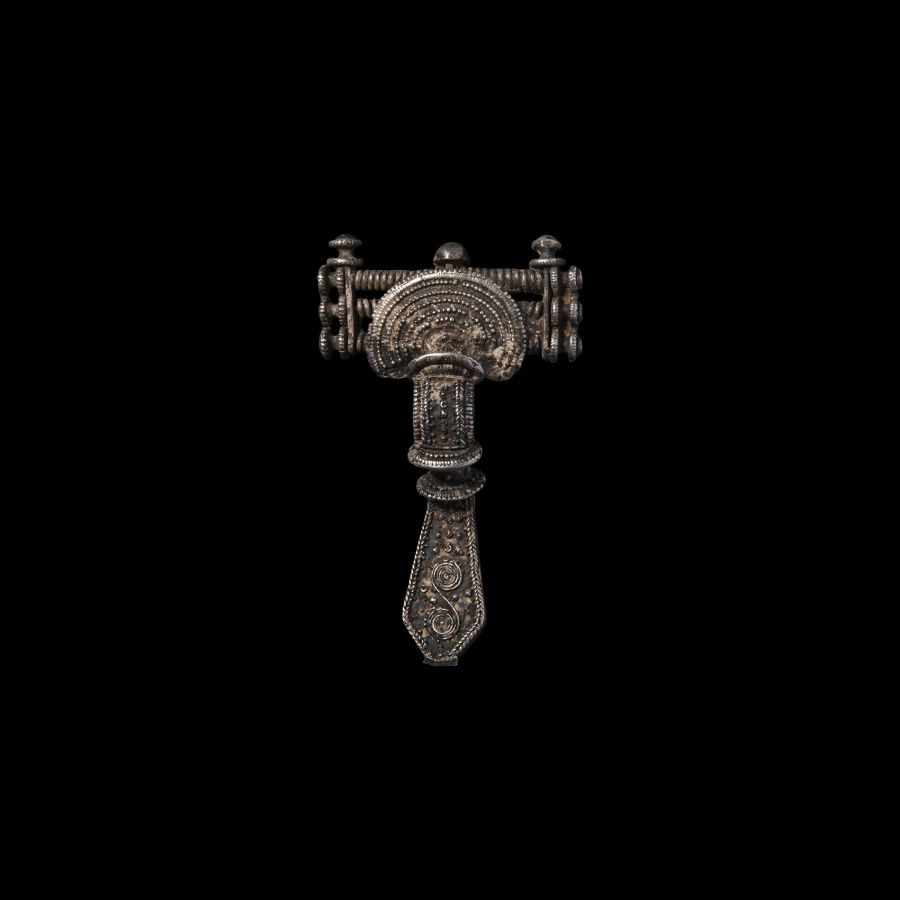
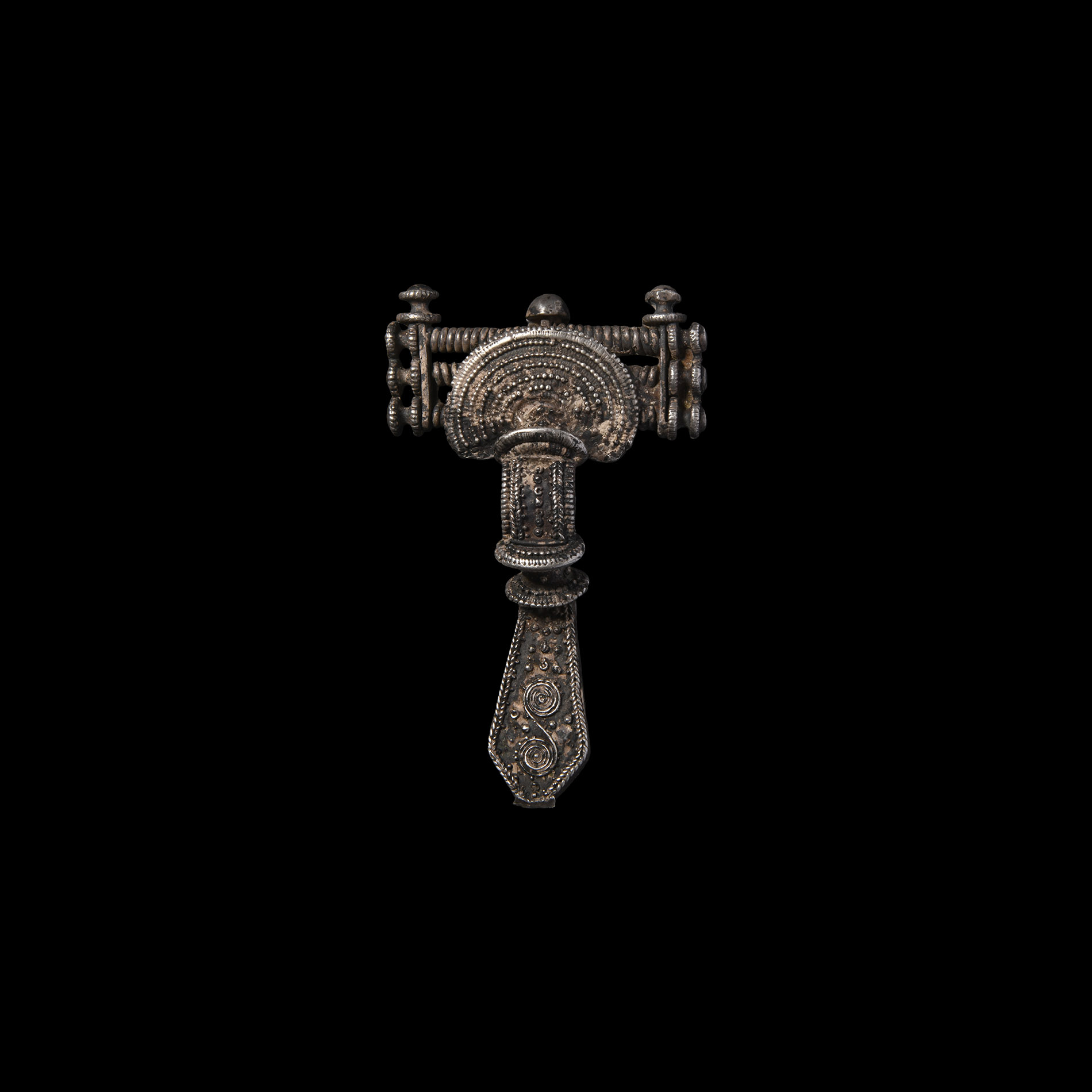
Gothic Silver Filigree Bow Brooch
CIRCA 5TH CENTURY A.D. OR LATER
3 1/4 in. (69.2 grams, 84 mm).
A silver bow brooch comprising a D-shaped headplate with concentric granulated bands, three-row spring with granulated knops, shallow bow with D-shaped ledges and granule detailing, tongue-shaped footplate with applied filigree scroll and ropework borders; catchplate to the reverse.
ProvenanceAcquired in the 1980s.
Old European collection.
Ex property of a European collector.
Cf. Beck, H. et al., Fibel und Fibeltracht, Berlin, 2000, fig.99(13).
CONDITIONTimeLine Auctions follows a vetting process to ensure the authenticity and legality of all items, reinforcing our commitment to integrity and responsible trading. Each antiquity, antique, and coin lot undergoes thorough examination by a vetting committee of at least ten external specialists, professional trade association members, scientists, and archaeologists: Our Vetting Process
AUCTIONS:
TimeLine is a leading auction house specialising in antiquities, ancient art, collectables, natural history, coins, medals, and books. Our auctions offer museums, collectors, historians, and enthusiasts the opportunity to acquire unique and historically significant pieces.
-
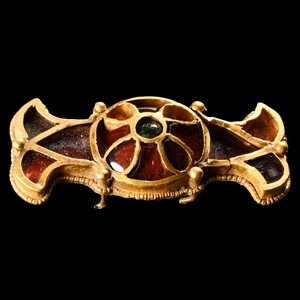
Large Merovingian Gold Fish-Tailed Mount with Garnets
6th century A.D.Sold for (Inc. bp): £3,640
A substantial gold mount or fitting for a shield, belt or bridle comprising a median domed panel with central green glass cabochon, four pelta-shaped radiating-arm cells with inset garnets, two now absent; to each end a fish-tail with inset garnet cloisons, one absent; six fixing pins to the mounting plate with beaded border. 12.62 grams, 48 mm
Acquired by Mr L. Grenacs of Belgium in 1975. Acquired London, UK, 1999. This lot has been checked against the Interpol Database of stolen works of art and is accompanied by search certificate no.11650-198616. -
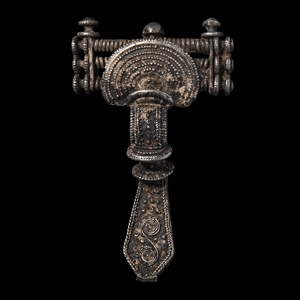
Gothic Silver Filigree Bow Brooch
Circa 5th century A.D. or laterSold for (Inc. bp): £390
A silver bow brooch comprising a D-shaped headplate with concentric granulated bands, three-row spring with granulated knops, shallow bow with D-shaped ledges and granule detailing, tongue-shaped footplate with applied filigree scroll and ropework borders; catchplate to the reverse. 69.2 grams, 84 mm
Fine condition.
Acquired in the 1980s. Old European collection. Ex property of a European collector. -
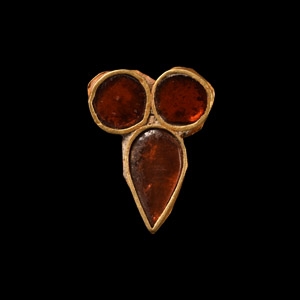
Migration Period Gold Teardrop Jewel with Garnets
5th-6th century A.D.Sold for (Inc. bp): £507
A gold trilobate jewel or mount formed from one piriform and two conjoined circular cells, each set with polished garnet; three suspension loops to reverse. 0.69 grams, 14 mm
Acquired 1980-2015. Ex Abelita family collection.
