
LOT 3188
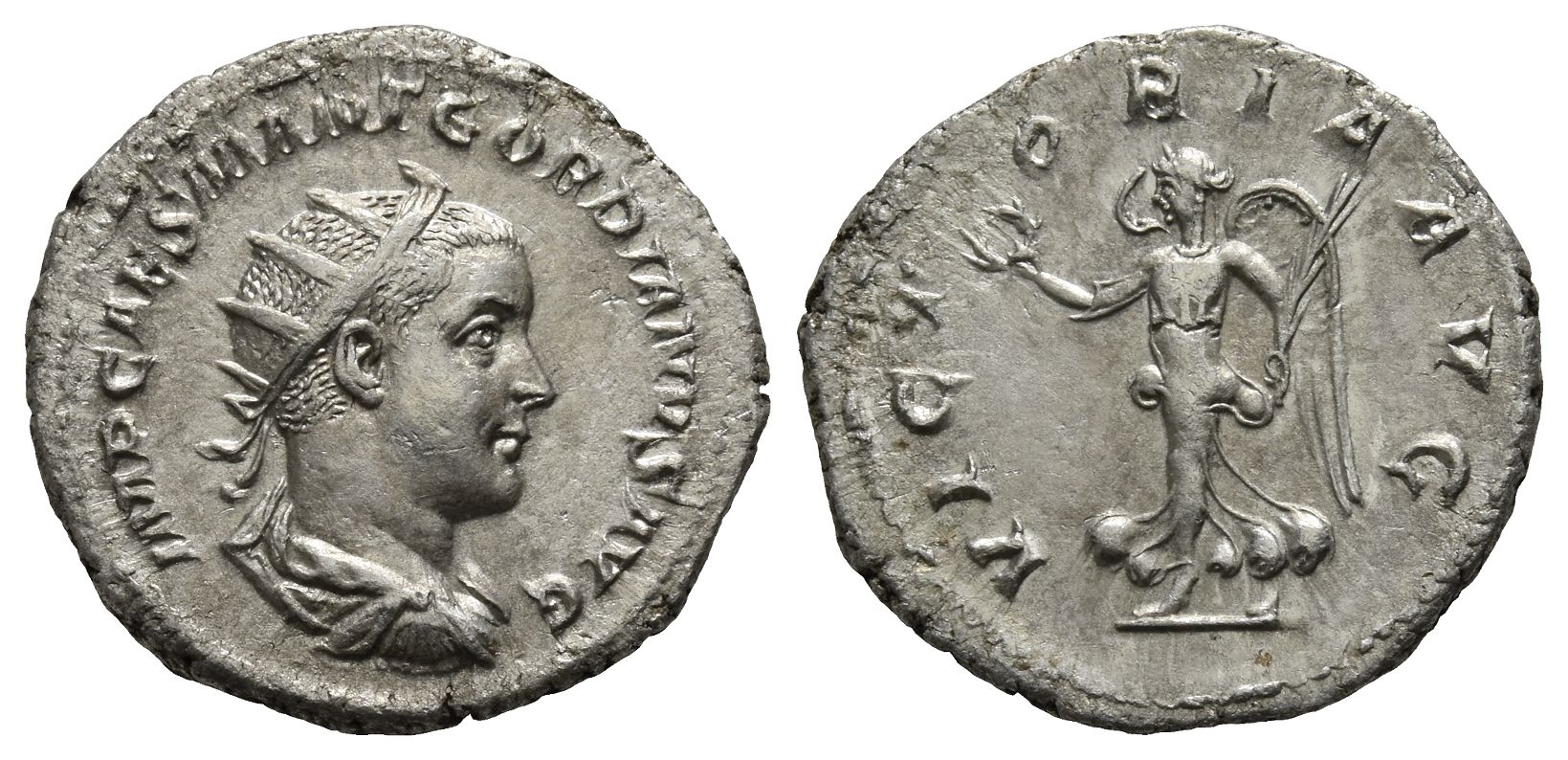
Gordian III AR Antoninianus. AD 238-244.
Rome mint; struck AD 238-239. IMP CAES M ANT GORDIANVS AVG, radiate, draped and cuirassed bust to right / VICTORIA AVG, Victory advancing to left, holding wreath and palm. RIC IV 5; RSC 357. Extremely Fine.(3.88gr, 22mm, 12h.).
ProvenanceEx German art market, 2000s.
Acquired from an EU collector living in London.
From the collection of a Surrey, UK, gentleman.
TimeLine Auctions follows a vetting process to ensure the authenticity and legality of all items, reinforcing our commitment to integrity and responsible trading. Each antiquity, antique, and coin lot undergoes thorough examination by a vetting committee of at least ten external specialists, professional trade association members, scientists, and archaeologists: Our Vetting Process
AUCTIONS:
TimeLine is a leading auction house specialising in antiquities, ancient art, collectables, natural history, coins, medals, and books. Our auctions offer museums, collectors, historians, and enthusiasts the opportunity to acquire unique and historically significant pieces.
-
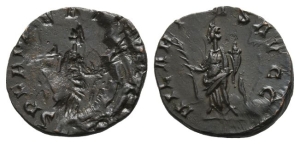
Tetricus I, Romano-Gallic Emperor, BI Antoninianus. AD 271-274.
Sold for (Inc. bp): £20
[...]S P F AVG; incuse of reverse / HILARITAS AVGG, Hilaritas standing to left, holding long branch with right hand and cornucopia with left. Cf. RIC V.2 80; cf. RIC V.4 801. 2.36gr, 19mm.
Extremely Fine. Brockage of reverse.
From a private, UK, collection in the 1980s. Property of a London, UK, antiquarian.
Brockage errors are caused when an already minted coin sticks to the coin die and impresses onto another blank that hasn't been struck yet, pressing a mirror image of the other coin into the blank. Until the late 3rd century AD brockages showing the reverse are much less common since mint workers would be more likely to see the stuck coin in the anvil die. -
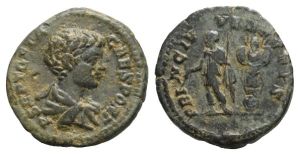
Geta as Caesar AE 'Limes Denarius'. AD 198-209.
Sold for (Inc. bp): £26
Struck at the frontiers of the empire, based on an issue minted in Rome under Septimius Severus and Caracalla, AD 200-205. P SEPT GETA CAES PONT, young, bareheaded and draped bust to right / PRI-NC IV-VENTVTIS, Geta, in military dress, standing to left, holding baton and sceptre; trophy to right. For prototype: RIC IV 18 var. (branch instead of baton); RSC 157b. 2.56gr, 18mm, 12h.
Good Very Fine.
Acquired from the vendor's grandfather in the 1990s. Property of an Essex collector.
'Limes Denarii' (misnomer) are more or less faithful bronze copies of silver Denarii, minted on the fringes of the empire out of necessity. Perhaps they may be officially sanctioned issues for use in regions where political unrest made it hazardous to ship large amounts of silver. These low value issues could have served troops on the front and been redeemable for good coinage when they returned to the stable regions. Were they a form of military scrip meant to keep large quantities of precious metal from falling into enemy hands in the event of a defeat? -
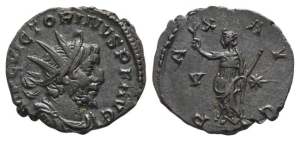
Victorinus, Romano-Gallic Emperor BI Antoninianus. AD 269-271.
Sold for (Inc. bp): £13
Treveri mint; struck AD 269-270. 5th officina. IMP C VICTORINVS P F AVG, radiate, draped and cuirassed bust to right / PAX AVG, Pax standing to left, holding olive branch and sceptre; V in left field, star in right field. RIC V.2 118 (Colonia Agrippinensis). 2.50gr, 19mm, 1h.
Good Very Fine.
Property of a North London, UK, gentleman.
