
Loading, please wait...
LOT 2037
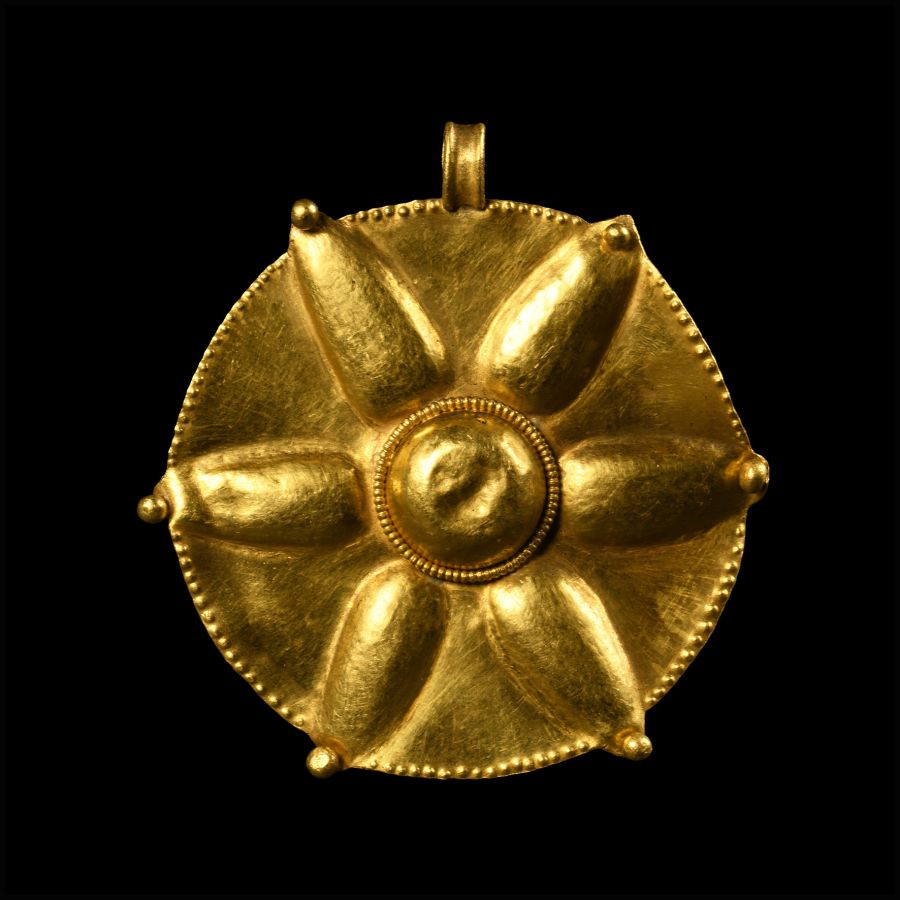
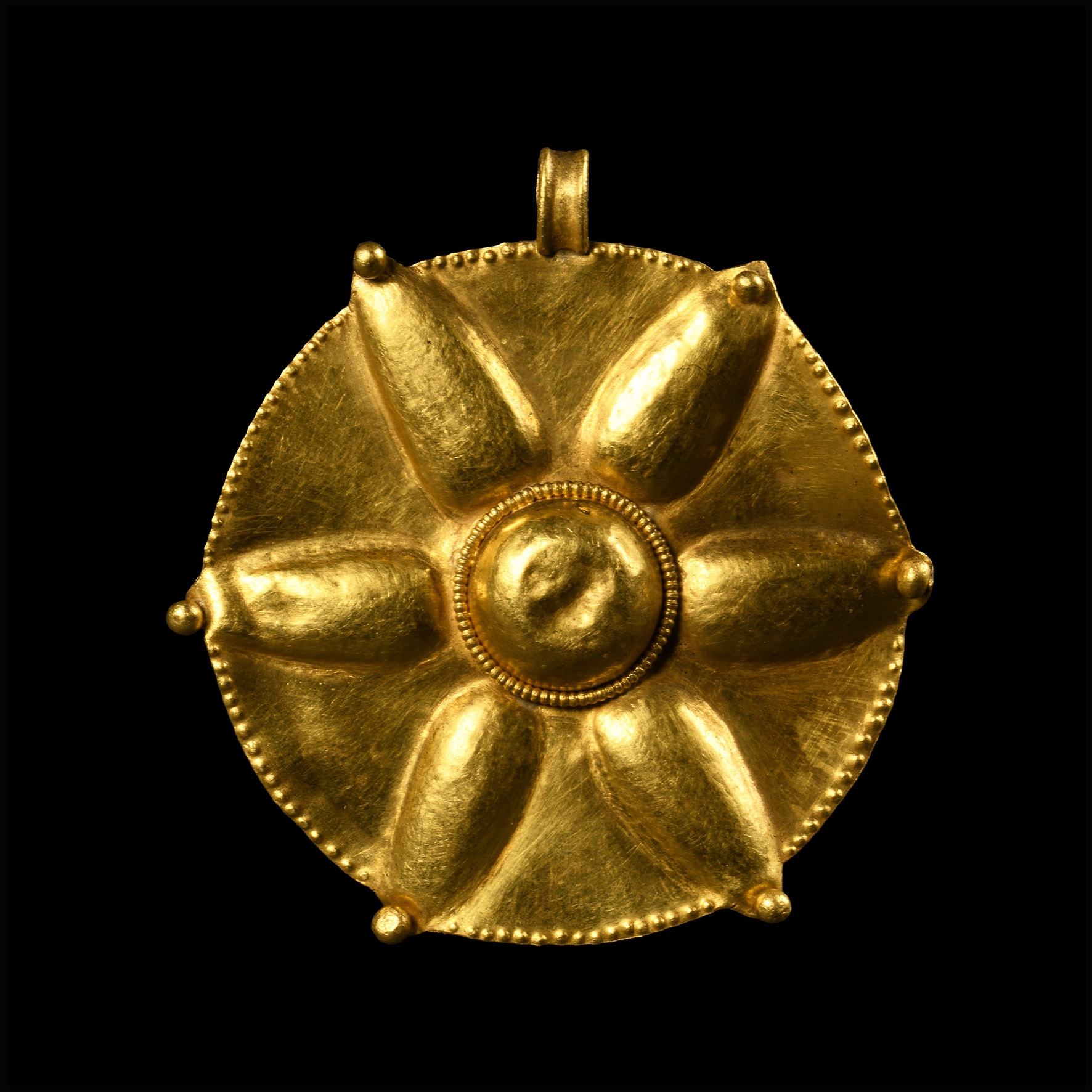
Gold Roman Style Pendant
20TH CENTURY A.D.
2 in. (10.72 grams, 51 mm).
Discoid with repoussé radiating petals, repoussé central boss, pellets to the rim and granule to the tip of each petal, beaded wire collar to the boss. [No Reserve]
ProvenanceFrom the collection of a North American gentleman, formed in the 1990s.
CONDITIONTimeLine Auctions follows a vetting process to ensure the authenticity and legality of all items, reinforcing our commitment to integrity and responsible trading. Each antiquity, antique, and coin lot undergoes thorough examination by a vetting committee of at least ten external specialists, professional trade association members, scientists, and archaeologists: Our Vetting Process
AUCTIONS:
TimeLine is a leading auction house specialising in antiquities, ancient art, collectables, natural history, coins, medals, and books. Our auctions offer museums, collectors, historians, and enthusiasts the opportunity to acquire unique and historically significant pieces.
-
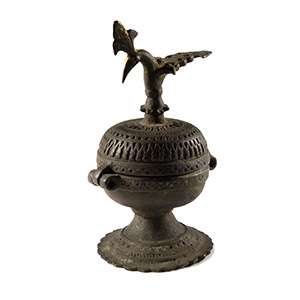
Post Medieval Bronze Lidded Vessel
Circa 19th century A.D.Sold for (Inc. bp): £20
The squat body with finial formed as a bird, splayed stem and foot with scalloped circumference, concentric rings of geometric motifs to the lid; three hinge lugs to two sides. 172 grams, 11.5 cm high
Acquired on the UK art market. Property of a Ruislip, UK, gentleman, by inheritance. -
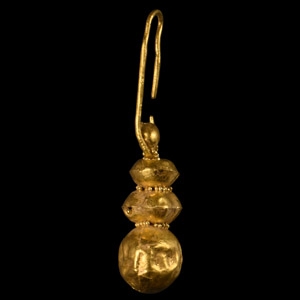
Gold Viking Style Earring
20th century A.D. or earlierSold for (Inc. bp): £46
Composed of graduated bulbs separated by granulated collars and a slender wire hook. 2.12 grams, 44 mm
From the collection of a North American gentleman, formed in the 1990s. -
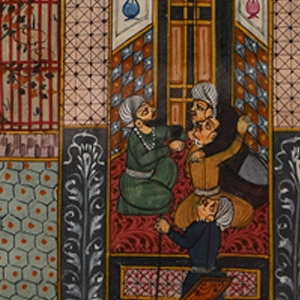
Framed Watercolour Painting with Male Figures Engaged in Conversation
Persia, 20th century A.D.Estimate: £80 - 100 (+bp*)
Opening Bid: £40
With extensive use of liquid gold; polychrome painted scene of three male figures within a building engaged in conversation; three passers-by outside with faces raised to another figure on the roof; panels of calligraphic nastaliq text above and below; mounted in a glazed wooden frame. 689 grams, 37 x 26.5 cm
Very fine condition.
Acquired on the UK art market, 1980s-1990s. The Woodbridge collection of Indo-Persian art.
