
Loading, please wait...
LOT 1545
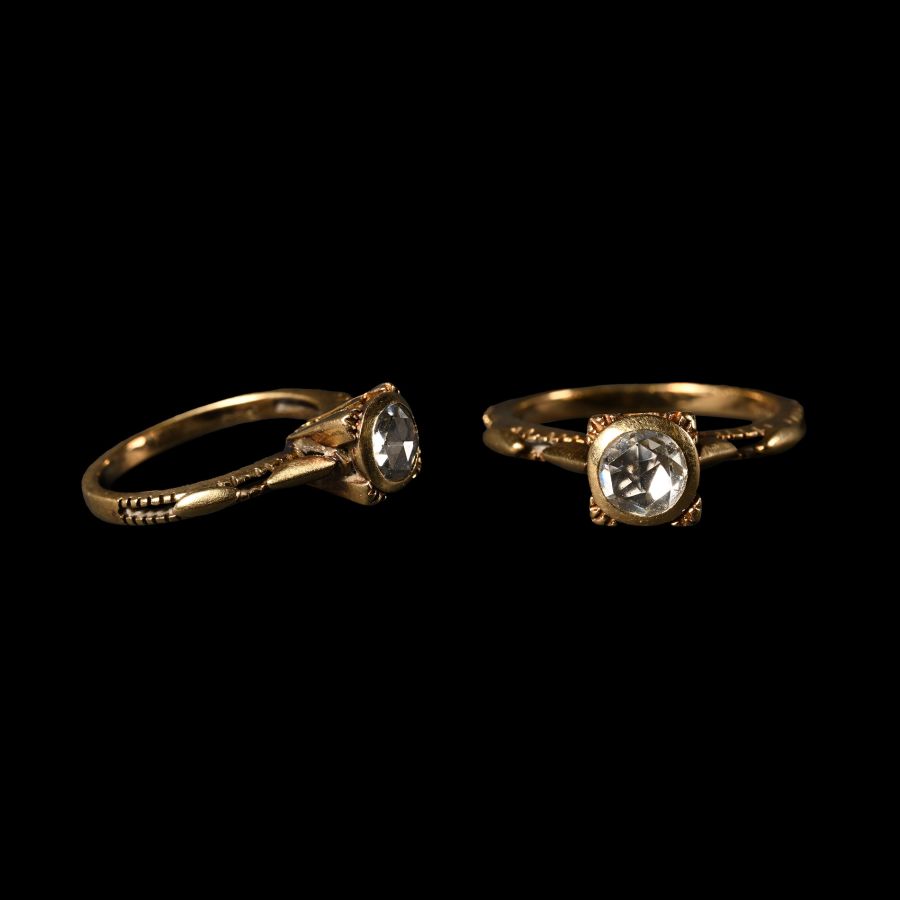
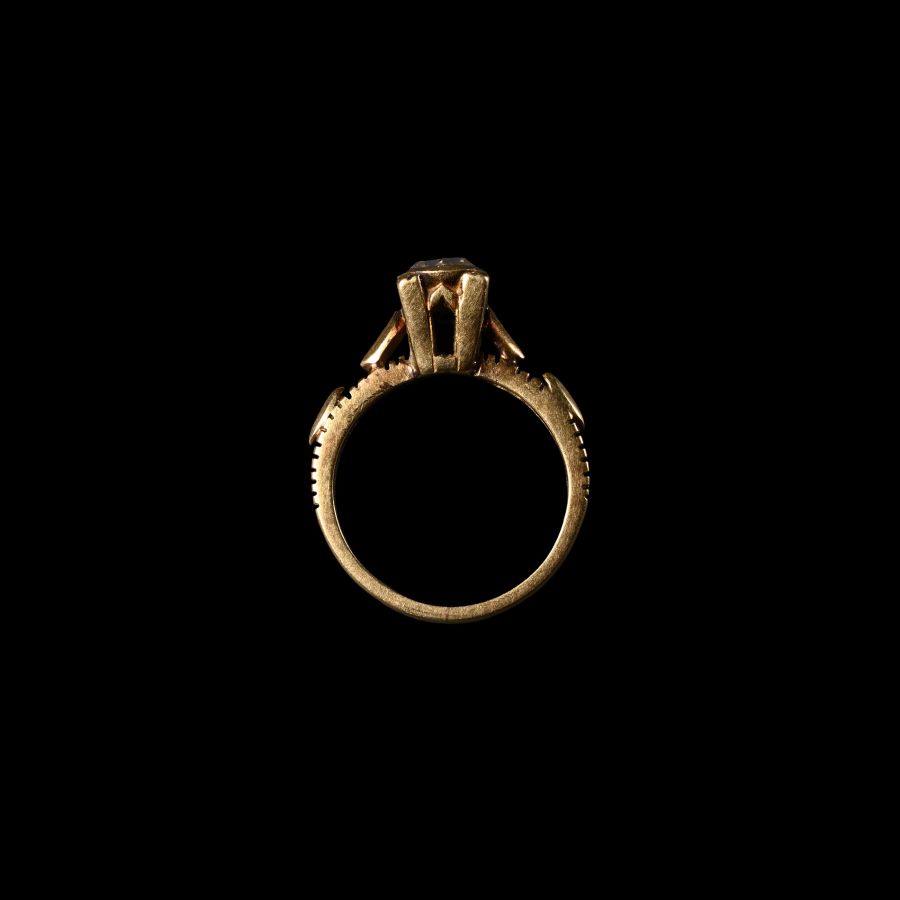
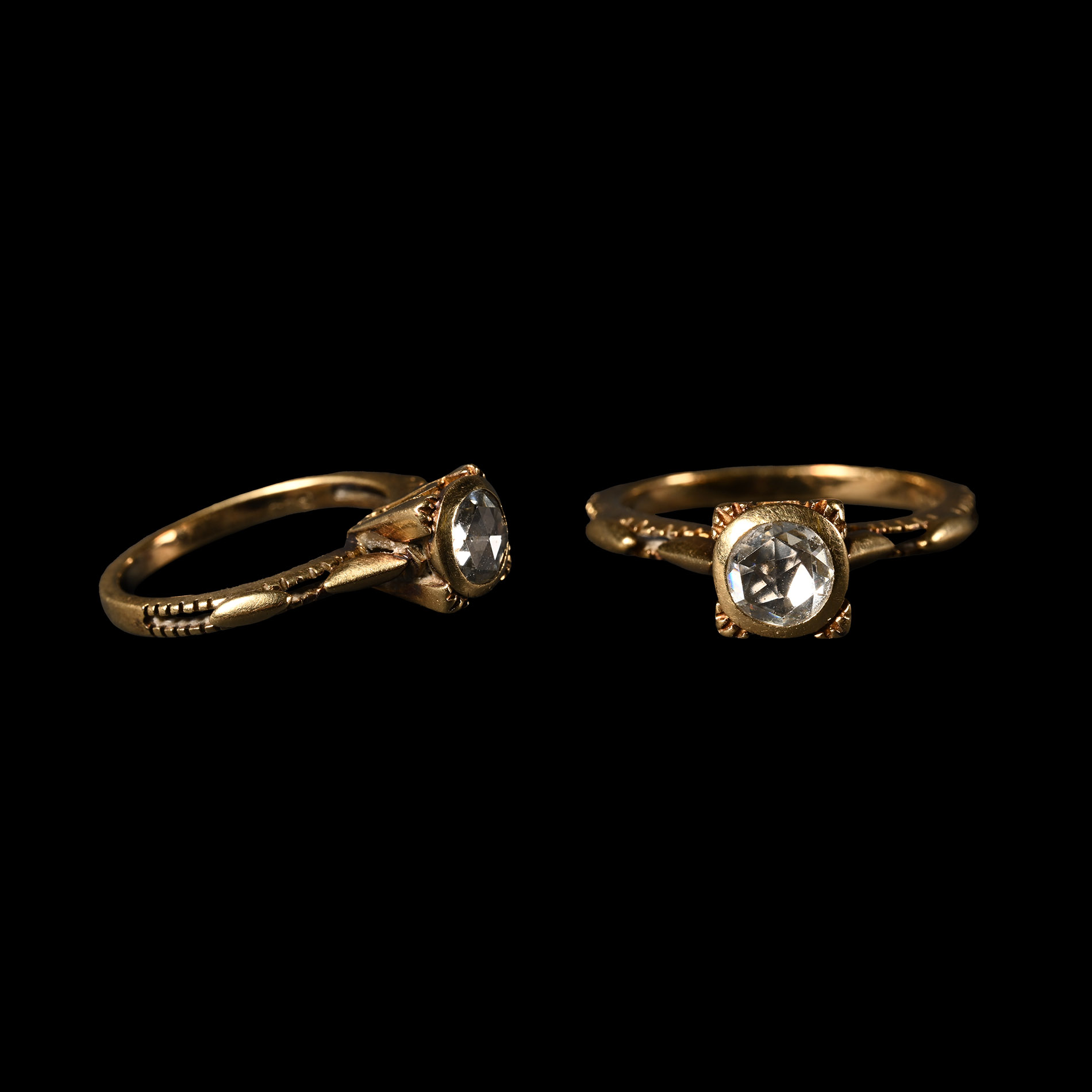
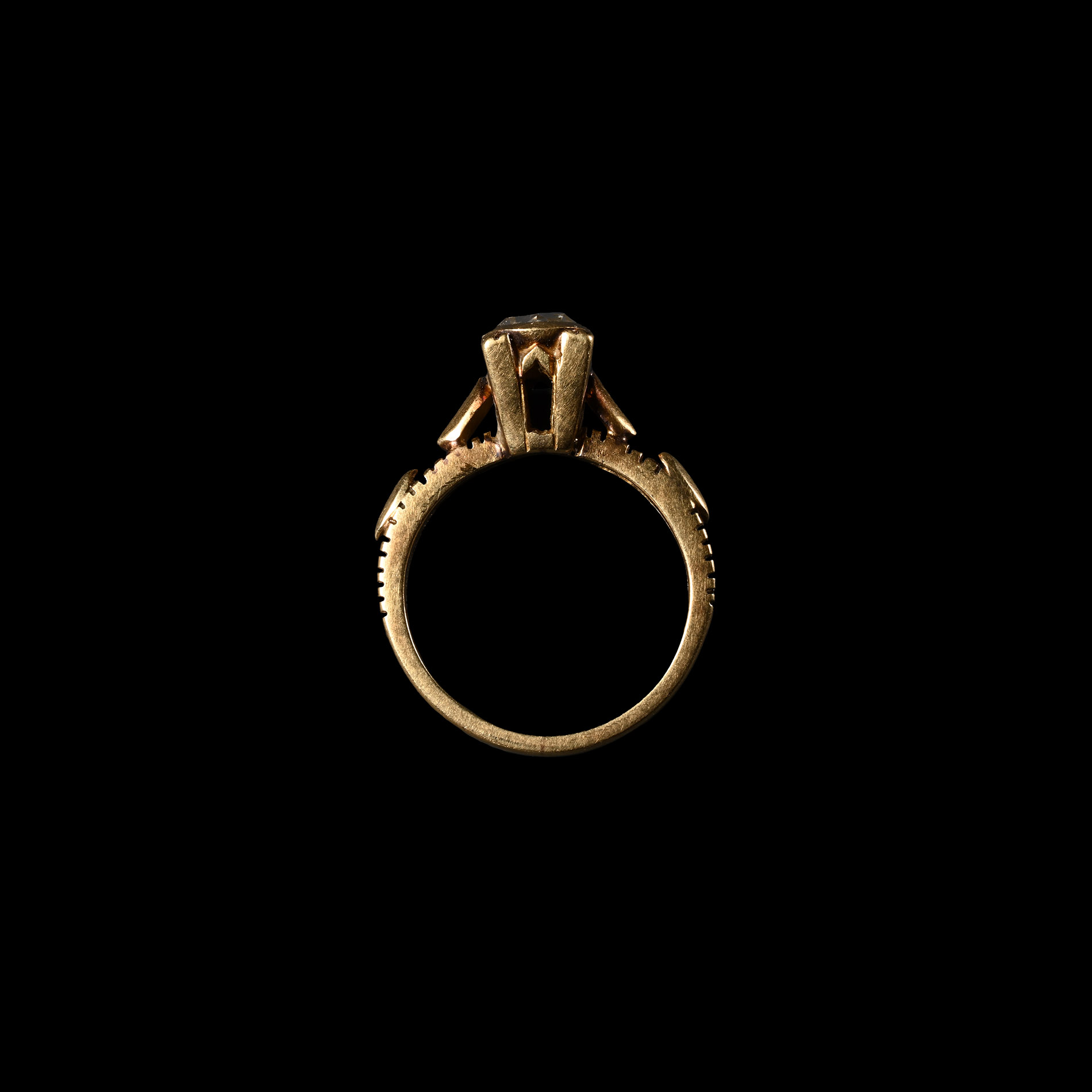
Gold Ring with 'Rose-Cut' Diamond
LATE 19TH-EARLY 20TH CENTURY A.D.
1 in. (3.95 grams, 26.42 mm overall, 16.60 mm internal diameter (approximate size British L 1/2, USA 6, Europe 11.87, Japan 11)).
With dentilled edges to the bifid shoulders and fusiform spurs above, lateral bars supporting a tall square-section openwork bezel with inset rose-cut diamond.
ProvenanceAcquired in the late 1980s-early 1990s.
Important North West London collection.
TimeLine Auctions follows a vetting process to ensure the authenticity and legality of all items, reinforcing our commitment to integrity and responsible trading. Each antiquity, antique, and coin lot undergoes thorough examination by a vetting committee of at least ten external specialists, professional trade association members, scientists, and archaeologists: Our Vetting Process
AUCTIONS:
TimeLine is a leading auction house specialising in antiquities, ancient art, collectables, natural history, coins, medals, and books. Our auctions offer museums, collectors, historians, and enthusiasts the opportunity to acquire unique and historically significant pieces.
LOT 1545
Gold Ring with 'Rose-Cut' Diamond
Estimate £800 - 1,000€930 - 1,160 (for guidance only)$1,080 - 1,350 (for guidance only)
-
.jpg)
Larger Than Life-Size Hellenistic Style Female Marble Head
Late 19th-early 20th century A.D. or earlierSold for (Inc. bp): £4,680
Modelled in the round with heavy brow extending to a slightly aquiline nose, deep-set lentoid eyes above high cheekbones, a small mouth with lips slightly parted; the hair combed radially and the outer band parted centrally and gathered at the nape of the neck in a chignon; mounted on a custom-made stand. 32.3 kg total, 49 cm high including stand
Acquired prior to 1952. Hauser family collection, Zurich, Switzerland. French collection Madam X, acquired from the above 1984. UK private collection, 1997. This lot has been checked against the Interpol Database of stolen works of art and is accompanied by search certificate no.11984-206396. -
Minoan Style Painted Jar
20th century A.D.Sold for (Inc. bp): £85
Substantial conical body with heavy collar, waisted neck and flared rim with flattened upper face, singe loop handle to the rim; painted detailing of stars and helices in red-brown on a yellow field; after the antique. 1 kg, 28 cm high
Ex Bamfords Auctioneers, Derbyshire, UK. Property of a North London, UK, gentleman. -
Post Medieval Mixed Artefact Collection
20th century A.D. and earlierSold for (Inc. bp): £72
Comprising: a translucent glass token with a profile male to one side and an eagle attacking to the other; a restrung string of African terracotta beads; four seal impressions; four carnelian mounts; a carved rock crystal pendant; a bronze Dark Age style eagle mount; a ceramic tongue-shaped finial with a standing figure; a bronze standing figure of male wearing a bowler hat; a bronze fob seal with calligraphic inscription and a Belgian coin pendant; a large tinned lead mount; and a small floral lead(?) mount with an old handwritten label. 106 grams total, 1.6-74 cm
UK private collection formed 1970s-1990s. Property of an East Sussex, UK, gentleman.
