
Loading, please wait...
LOT 0819
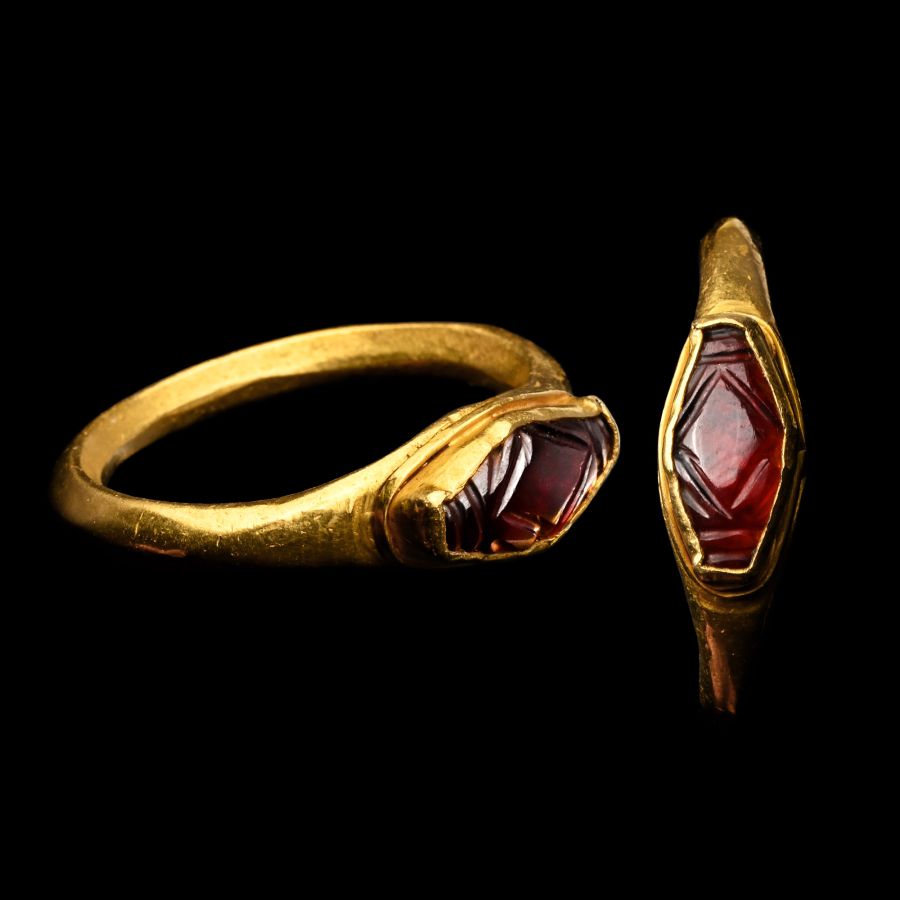
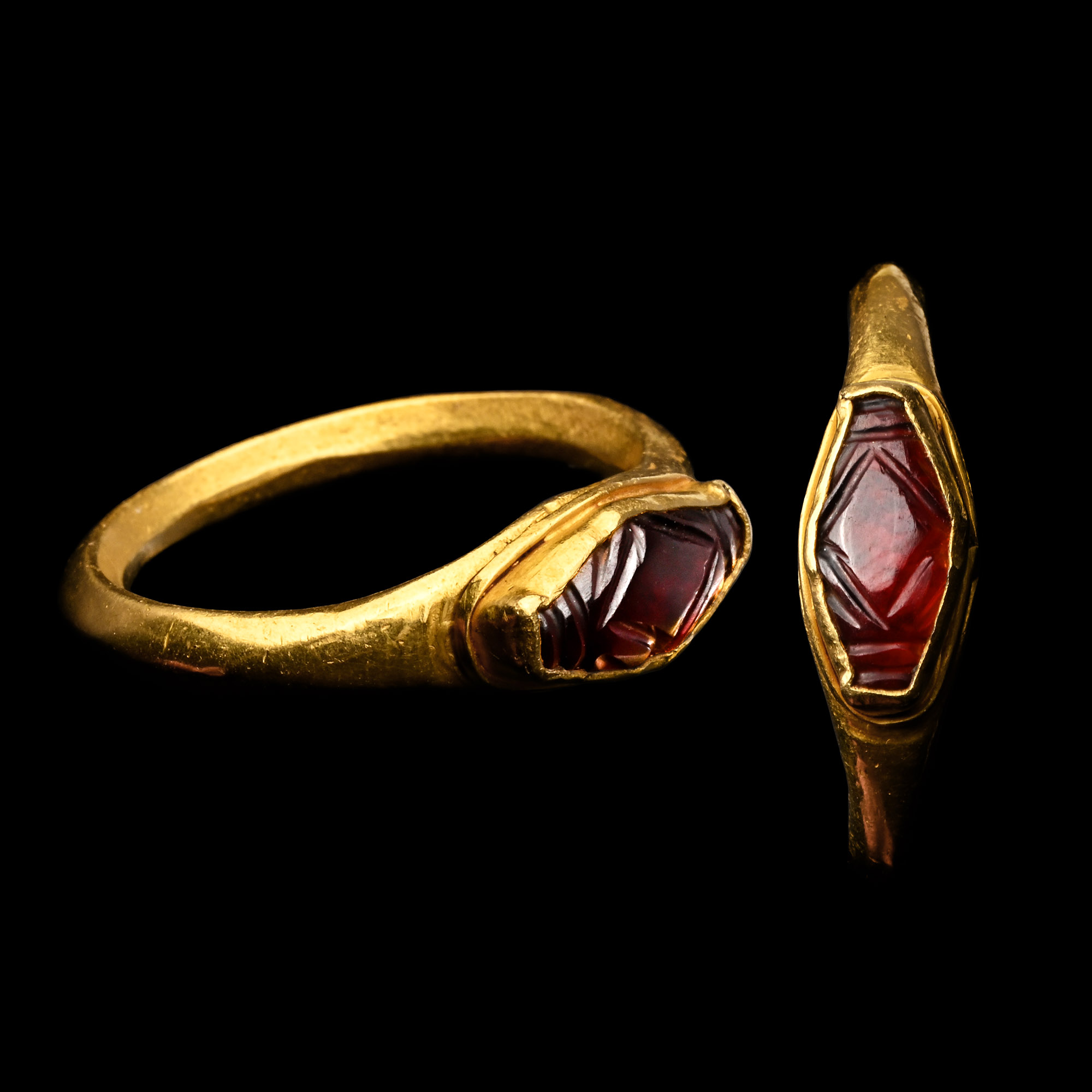
Gold Ring with Elliptical Garnet
ROMAN, 1ST CENTURY B.C.-1ST CENTURY A.D. OR LATER
1 in. (8.36 grams, 25.87 mm overall, 19.48 mm internal diameter (approximate size British P 1/2, USA 7 3/4, Europe 16.86, Japan 16)).
Comprising a substantial keeled hoop and raised bezel set with a garnet, the garnet with a central lozenge flanked by two transverse lines, the ring shape is characteristic of Augustan rings.
ProvenancePrivate English collection.
Private collection, UK.
This lot has been checked against the Interpol Database of stolen works of art and is accompanied by search certificate number no.12955-245984.
Cf. Chadour, A.B., Rings. The Alice and Louis Koch Collection, volume I, Leeds, 1994, item 163, for a similar type.
FootnotesThe ring type is characteristic of the Augustan Period, and two further examples are documented by the Romisch-Germanisches Zentralmuseum in Mainz.
CONDITIONTimeLine Auctions follows a vetting process to ensure the authenticity and legality of all items, reinforcing our commitment to integrity and responsible trading. Each antiquity, antique, and coin lot undergoes thorough examination by a vetting committee of at least ten external specialists, professional trade association members, scientists, and archaeologists: Our Vetting Process
AUCTIONS:
TimeLine is a leading auction house specialising in antiquities, ancient art, collectables, natural history, coins, medals, and books. Our auctions offer museums, collectors, historians, and enthusiasts the opportunity to acquire unique and historically significant pieces.
LOT 0819
Gold Ring with Elliptical Garnet
Estimate £2,500 - 3,500€2,900 - 4,060 (for guidance only)$3,380 - 4,730 (for guidance only)
-
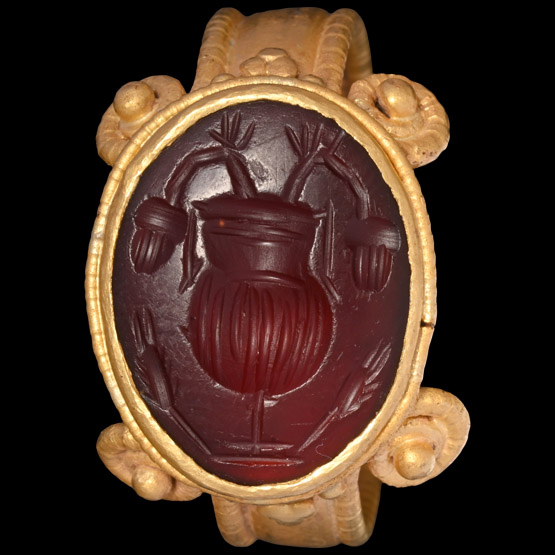
Roman Vase Gemstone in Gold Ring
2nd-3rd century A.D.Estimate: £1,200 - 1,700 (+bp*)
Opening Bid: £600
A cloison garnet intaglio with vase, flowers and seeds; set into a later gold finger ring comprising a broad hoop with beaded wire rims, scrolled shoulders with granule detailing, discoid bezel; set into a later gold ring; supplied with a museum-quality impression. 8.48 grams, 22.56 mm overall, 19.58 mm internal diameter (approximate size British Q, USA 8, Europe 17.49, Japan 16)
Private collection, before 1975. Private collection, England. -
.jpg)
Roman Bronze Horse and Rider Statuette Group
1st-4th century A.D.Sold for (Inc. bp): £234
Comprising: horse with one foreleg raised, plume to brow; rider with helmet and one arm raised; socle base with stub legs. 55.3 grams total, 35-54 mm
Ex German art market, 2000s. Acquired from an EU collector living in London. From the collection of a Surrey, UK, gentleman. -
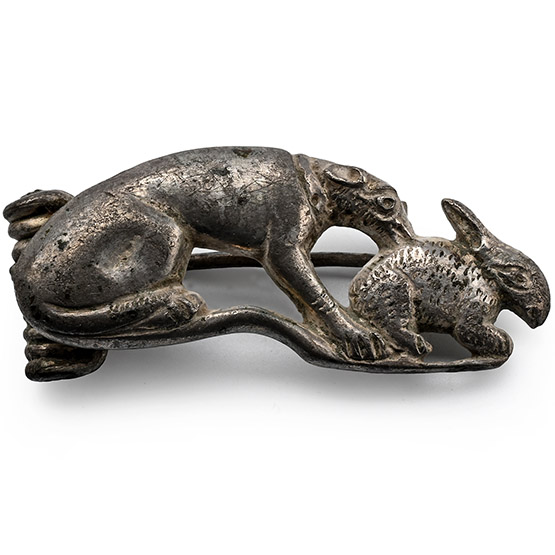
Roman Silver Hare and Hound Brooch
Circa 2nd century A.D.Estimate: £1,200 - 1,700 (+bp*)
Opening Bid: £600
Modelled in the half-round, image of a hare attacked by a hound on a baseline; pin-lugs, pin and catch to reverse. 10.2 grams, 42 mm
Ex 'S' collection, London, UK, 1970s-1990s.
