
Loading, please wait...

LOT 0393
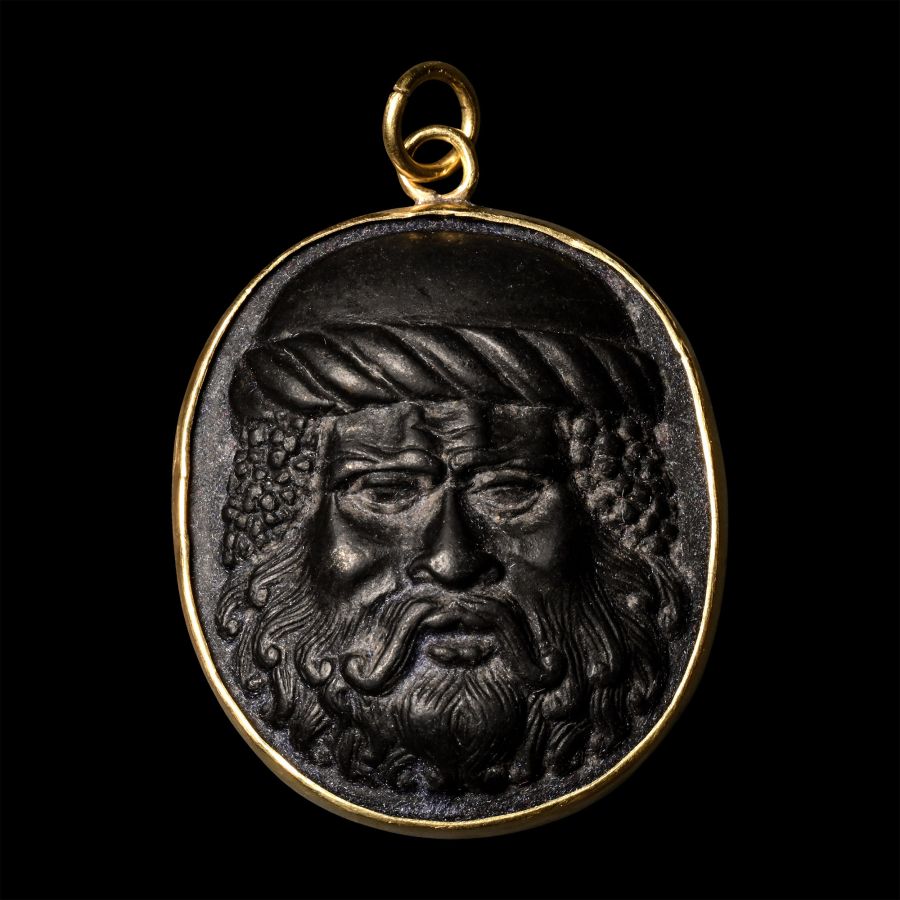
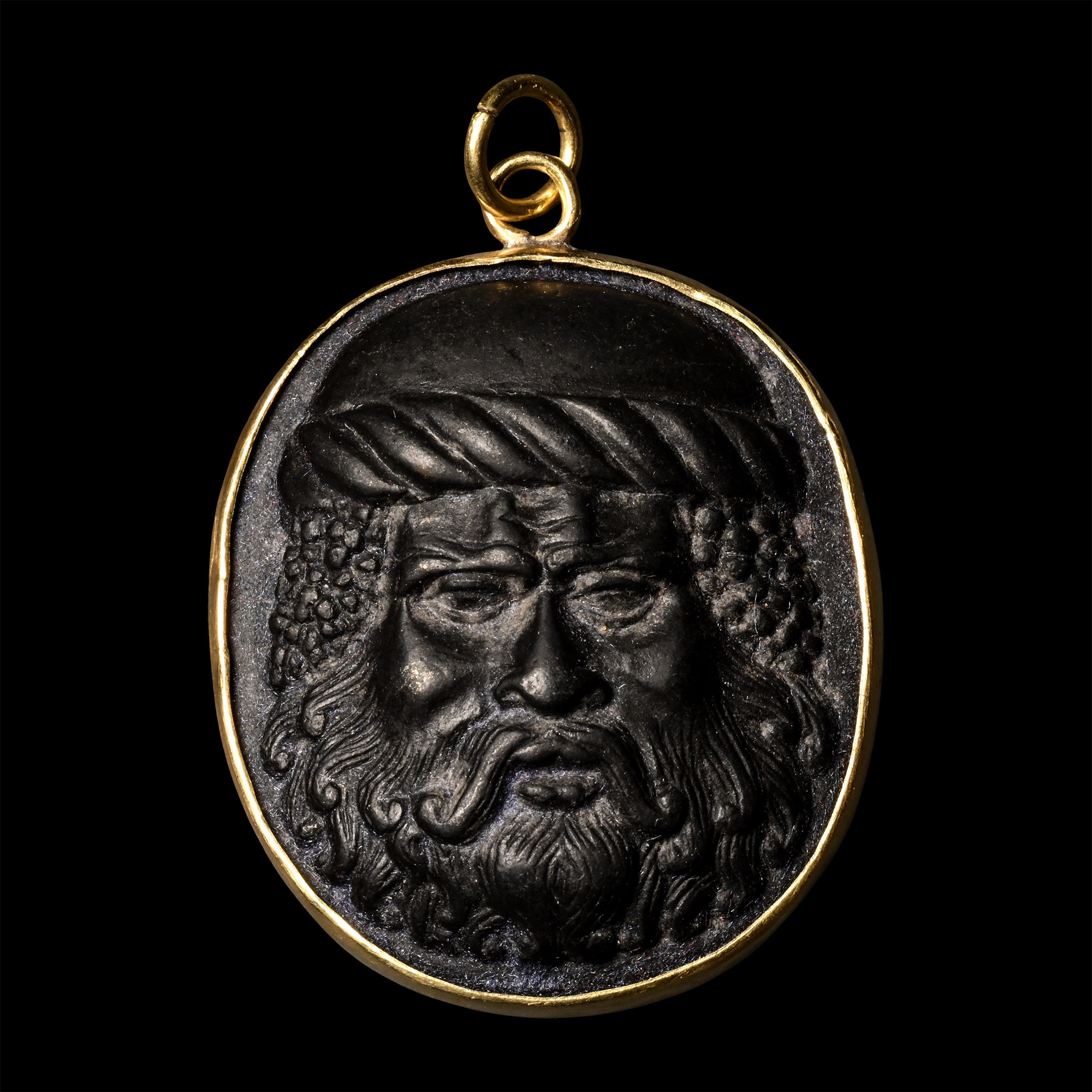
Gold Pendant with Glass Head
19TH CENTURY A.D.
1 3/4 in. (11.5 grams, 44 mm).
In low-relief, facing bust with braided band to his brow and bunch of grapes to each temple.
ProvenancePrivate collection, Europe.
Acquired on the English art market.
TimeLine Auctions follows a vetting process to ensure the authenticity and legality of all items, reinforcing our commitment to integrity and responsible trading. Each antiquity, antique, and coin lot undergoes thorough examination by a vetting committee of at least ten external specialists, professional trade association members, scientists, and archaeologists: Our Vetting Process
AUCTIONS:
TimeLine is a leading auction house specialising in antiquities, ancient art, collectables, natural history, coins, medals, and books. Our auctions offer museums, collectors, historians, and enthusiasts the opportunity to acquire unique and historically significant pieces.
LOT 0393
Gold Pendant with Glass Head
Estimate £500 - 700€580 - 810 (for guidance only)$680 - 950 (for guidance only)
-
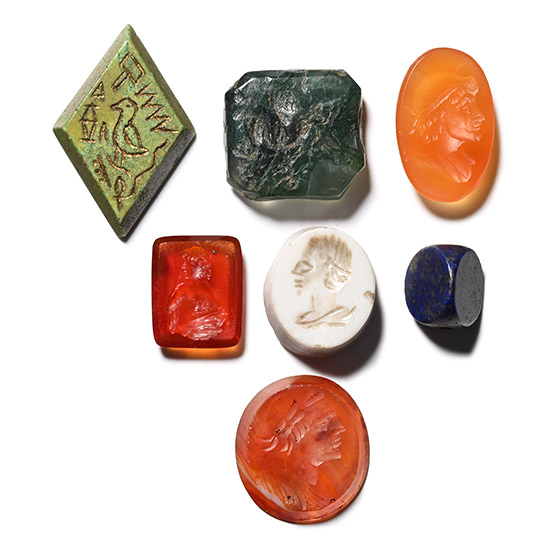
Post Classical Gemstone Collection
19th century A.D.Sold for (Inc. bp): £143
Comprising: three carnelian intaglios with profile busts; an agate intaglio with profile bust; a lozenge-shaped intaglio with bird and other symbols, possibly made of stained bone; an octagonal green stone intaglio with worn motif; and a lapis lazuli bead. 9.71 gram stotal, 9-24 mm
Acquired on the European art market. -
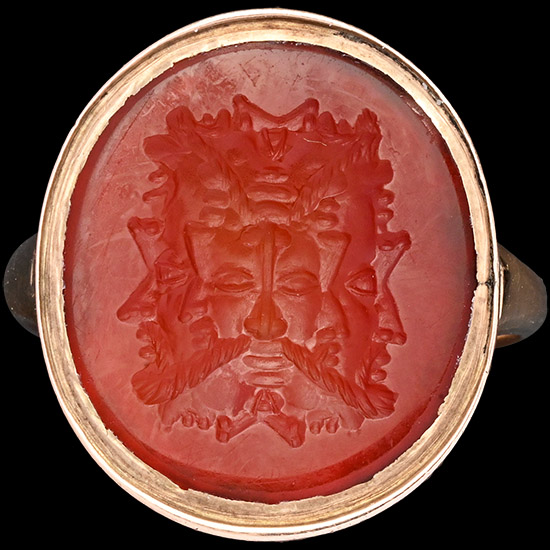
Post Medieval Gold Ring with Carnelian Gemstone with Fourteen Faces
Italy, 17th-18th century A.D.Estimate: £3,500 - 4,500 (+bp*)
Opening Bid: £1,750
Composed of a D-section large hoop and an oval collet set with an intaglio intricately carved with a composite head composed of at least fourteen distinct faces, based on an image engraved after Jean Berain c.1675; supplied with a museum-quality impression. 4.66 grams, 22.60 mm overall, 20.70 mm internal diameter (approximate size British Q 1/2, USA 8 1/4, Europe 18.12, Japan 17)
Acquired on the European art market. This lot has been checked against the Interpol Database of stolen works of art and is accompanied by search certificate number no.13397-257946. -
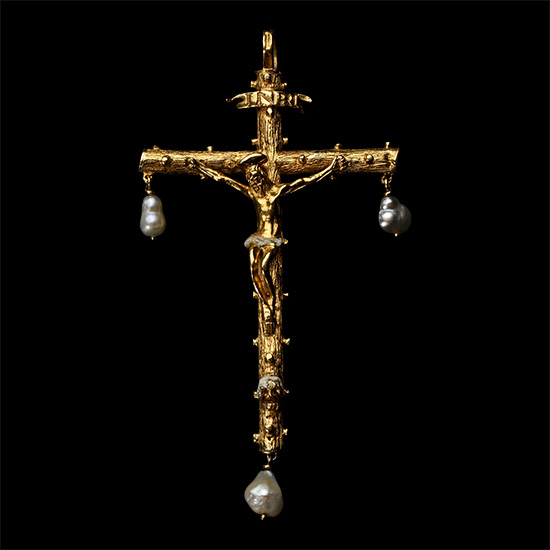
Renaissance Gold and Enamelled Crucifix Pendant
Spain, 16th century A.D.Sold for (Inc. bp): £4,550
The limp body of Christ hanging from the cross, wearing an enamelled loincloth, the bones of Adam at his feet; above his head a plaque mocking the saviour, hung by Pilate with the initials ‘INRI’, an abbreviation of the Latin ‘Iēsus Nazarēnus, Rēx Iūdaeōrum’, translating as 'Jesus the Nazarene, King of the Jews’; carefully rendered three-dimensional cross imitating the grain, knots and stumps of the wood, a baroque pearl suspended from both arms and the base of the cross. 8.56 grams, 75 mm
Acquired on the European art market. This lot has been checked against the Interpol Database of stolen works of art and is accompanied by search certificate number no.13402-257995.
