Loading, please wait...

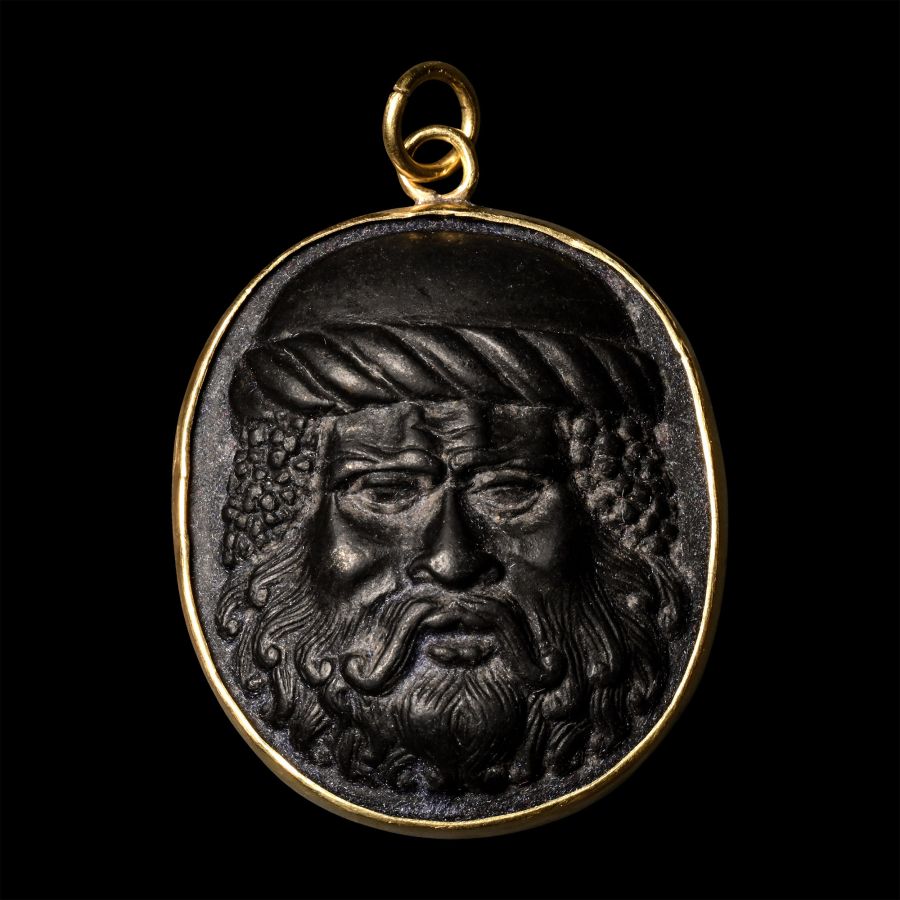
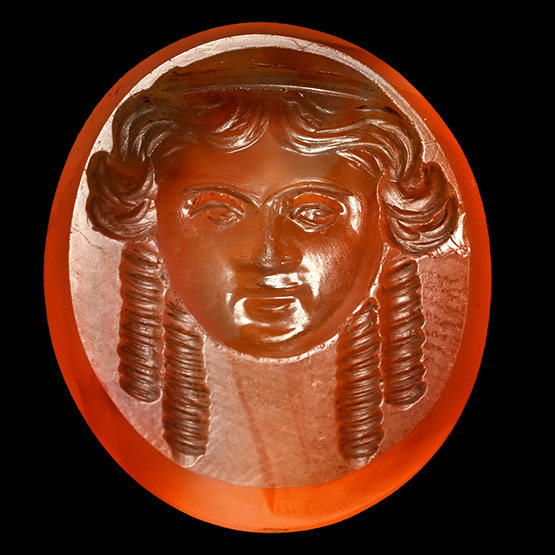
Gold Pendant with Glass Head Gold Pendant with Glass Head Gold Pendant with Glass Head
Use mousewheel to zoom in and out, click to enlarge
Details

LOT 0431

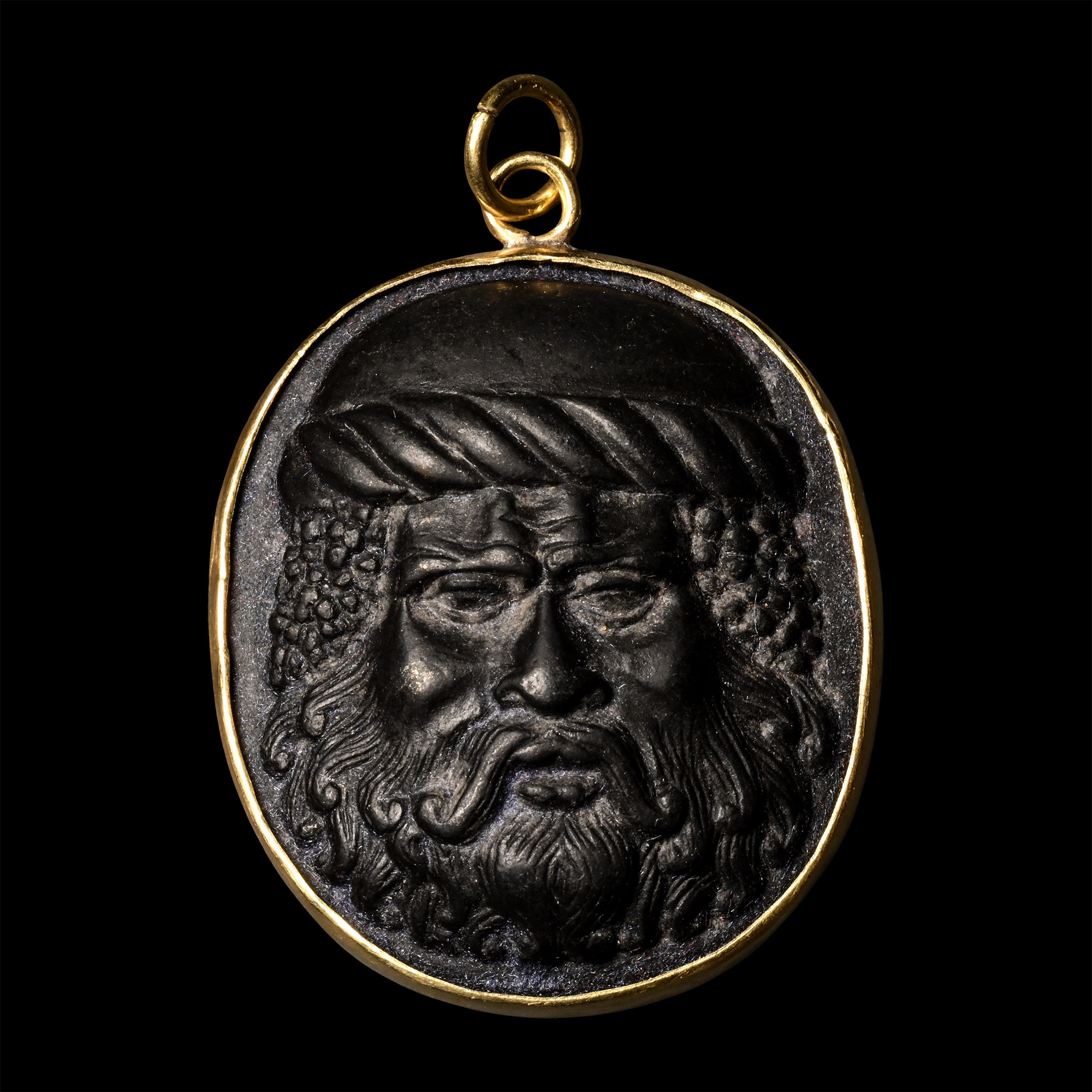
Gold Pendant with Glass Head

19TH CENTURY A.D.

1 3/4 in. (11.5 grams, 44 mm).

In low-relief, facing bust with braided band to his brow and bunch of grapes to each temple.

Provenance

Private collection, Europe.
Acquired on the English art market.

CONDITION
VETTING:

TimeLine Auctions follows a vetting process to ensure the authenticity and legality of all items, reinforcing our commitment to integrity and responsible trading. Each antiquity, antique, and coin lot undergoes thorough examination by a vetting committee of at least ten external specialists, professional trade association members, scientists, and archaeologists: Our Vetting Process


AUCTIONS:

TimeLine is a leading auction house specialising in antiquities, ancient art, collectables, natural history, coins, medals, and books. Our auctions offer museums, collectors, historians, and enthusiasts the opportunity to acquire unique and historically significant pieces.

Live Bidding

LOT 0431

Gold Pendant with Glass Head

Estimate £600 - 800€700 - 930 (for guidance only)$810 - 1,080 (for guidance only)

Print page

RELATED LOTS
  • Very Large Glazed Bellarmine Witchs Bottle with Contents
    Very Large Glazed Bellarmine Witch's Bottle with Contents
    Late 16th-early 17th century A.D.

    Sold for (Inc. bp): £9,750

    Vessel of squat spherical form with a broad cylindrical neck, strap handle and foot with rolled rim, bearded face (Bartmann 'mask') and other detailing; with original contents comprising: eight iron clout nails with square-section shank and domed head; three similar with flat head; base metal dress pin with hollow-formed spherical head; similar with biconvex head; fragment of coarse-woven textile with five pins in situ; thirteen unassociated pins. 1.7 kg total, bottle: 26.5 cm


    From the private collection of a London, UK, gentleman.

    Witch bottles were a response to the common belief in witchcraft, which was feared in the Puritan culture of those times. The process involved heating the victim’s urine in a bottle, mixed with human hair and metal nails and pins, sometimes inserted into a cloth panel representing the victim's heart. The bottle was then either buried under the hearth of a house (East Anglian tradition) or thrown into a river (London tradition). The heating of the bottle was supposed to transfer to the body of the witch who had caused the victim to be afflicted.

    Lot Details

  • Published Iron Alpine Candle Holder
    Published Iron Alpine Candle Holder
    France or Switzerland, 19th century A.D.

    Sold for (Inc. bp): £338

    With spring arm to secure the candle, with raised tray feature. 687 grams, 36.5 cm


    From a private collection. Ex Nic McElhatton, former chairman of Christie's South Kensington. Property of a Berkshire, UK, collector. Accompanied by copies of the relevant book pages where published.

    Lot Details

  • Veneto-Cretan Icon of Marcia Lactans with St Rock
    Veneto-Cretan Icon of Marcia Lactans with St Rock
    17th century A.D.

    Estimate: £3,500 - 4,500 (+bp*)

    Opening Bid: £1,750

    Executed in oil and tempera on a slightly curved wooden panel base depicting the Theotokos (Mother of God), the infant Jesus and Saint Rock on a natural background; Mary with head bowed left wearing a red maphorion mantle over a dark blue robe, with elaborate golden saltires on the shoulders and head of the mantle, fine gold brocade to the hem of the blue robe, nursing the child; the infant Jesus facing away to left, supported on Mary's right arm and dressed in gold tunic, wrapped in a red shawl with gold highlights to folds, both hands holding the mother’s breast; the long-haired Saint Rock covered in a black tabarrino marked with his attributes, the red cross, the pilgrim's staff, the scallop shell and the keys, holds his walking stick in his hand; trees and mountain profiles in the background; gilded wooden frame surrounded by a blue indigo border with gold arabesques; from the Veneto-Cretan guild. 857 grams, 32.5 x 27.5 cm


    Acquired on the European art market. Private collection, London, UK. Accompanied by an academic report by Dr Raffaele D’Amato. This lot has been checked against the Interpol Database of stolen works of art and is accompanied by search certificate no. 13065-249292.

    The icon presents the type known in Greek as the Galaktotrophousa and in Russia as Mlekopitatelnitsa. Originating from the pagan iconography of Isis nursing Horus, the icon presents the Mother of God nursing the child. As is typical in traditional Orthodox iconography, conscious effort is made to remove the image from reality. That is why Mary’s breast is so oddly depicted and placed near her shoulder — an attempt to avoid any trace of sensuality.

    Lot Details

Stay up-to-date with the latest from TimeLine Auctions by joining our mailing list