
Loading, please wait...
LOT 1443
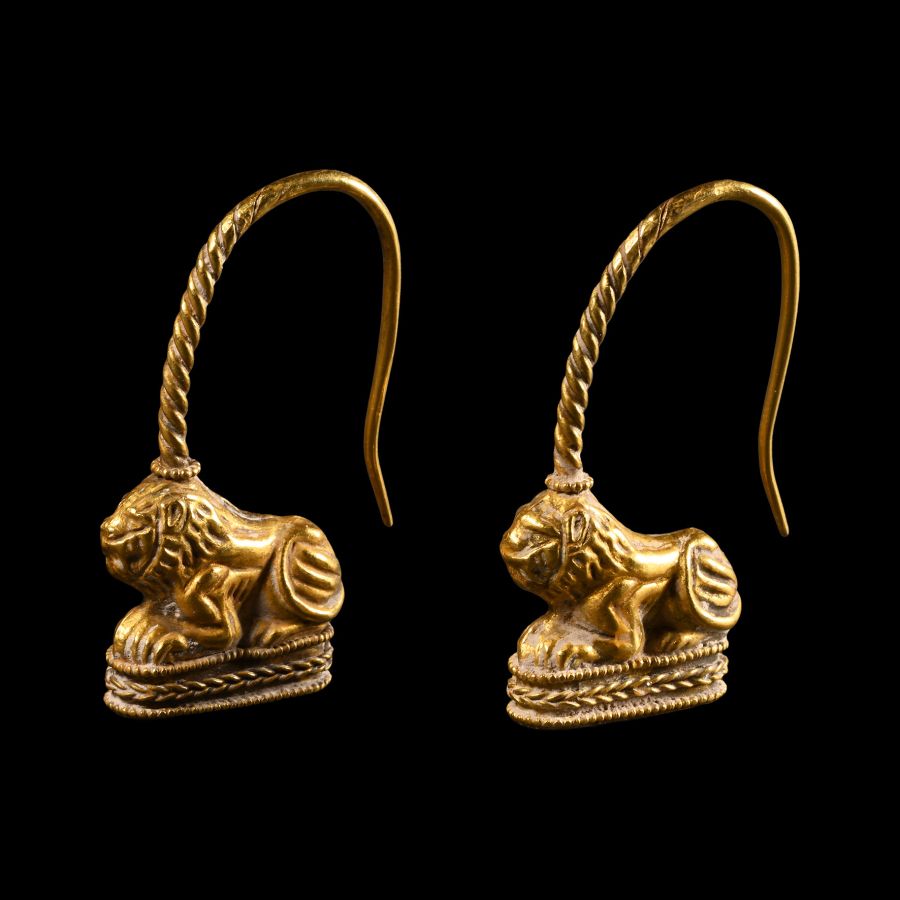
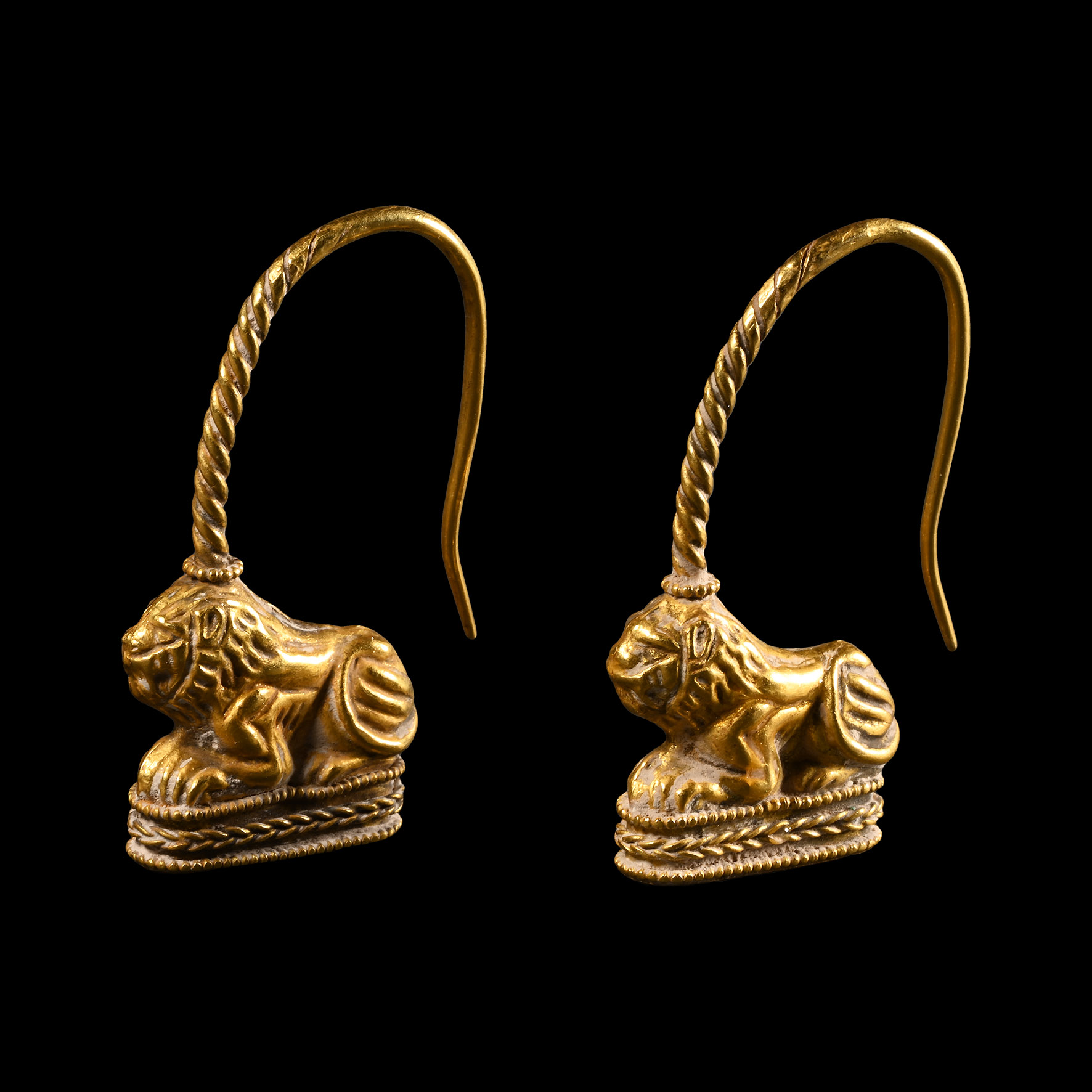
Gold Lion Earring Pair
20TH CENTURY A.D. OR EARLIER
1 3/8 in. (9.06 grams total, 35 mm each).
Each composed of an oblong base adorned with filigree and granules, a couchant lion modelled in the round on top, ear hook with decoratively twisted lower body. [2, No Reserve]
ProvenanceFrom the collection of a North American gentleman, formed in the 1990s.
CONDITIONTimeLine Auctions follows a vetting process to ensure the authenticity and legality of all items, reinforcing our commitment to integrity and responsible trading. Each antiquity, antique, and coin lot undergoes thorough examination by a vetting committee of at least ten external specialists, professional trade association members, scientists, and archaeologists: Our Vetting Process
AUCTIONS:
TimeLine is a leading auction house specialising in antiquities, ancient art, collectables, natural history, coins, medals, and books. Our auctions offer museums, collectors, historians, and enthusiasts the opportunity to acquire unique and historically significant pieces.
-
Bactrian Style Lapis Lazuli Bead Necklace String
20th century A.D.Sold for (Inc. bp): £46
Restrung group of lapis lazuli beads, tubular, polyhedral, fusiform and other types. 40.4 grams, 66 cm long
Acquired 1980-2015. Ex Abelita family collection. -
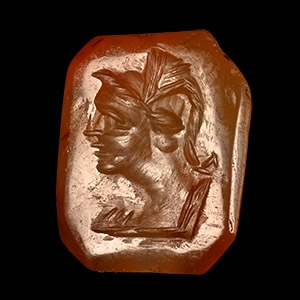
Neoclassical Agate Gemstone with Helmetted Roman Bust
19th century A.D.Sold for (Inc. bp): £52
Sub-rectangular in form, intaglio image of a youthful soldier wearing a high-crested helmet. 2.64 grams, 19 mm
From the property of the late Mr SM, London, UK, 1969-1999. -
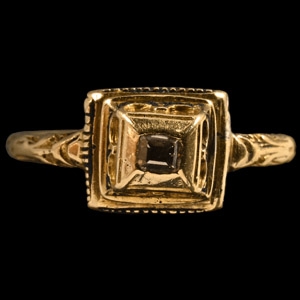
Renaissance Gold Ring with a High-Quality Facetted Diamond
16th century A.D.Sold for (Inc. bp): £3,900
Composed of a slender hoop with ornamental shoulders, scallops and pellets to the oblong box bezel, set with a cut and polished diamond; traces of black enamel remaining to the lower half and base of the bezel; the diamond believed to be: VS 1, colour H. 2.44 grams, 22.59 mm overall, 15.44 mm internal diameter (approximate size British J, USA 4 3/4, Europe 8.69, Japan 8)
From an early 20th century family collection. Acquired by a London gentleman in the 1930s, thence by descent. From the private collection of a Kent, UK, lady. This lot has been checked against the Interpol Database of stolen works of art and is accompanied by search certificate no.11910-206607.
