
Loading, please wait...
LOT 1898
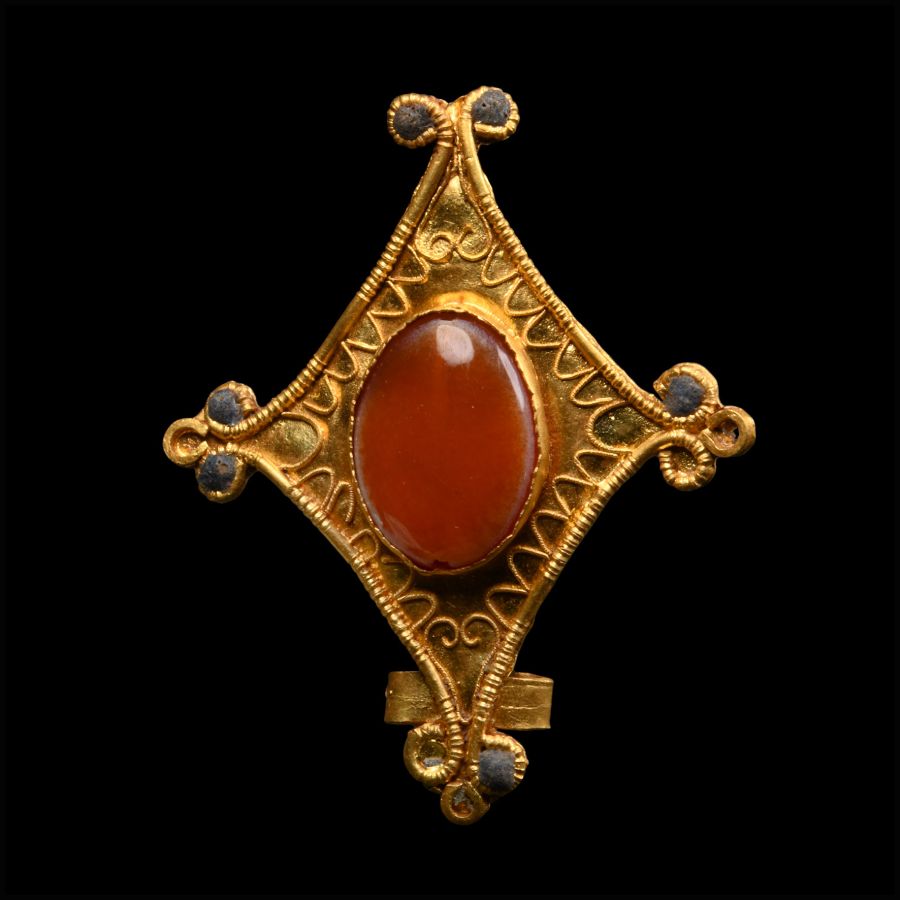
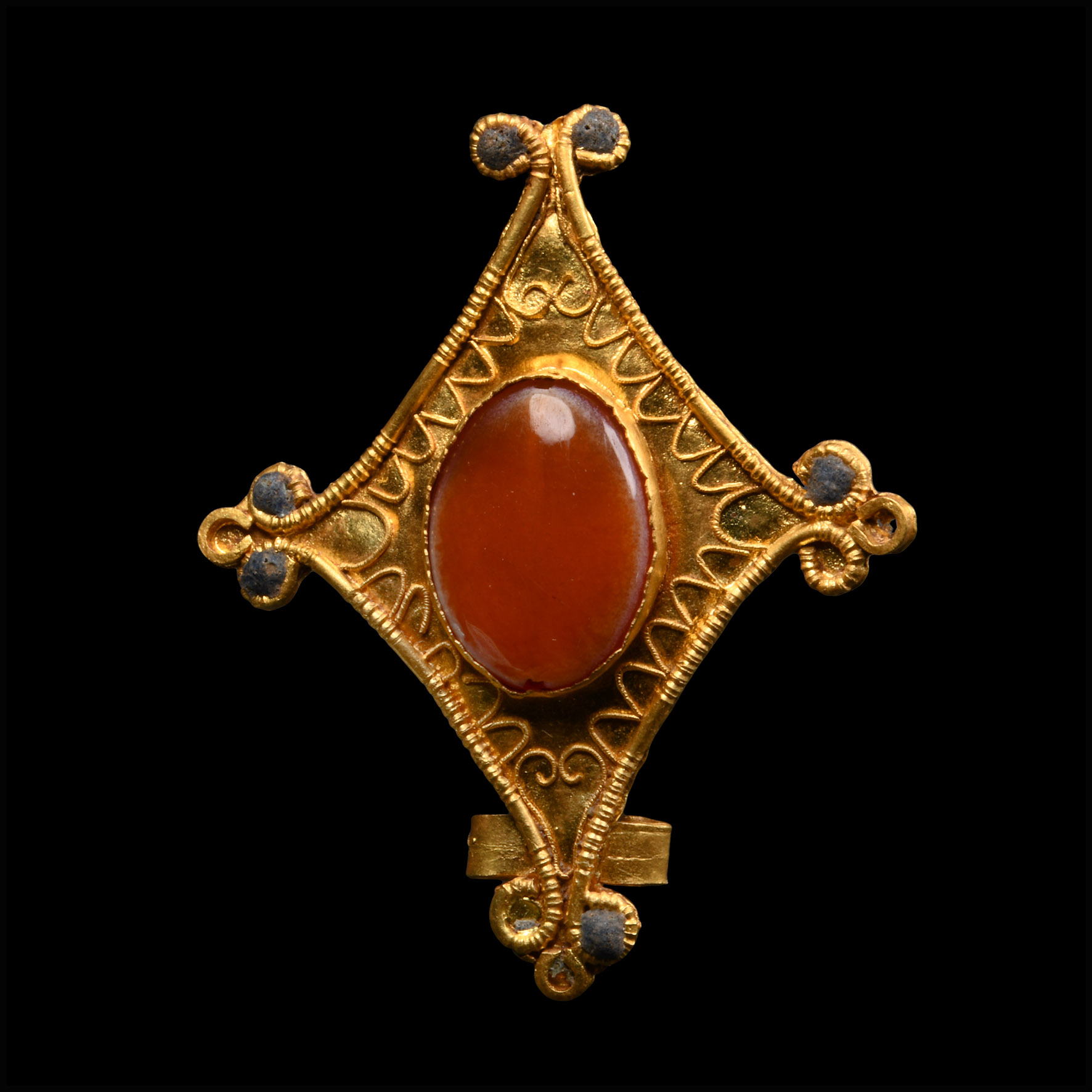
Gold Greek Style Brooch
20TH CENTURY A.D. OR EARLIER
2 1/8 in. (9.38 grams, 54 mm).
With beaded wire borders, inset lapis lazuli cabochons, filigree arcading and central carnelian cabochon. [No Reserve]
ProvenanceFrom the collection of a North American gentleman, formed in the 1990s.
CONDITIONTimeLine Auctions follows a vetting process to ensure the authenticity and legality of all items, reinforcing our commitment to integrity and responsible trading. Each antiquity, antique, and coin lot undergoes thorough examination by a vetting committee of at least ten external specialists, professional trade association members, scientists, and archaeologists: Our Vetting Process
AUCTIONS:
TimeLine is a leading auction house specialising in antiquities, ancient art, collectables, natural history, coins, medals, and books. Our auctions offer museums, collectors, historians, and enthusiasts the opportunity to acquire unique and historically significant pieces.
-
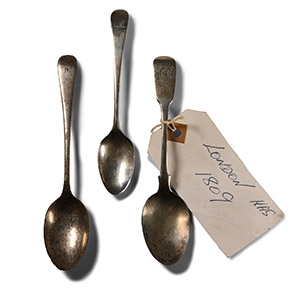
Post Medieval Silver Spoon Group
Circa 19th century A.D.Sold for (Inc. bp): £13
Two silver spoons; one assayed for London, 1809 with elaborate initials to finial; one without assay but probably London 1824, engraved with the head of a bird holding a flag in its beak; plus one Victorian EPNS with initial W to finial. 57 grams total, 13-14.5 cm
Found Berkshire, UK. -
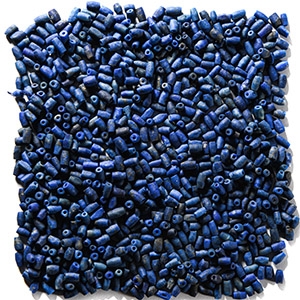
Lapis Lazuli Necklace Bead Group
20th century A.D. or earlierSold for (Inc. bp): £72
Comprising hundreds of small tubular beads; each pierced longitudinally for stringing. 75 grams total, 4-6 mm
UK gallery, early 2000s. -
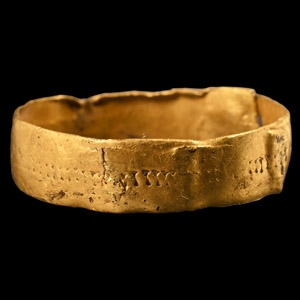
Stuart Period Decorated Gold Ring
17th-18th century A.D.Sold for (Inc. bp): £156
Incomplete with a flat cross-section hoop, continuous band of enigmatic ornament to the equator; repaired. 1.82 grams, 20.52 mm overall, 18.23 mm internal diameter (approximate size British P, USA 7 1/2, Europe 16.23, Japan 15)
Found Berkshire, UK. Accompanied by a copy of the British Museum's Portable Antiquities Scheme (PAS) report no.BERK-09E1C9 and with Treasure case no.2014.092.
