
Loading, please wait...
LOT 0351
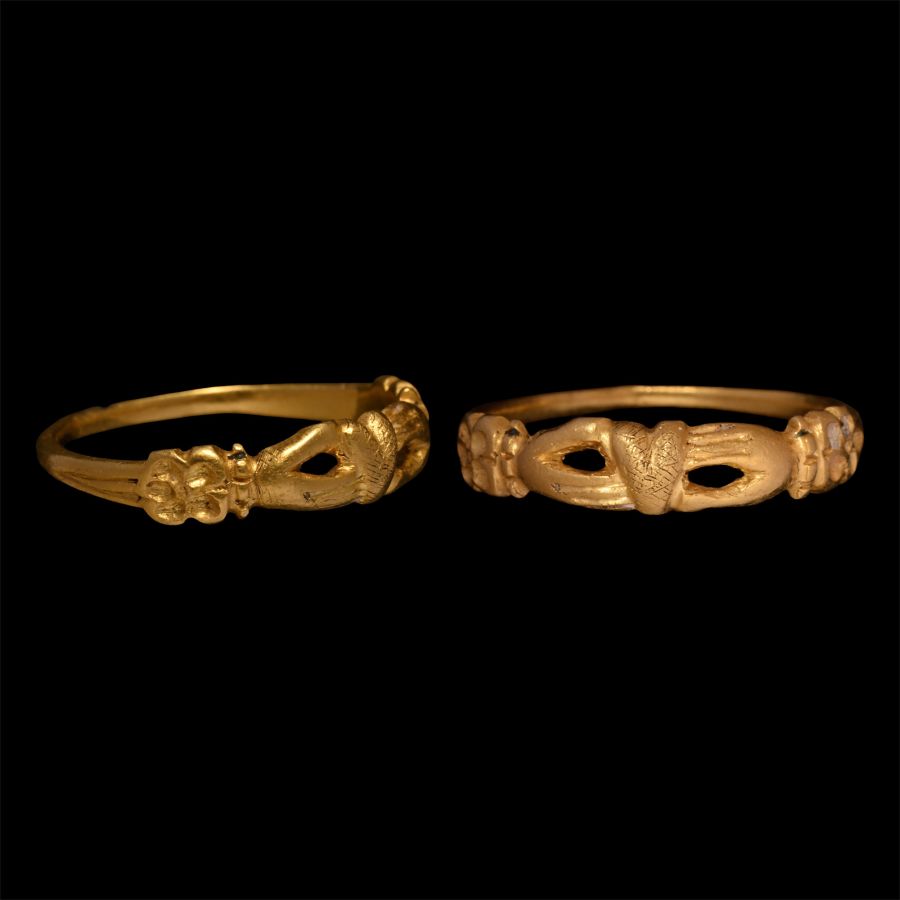
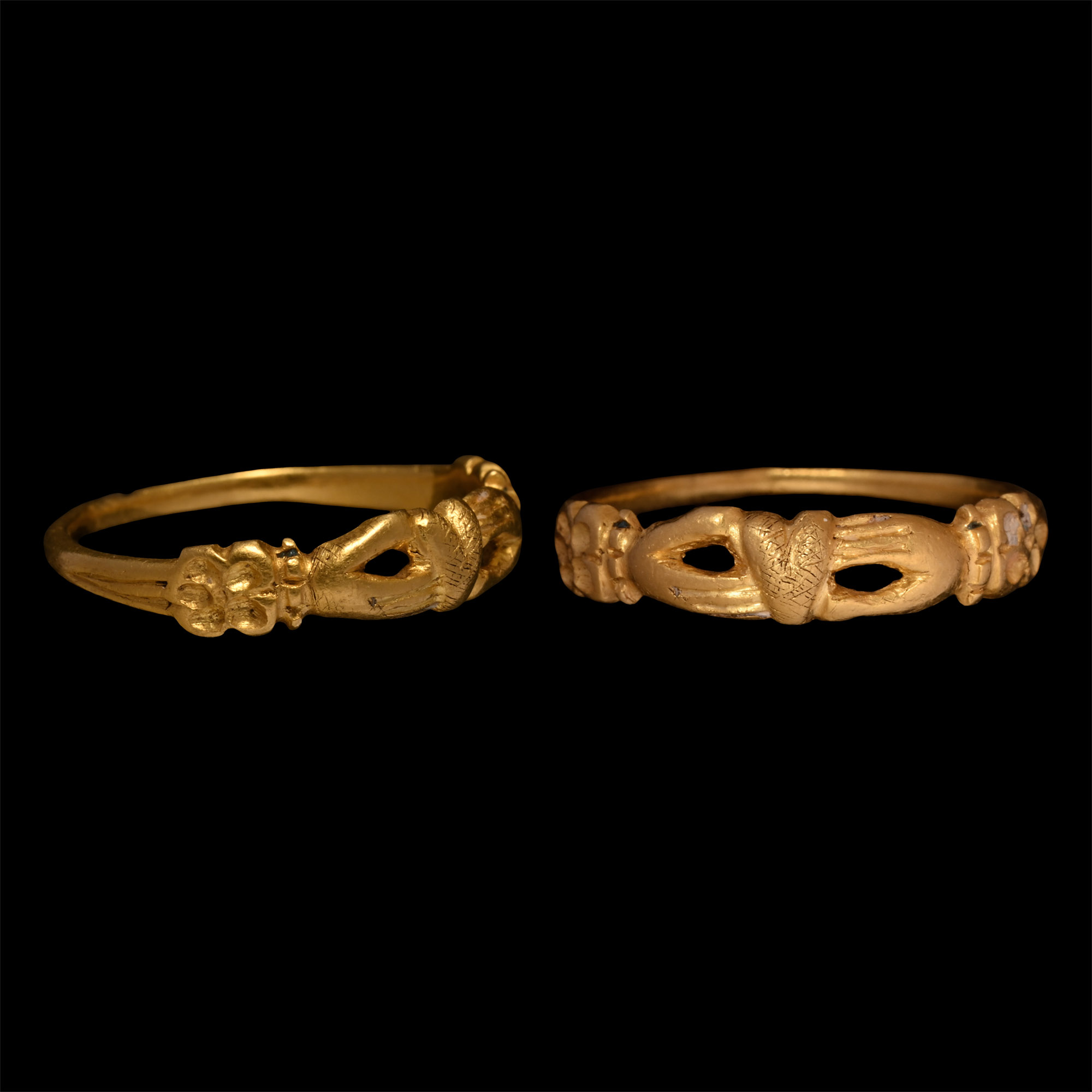
Gold Fede Ring with Hands Holding a Heart
MID-17TH CENTURY A.D.
3/4 in. (3.24 grams, 21.13 mm overall, 18.50 mm internal diameter (approximate size British O 1/2, USA 7 1/4, Europe 15.61, Japan 15)).
With a gold flat-section hoop, bezel formed as two hands supporting a heart, a flower ornament to each shoulder with traces of white enamel.
ProvenanceFrom an old European collection, 1990s.
From a Cambridgeshire, UK, private collection.
This lot is accompanied by an illustrated lot declaration signed by the Head of the Antiquities Department, Dr Raffaele D'Amato.
The fine craftsmanship and design suggest it could have been a ring commemorating the wedding of Charles II and Catherine of Braganza in 1662.
CONDITIONTimeLine Auctions follows a vetting process to ensure the authenticity and legality of all items, reinforcing our commitment to integrity and responsible trading. Each antiquity, antique, and coin lot undergoes thorough examination by a vetting committee of at least ten external specialists, professional trade association members, scientists, and archaeologists: Our Vetting Process
AUCTIONS:
TimeLine is a leading auction house specialising in antiquities, ancient art, collectables, natural history, coins, medals, and books. Our auctions offer museums, collectors, historians, and enthusiasts the opportunity to acquire unique and historically significant pieces.
-
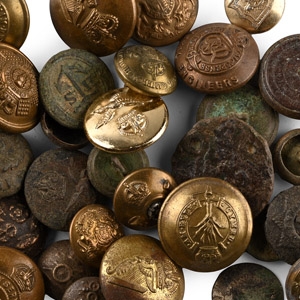
Military Bronze Button Collection
19th-20th century A.D.Sold for (Inc. bp): £26
Mainly military types, domed, hollow some with text to verso. 138 grams total, 15-30 mm
Acquired on the UK art market. Property of an East Anglia private collector. This lot is accompanied by an illustrated lot declaration signed by the Head of the Antiquities Department, Dr Raffaele D'Amato. -
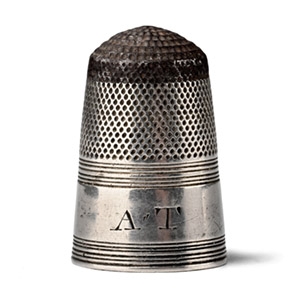
Post Medieval Silver Thimble with Initials AT
19th century A.D.Sold for (Inc. bp): £85
With regularly placed dimples, horizontal banding, initials 'AT' at base. 5.63 grams, 24 mm
Acquired on the UK art market in the early 2000s. This lot is accompanied by an illustrated lot declaration signed by the Head of the Antiquities Department, Dr Raffaele D'Amato. -
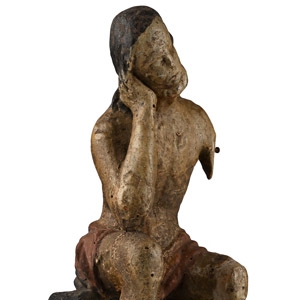
Post Medieval Painted Wooden Statue of Pensive Christ
18th-19th century A.D.Sold for (Inc. bp): £169
Seated figure of Christ on a rock, right hand supporting head, left hand absent; remains of black, cream and red colour. 665 grams, 30 cm
From the private family collection of Ersula Barter-Hemmerich, the longest serving member of staff working at the United Nations, her private collection formed in the 1950s and 1960s; thence by descent to her grandson. This lot is accompanied by an illustrated lot declaration signed by the Head of the Antiquities Department, Dr Raffaele D'Amato.
