
Loading, please wait...
LOT 0338
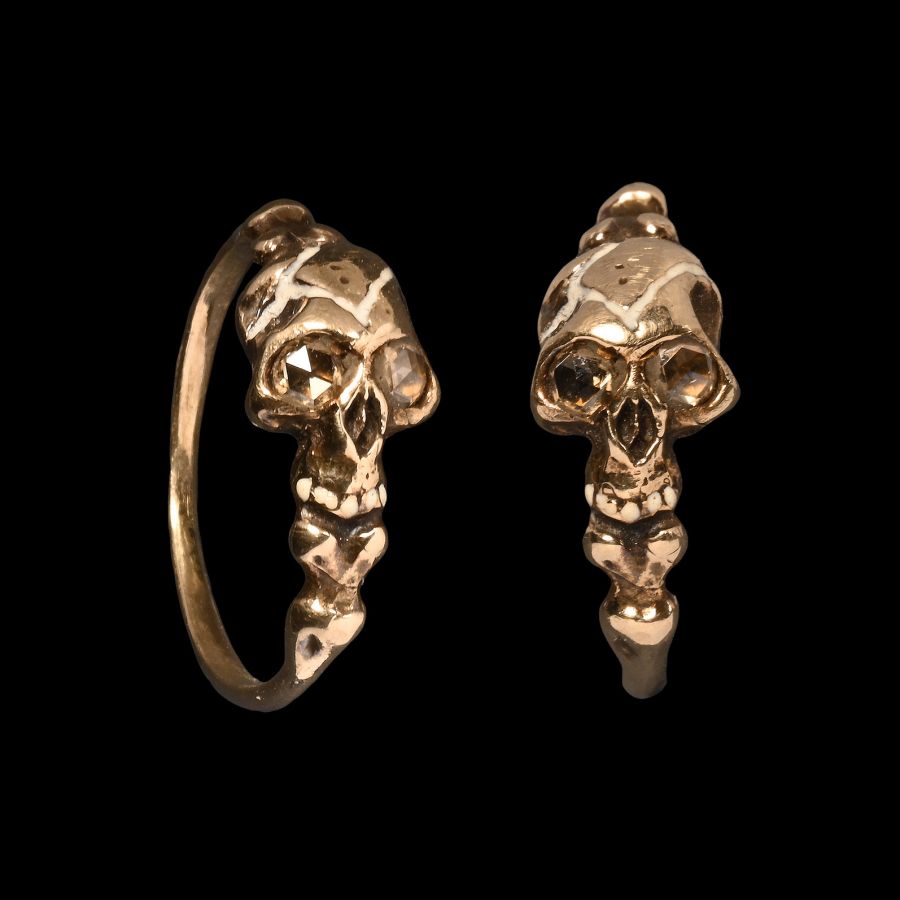
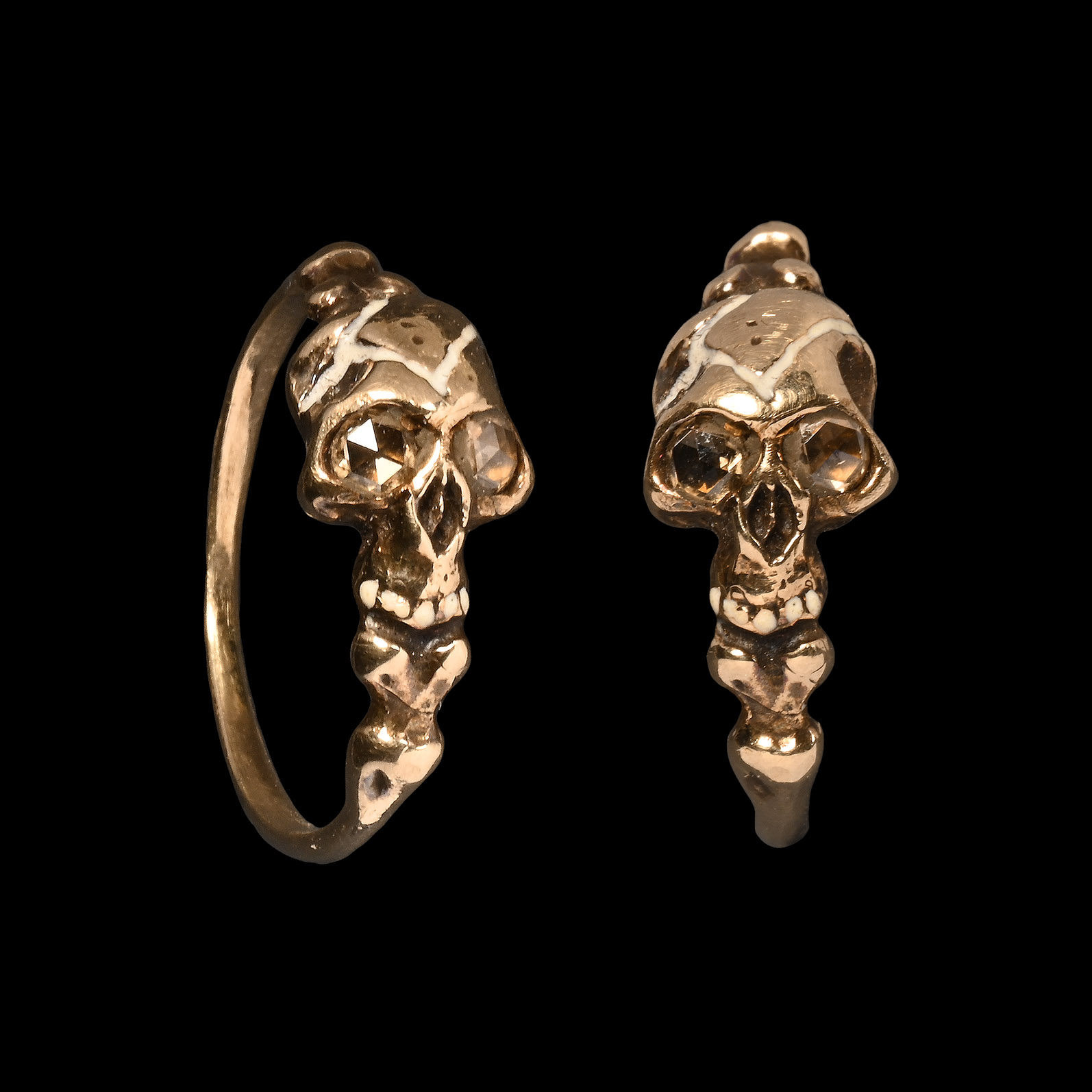
Gold, Enamel, and Diamond-Set Skull Ring
CIRCA 1700 A.D.
3/4 in. (2.82 grams, 19.54 mm overall,17.22 mm internal diameter (approximate size British J 1/2, USA 5, Europe 9.32, Japan 9)).
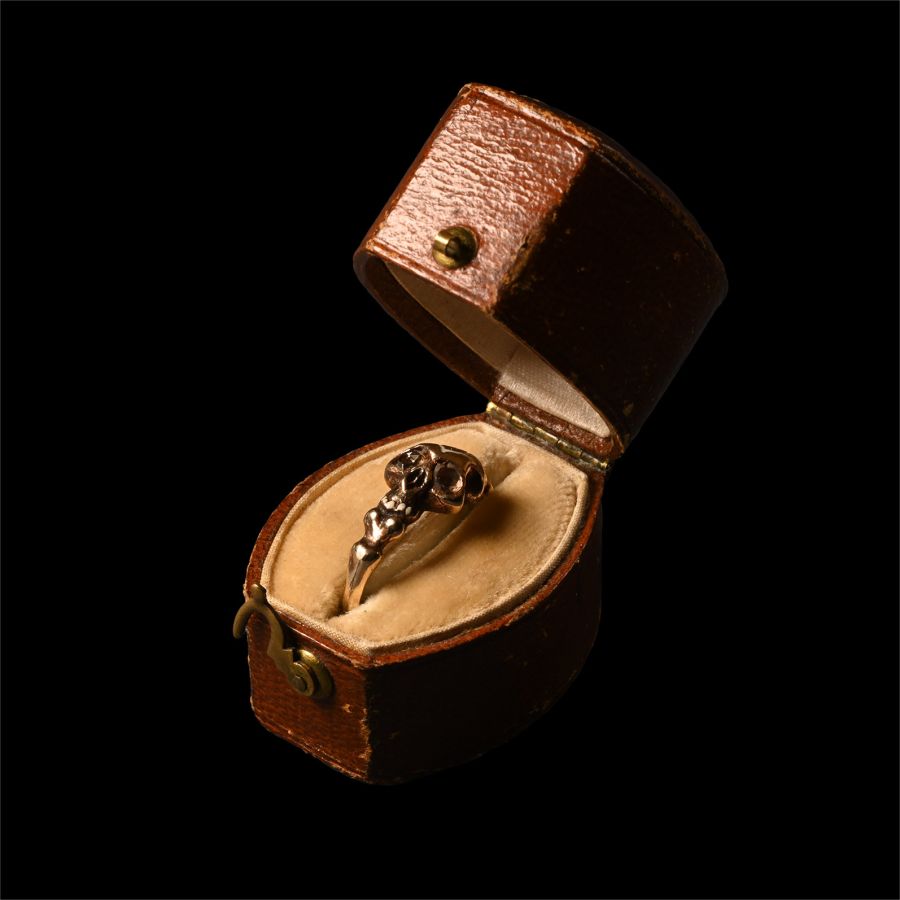
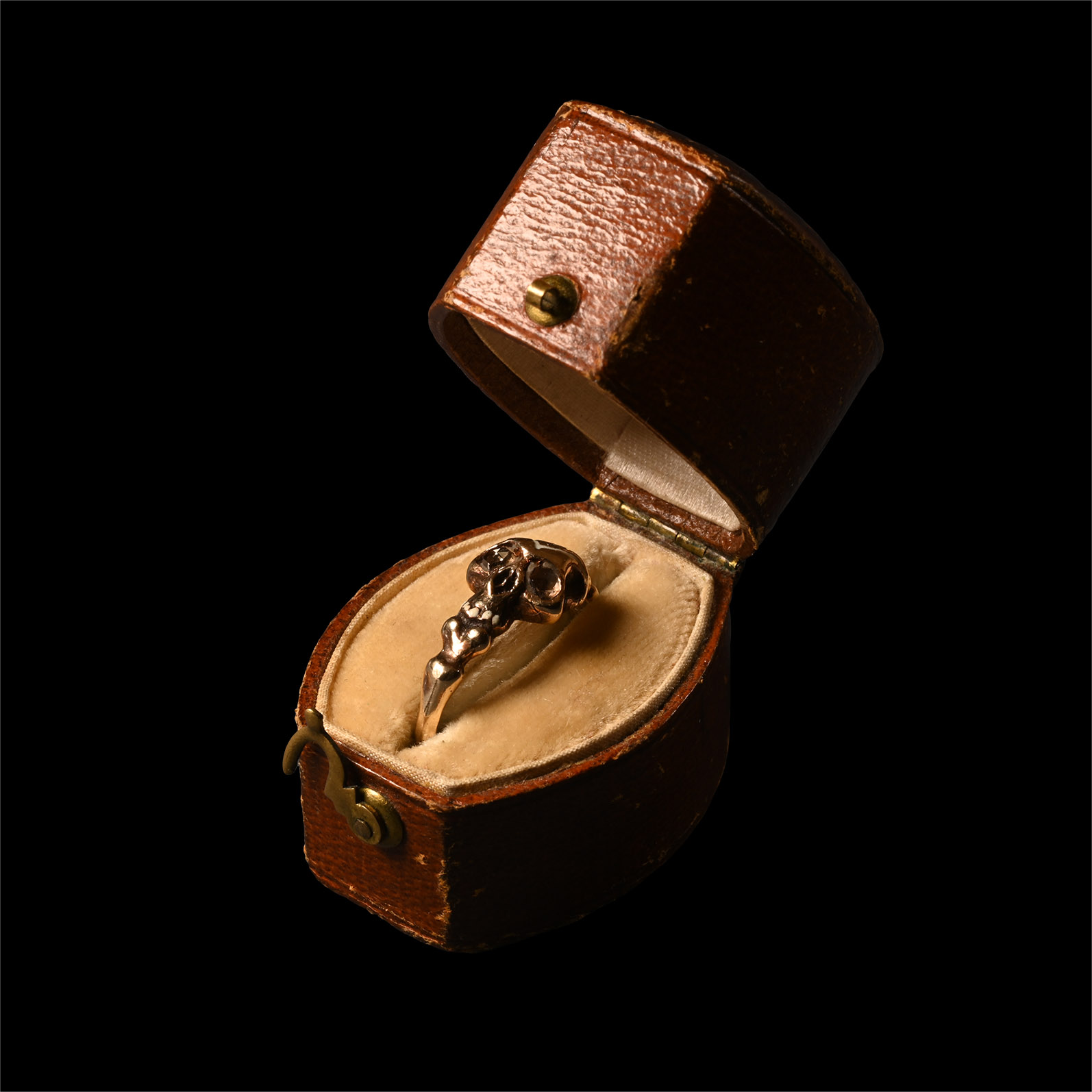
A Queen Anne period gold ring composed of a slender hoop with expanding shoulders formed as the ball-joints of long bones; bezel formed as an elongated stylised skull featuring large eye-sockets set with facetted diamonds; white enamelled teeth and head detailing; accompanied by a vintage ring box.
ProvenanceAcquired from Berganza, Hatton Garden, London, 2016.
Property of an East Sussex collector.
Accompanied by a copy of the Berganza invoice.
This lot has been checked against the Interpol Database of stolen works of art and is accompanied by search certificate no.11665-197583.
Cf. The V&A Museum, London, accession number 528-1868, for a ring of similar type.
FootnotesLikely a ring of the memento mori genre.
The V & A Museum states that during the 'Renaissance, the ring developed from the simple forms of the medieval period into a miniature work of art, combining the skills of the chaser, engraver and enameller as well as the stone cutter.'
TimeLine Auctions follows a vetting process to ensure the authenticity and legality of all items, reinforcing our commitment to integrity and responsible trading. Each antiquity, antique, and coin lot undergoes thorough examination by a vetting committee of at least ten external specialists, professional trade association members, scientists, and archaeologists: Our Vetting Process
AUCTIONS:
TimeLine is a leading auction house specialising in antiquities, ancient art, collectables, natural history, coins, medals, and books. Our auctions offer museums, collectors, historians, and enthusiasts the opportunity to acquire unique and historically significant pieces.
-
Large Carnelian Gemstone with Venus and Cupid
19th century A.D.Sold for (Inc. bp): £33
A large polished carnelian intaglio gemstone showing Venus and Cupid advancing right, the goddess with a thyrsus over her shoulders, Cupid holding a trident. 2.44 grams, 27 mm high
From the collection of G.M.R.H., London, UK. -
Bronze Head of a Man
20th century A.D.Estimate: £800 - 1,000 (+bp*)
Opening Bid: £400
A hollow-formed bronze bust of a youthful clean-shaven male with short curly hair, with a subtle smiling expression; mounted on a custom-made stand. 18.4 kg total, 42 cm high including stand
French collection, 1960s-early 2000s. From an important Paris gallery, France. -
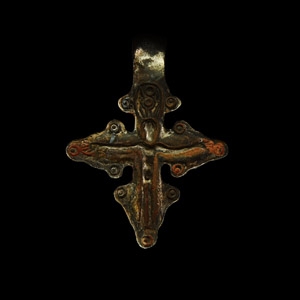
Post Medieval Silver Cross Pendant
17th-19th century A.D.Sold for (Inc. bp): £44
A silver cruciform pendant with lobed arms ornamented with pellets, bearing an image of Christ crucified in low relief, suspension loop above. 5.2 grams, 34 mm
Fine condition.
Acquired on the UK art market in the late 1990s. Property of a UK gentleman.
