
Loading, please wait...
LOT 0173
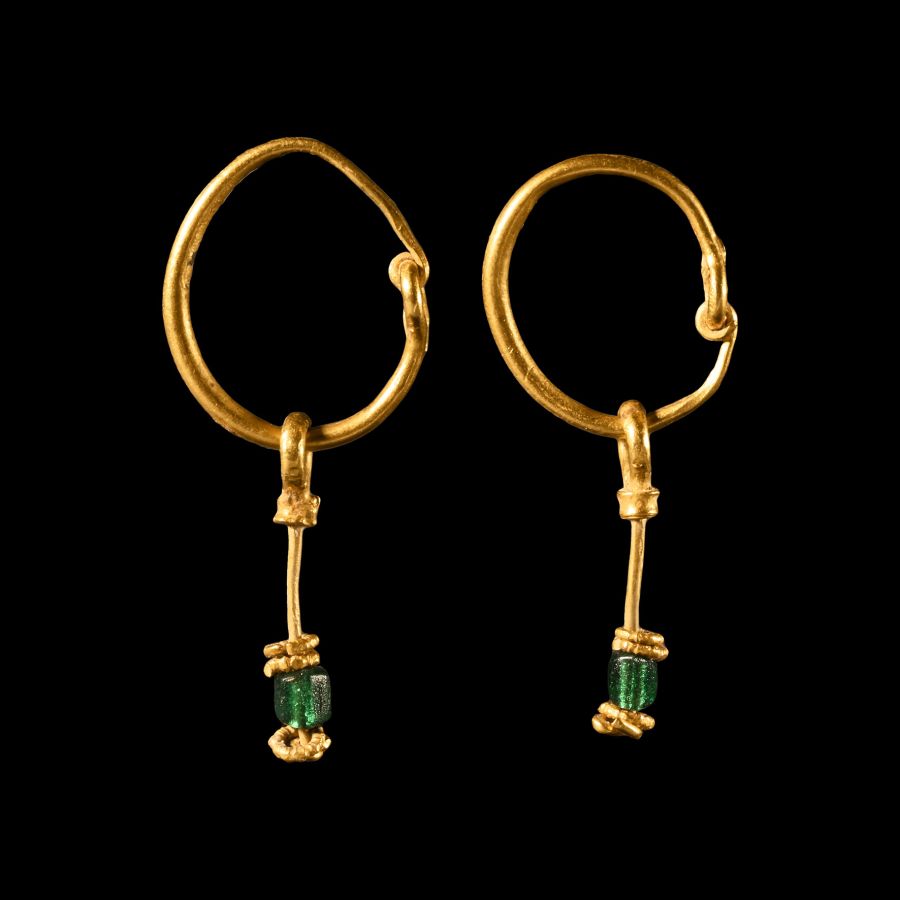
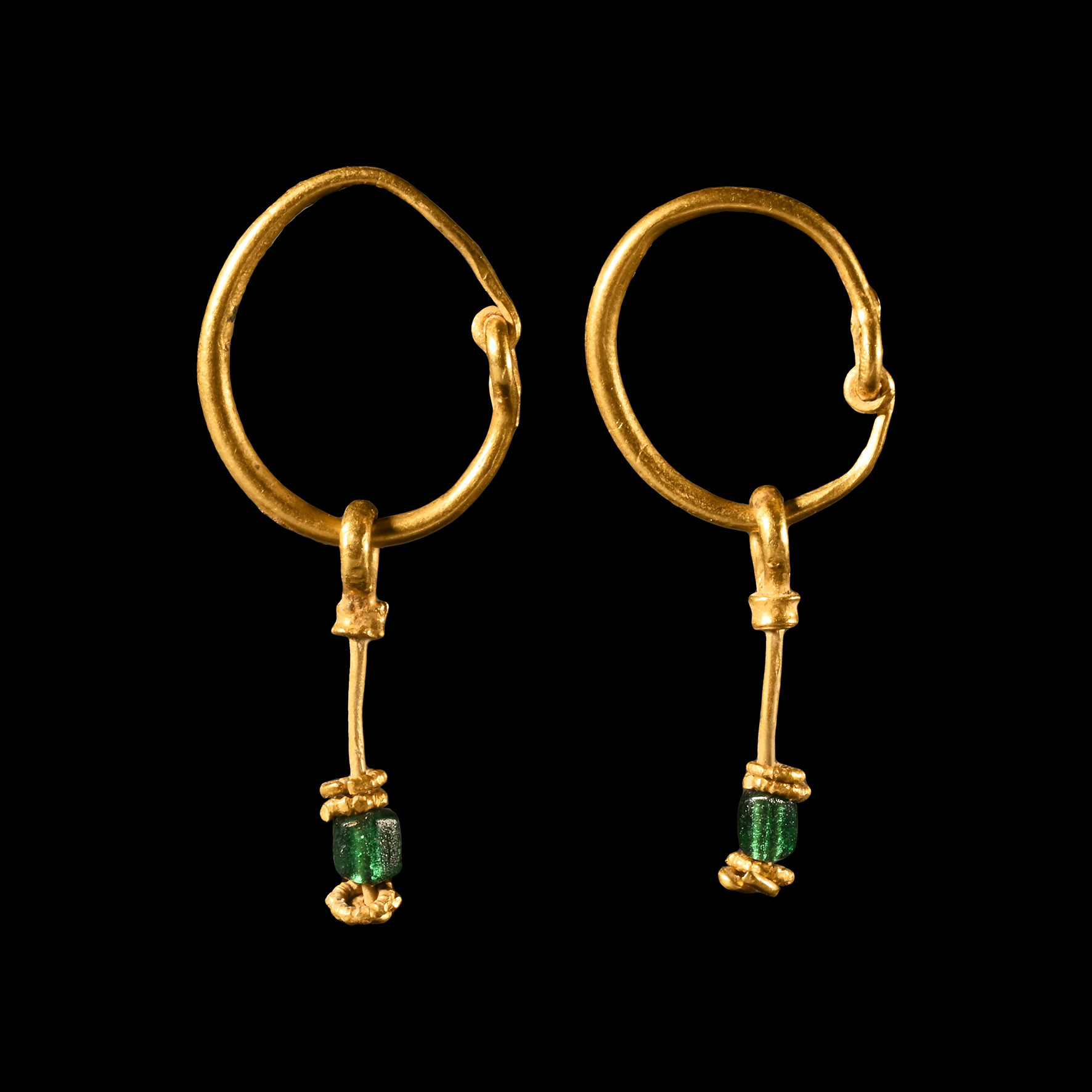
Gold Earrings with Beads
ROMAN, 1ST-4TH CENTURY A.D. AND LATER
1 3/8 in. (4.41 grams total, 35-37 mm).
Each composed of a slender round-section hoop tapering towards the closure, free-running dangle featuring an emerald green glass bead between gold annular beads. [2]
ProvenanceFrom a late Japanese specialist collector, 1970-2000s.
CONDITIONTimeLine Auctions follows a vetting process to ensure the authenticity and legality of all items, reinforcing our commitment to integrity and responsible trading. Each antiquity, antique, and coin lot undergoes thorough examination by a vetting committee of at least ten external specialists, professional trade association members, scientists, and archaeologists: Our Vetting Process
AUCTIONS:
TimeLine is a leading auction house specialising in antiquities, ancient art, collectables, natural history, coins, medals, and books. Our auctions offer museums, collectors, historians, and enthusiasts the opportunity to acquire unique and historically significant pieces.
-
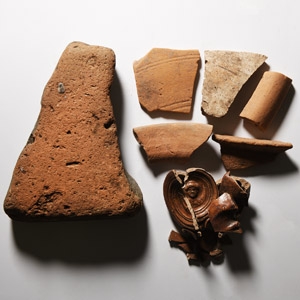
Roman Terracotta Fragment Group
1st century A.D. and laterSold for (Inc. bp): £26
Mainly from vessels and tiles, including base, rim and body fragments, together with decorated oil lamp fragments. 927 grams total, 1.1-16 cm
Acquired on the UK art market. Property of a Ruislip, UK, gentleman, by inheritance. -
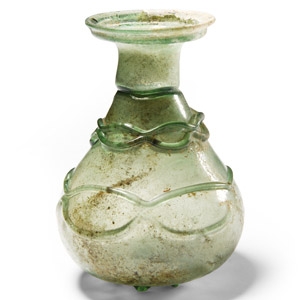
Roman Glass Sprinkler Vessel
2nd-3rd century A.D.Sold for (Inc. bp): £494
Piriform green jar raised on five small feet to the base, collar to the conical neck and chamfered rim; to the lower neck a disc with narrow central opening; to the outer face of the body, double wavey trail to the upper and lower body. 77 grams, 10 cm high
Acquired 1980-2015. Ex Abelita family collection. -
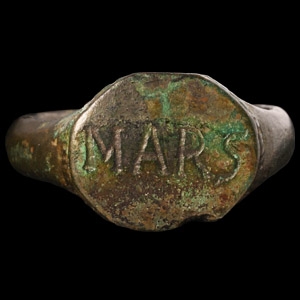
Roman Bronze Ring with Inscription
1st-4th century A.D.Sold for (Inc. bp): £494
The hoop with convex outer face and rounded octagonal bezel, later inscribed 'MARS'. 4.54 grams, 23.00 mm overall, 16.93 mm internal diameter (approximate size British N, USA 6 1/2, Europe 13.72, Japan 13)
Acquired on the German art market around 2000s. From the collection of an EU gentleman living in the UK.
