
Loading, please wait...
LOT 2227
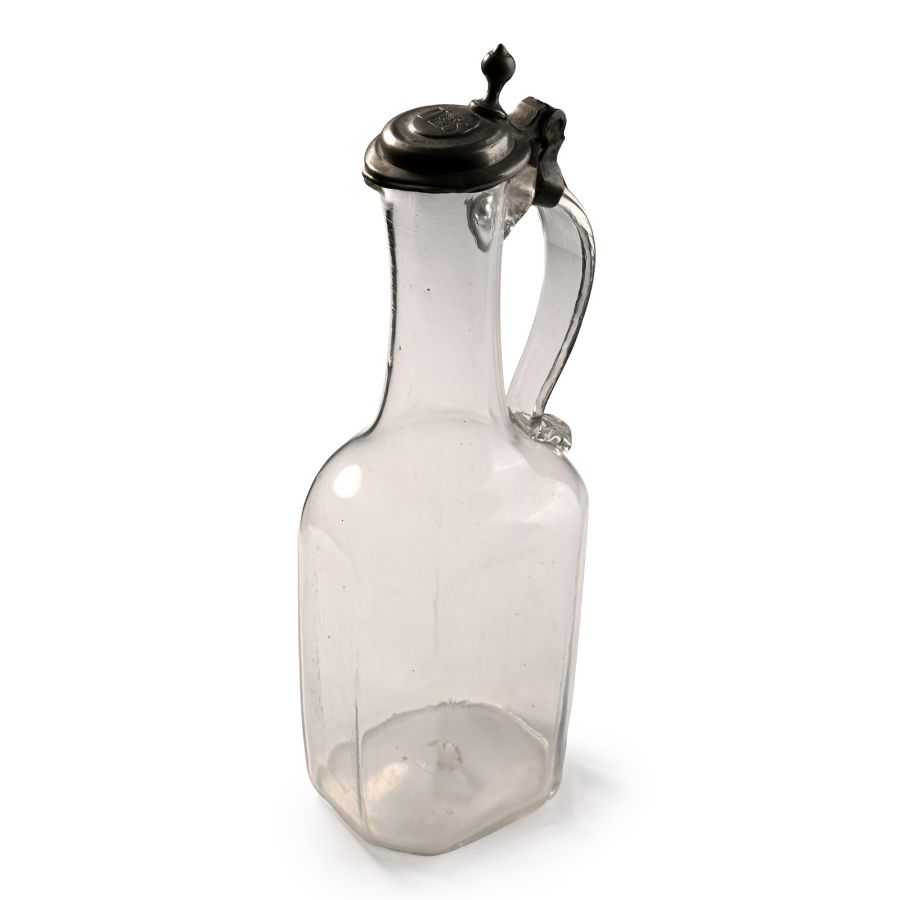
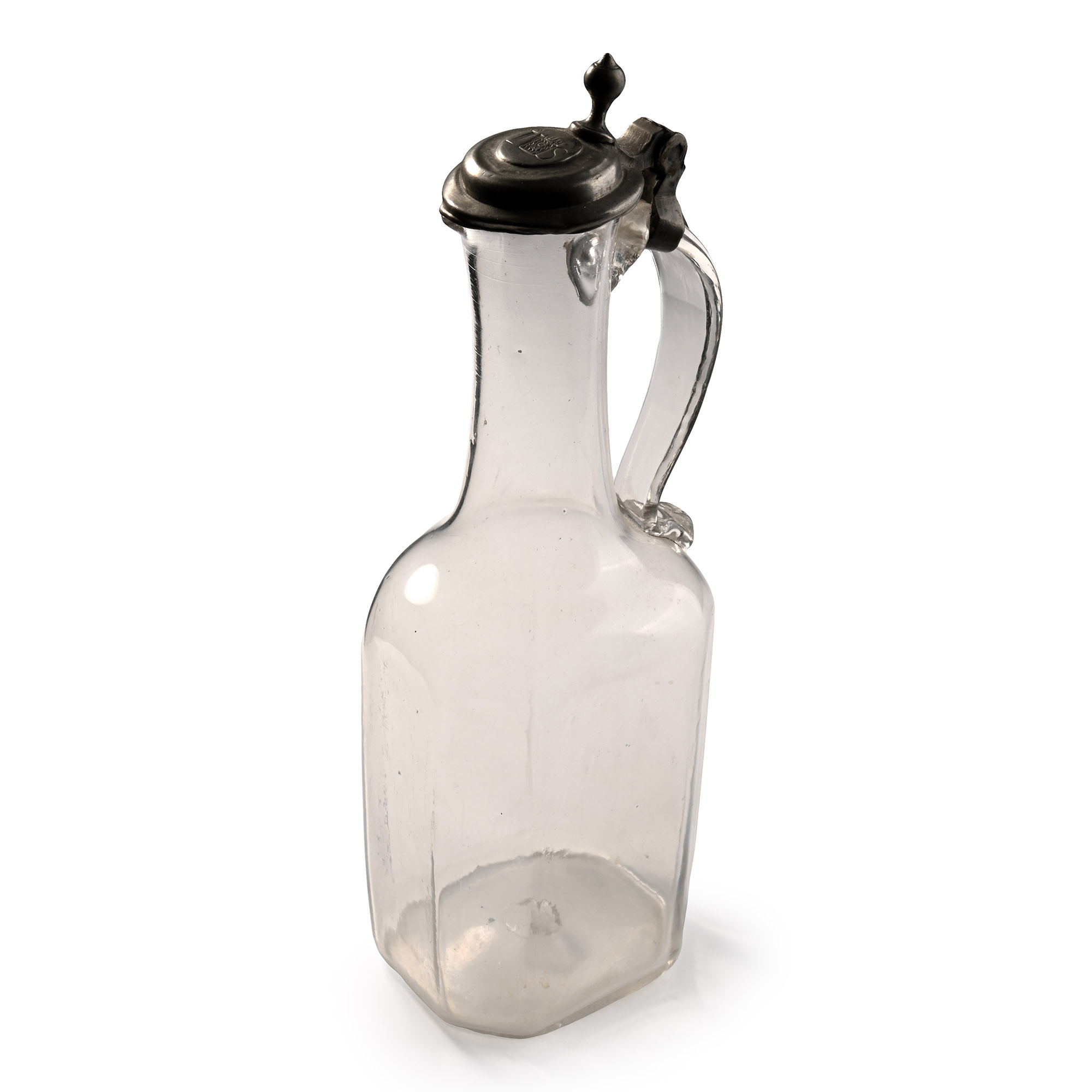
Glass Jug with Pewter Lid and Crowned Monogram
18TH CENTURY A.D.
9 1/2 in. (320 grams, 24 cm).
Octagonal-section glass ewer with strap handle and pouring lip to the rim; pewter hinged lid with thumb-knop, central raised tondo with impressed initials 'I[W]S', the central character partly obscured by later stamp of a rectangular shield with coronet above, lozengy field with escutcheon bearing crossed batons (or swords) and a crown above. [No Reserve]
ProvenanceFrom the private family collection of Ersula Barter-Hemmerich, the longest serving member of staff working at the United Nations, her private collection formed in the 1950s and 1960s; thence by descent to her grandson.
This lot is accompanied by an illustrated lot declaration signed by the Head of the Antiquities Department, Dr Raffaele D'Amato.
TimeLine Auctions follows a vetting process to ensure the authenticity and legality of all items, reinforcing our commitment to integrity and responsible trading. Each antiquity, antique, and coin lot undergoes thorough examination by a vetting committee of at least ten external specialists, professional trade association members, scientists, and archaeologists: Our Vetting Process
AUCTIONS:
TimeLine is a leading auction house specialising in antiquities, ancient art, collectables, natural history, coins, medals, and books. Our auctions offer museums, collectors, historians, and enthusiasts the opportunity to acquire unique and historically significant pieces.
-

Post Medieval Bronze Vesica-Shaped Plaque with Saint
19th century A.D.Sold for (Inc. bp): £26
A lentoid plaque with an applied applique showing a standing winged saint holding a staff, dressed in a short tunic, a dog standing against his leg, possibly depicting St Roch, the patron saint of dogs. 180 grams, 11.3 cm
Acquired on the UK art market in the 1970s-1990s. Property of a Nottinghamshire, UK, gentleman. This lot is accompanied by an illustrated lot declaration signed by the Head of the Antiquities Department, Dr Raffaele D'Amato. -

Stuart Period Lead Eagle Talon-and-Ball Merchant's Seal Pendant
17th century A.D.Sold for (Inc. bp): £7
Comprising an eagle's talon with claws gripping a truncated sphere; flat underside divided into quarters with pellets in the upper quadrants, 'S W' in the lower; pierced flange above. 19.8 grams, 40 mm
Previously from an old collection a Cornish, UK, gentleman. Property of a private collector, West London, UK. This lot is accompanied by an illustrated lot declaration signed by the Head of the Antiquities Department, Dr Raffaele D'Amato. -

Caravaca de la Cruz Bronze Cross Pendant
17th-18th century A.D.Estimate: £200 - 300 (+bp*)
Opening Bid: £75
Bifacial double cross with two angels at the base carrying the cross, applied figures of Corpus Christi and Virgin Mary to one side with an inscription 'CAR VACA'; separately made reverse panel with openwork panels and foliate decoration; made as a reliquary. 101 grams, 13.7 cm
Acquired on the UK art market, early 2000s. This lot is accompanied by an illustrated lot declaration signed by the Head of the Antiquities Department, Dr Raffaele D'Amato.
The Caravaca Cross, also known as the Cross of Caravaca, originated in the Spanish town of Caravaca de la Cruz and according to tradition, first appeared in the 13th century during the Christian reconquest of Spain. According to a legend, during the rule of the Muslim king Abu Zeid in 1231, a miraculous event occurred. A Christian priest lacking a cross celebrated Mass and was not able to continue as the cross is an essential element for the Eucharist. Miraculously, two angels bearing the Caravaca Cross appeared thus enabling the Mass to proceed. This event is considered the foundational miracle of the Caravaca Cross.
