
Loading, please wait...
LOT 1488
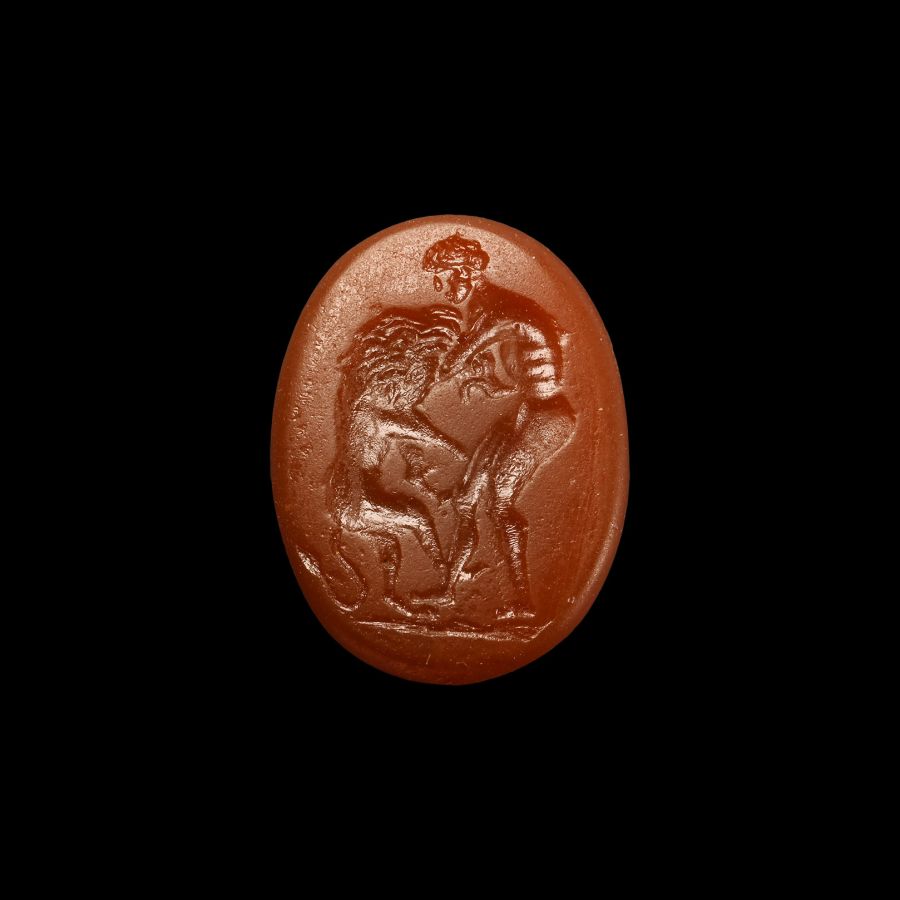
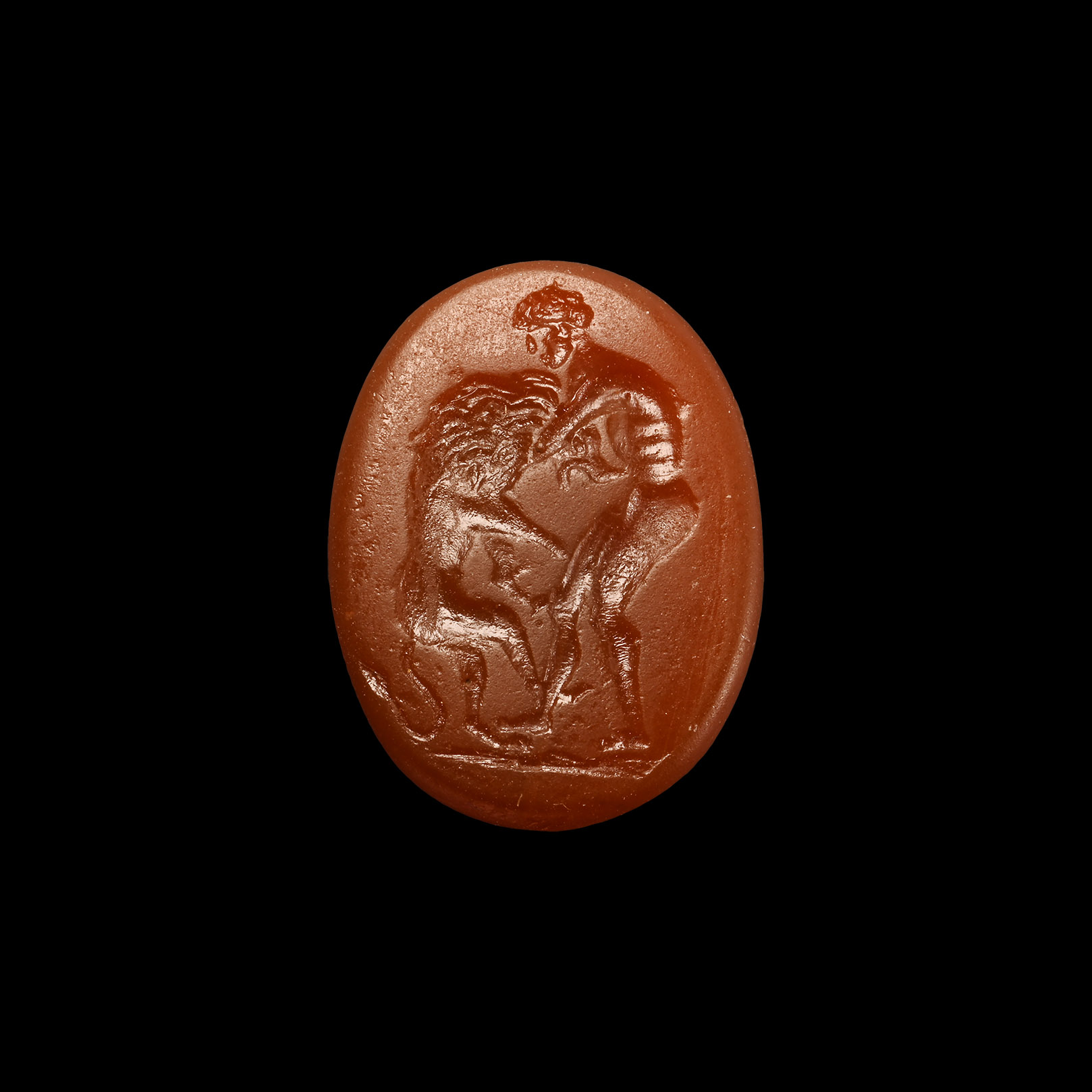
Glass Intaglio with Hercules and Nemean Lion
19TH-20TH CENTURY A.D.
3/4 in. (1.78 grams, 20 mm).
An oval glass intaglio presenting a scene depicting Hercules' First Labour: the god wrestling the Nemean lion. [No Reserve]
ProvenanceAcquired 1969-1999.
London collection of the late Mr S.M., thence by descent.
TimeLine Auctions follows a vetting process to ensure the authenticity and legality of all items, reinforcing our commitment to integrity and responsible trading. Each antiquity, antique, and coin lot undergoes thorough examination by a vetting committee of at least ten external specialists, professional trade association members, scientists, and archaeologists: Our Vetting Process
AUCTIONS:
TimeLine is a leading auction house specialising in antiquities, ancient art, collectables, natural history, coins, medals, and books. Our auctions offer museums, collectors, historians, and enthusiasts the opportunity to acquire unique and historically significant pieces.
-
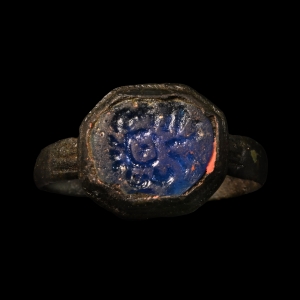
Tudor Period Ring with Intaglio
16th-17th century A.D.Sold for (Inc. bp): £33
A copper-alloy ring composed of a slender hoop supporting an octagonal bezel, set with a blue glass intaglio displaying an enigmatic, possibly pseudo-armorial design. 2.72 grams, 21.50 mm overall, 19.47 mm internal diameter (approximate size British N 1/2, USA 6 3/4, Europe 14.35, Japan 13)
Acquired 1990s. English private collection. Property of an Essex gentleman. -
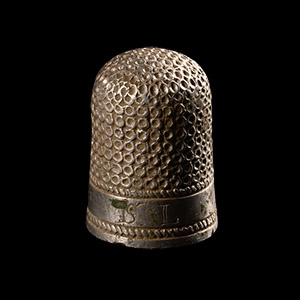
Georgian Silver Thimble with 'S L'
18th century A.D.Sold for (Inc. bp): £33
A silver thimble with annulets to the upper body and ropework bands to the lower body, framing a 'plain' band engraved with the initials 'S.L'. 5.54 grams, 21 mm
Found Suffolk. -
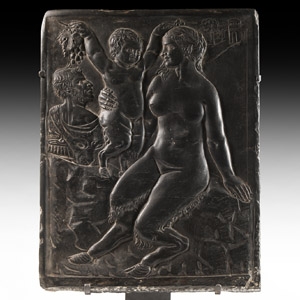
Grand Tour Relief with Satyrs
18th-19th century A.D.Estimate: £4,000 - 6,000 (+bp*)
Opening Bid: £2,000
A satyr Bacchus themed plaque featuring a nude woman and child with goat's legs and hooves, set in a formal landscape, the child holding bunches of grapes, a bearded male figure dressed in animal skins beside them; wax seal applied to the reverse; mounted on a custom-made display stand. 5.7 kg total, 37 cm high including stand
English private collection. This lot has been checked against the Interpol Database of stolen works of art and is accompanied by search certificate number no.11685-199804.
Possibly loosely based on C.M. Clodion's works.
