
Loading, please wait...
LOT 1932
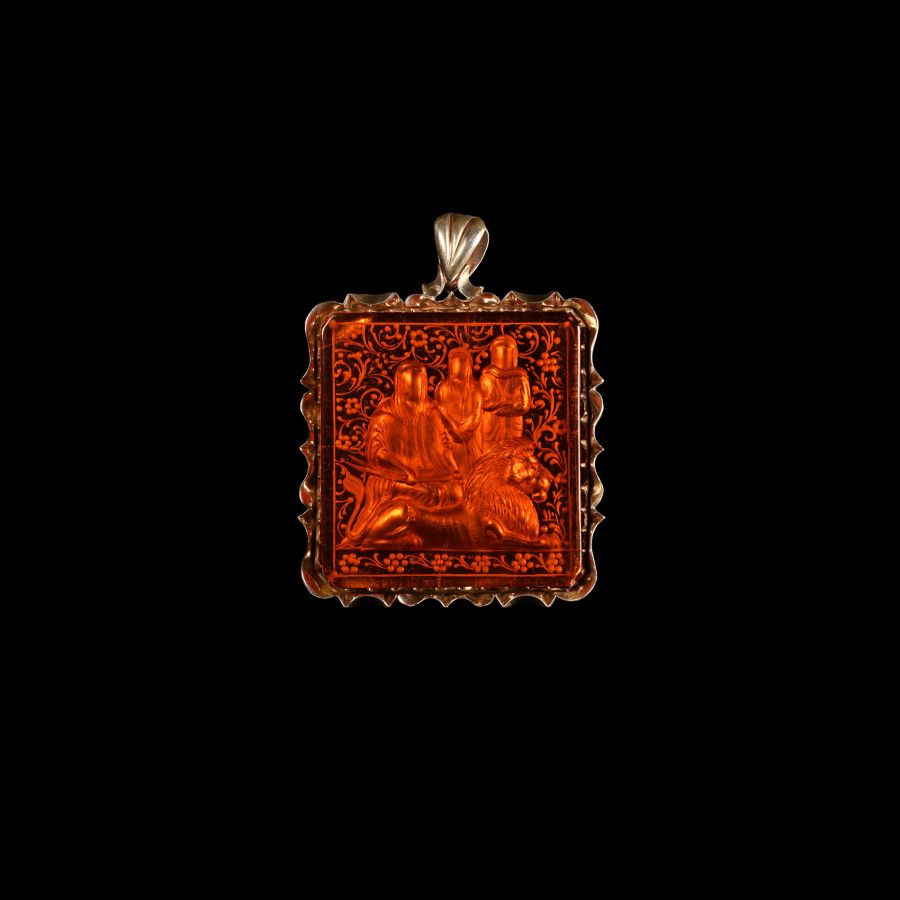
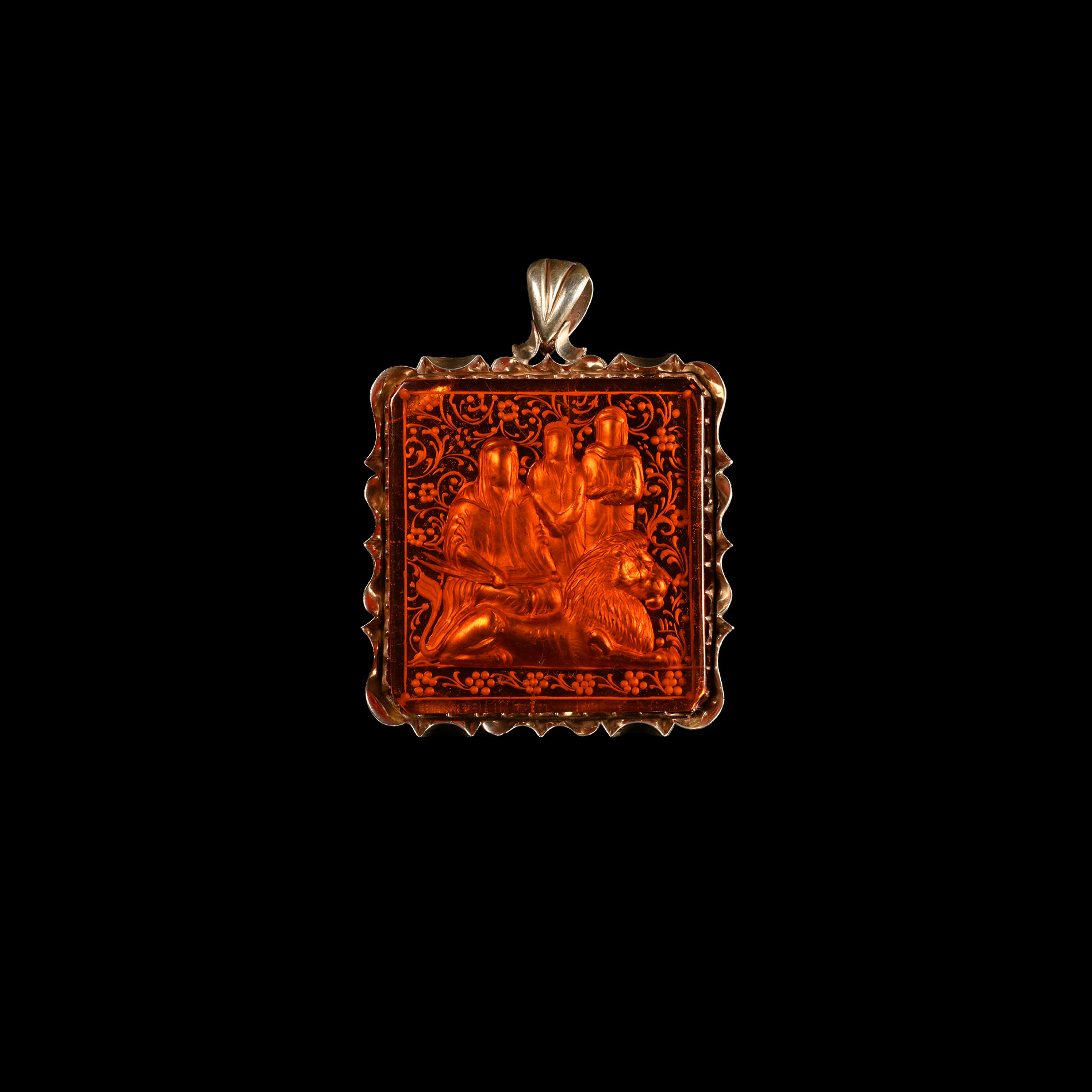
Glass in Silver-Coloured Metal Pendant
LATE 20TH CENTURY A.D.
3 in. (81 grams, 76 mm).
The scalloped frame with articulate bail, set with a glass plaque over coloured foil, displaying three robed figures arranged beside a couchant lion, floral tendrils in the field; possible maker's stamps to the bail reverse. [No Reserve]
ProvenanceLondon collection since the 1980s.
Property of a Canadian family.
TimeLine Auctions follows a vetting process to ensure the authenticity and legality of all items, reinforcing our commitment to integrity and responsible trading. Each antiquity, antique, and coin lot undergoes thorough examination by a vetting committee of at least ten external specialists, professional trade association members, scientists, and archaeologists: Our Vetting Process
AUCTIONS:
TimeLine is a leading auction house specialising in antiquities, ancient art, collectables, natural history, coins, medals, and books. Our auctions offer museums, collectors, historians, and enthusiasts the opportunity to acquire unique and historically significant pieces.
-
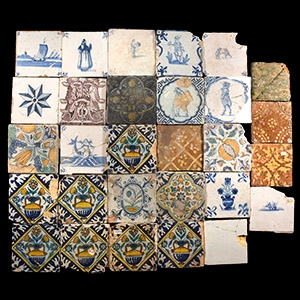
Post Medieval Dutch Glazed Ceramic and Other Tile Group
Circa 17th-18th century A.D.Sold for (Inc. bp): £117
Mainly composed of geometric, figural and foliate designs and details from an architectural capital; together with blank tile and a number of glazed medieval tiles. 11.6 kg total, 11 x 11 - 13.5 x 13.5 cm
Acquired 1990s-early 2000s. East Anglian private collection. -
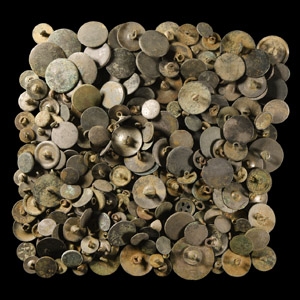
Post Medieval Bronze Button Group
18th-20th century A.D.Sold for (Inc. bp): £26
Comprising buttons of various sizes and dates, most retaining their attachment loops and including many displaying decorative motifs. 1 kg total, 11-37 mm
Found Berkshire, UK. -
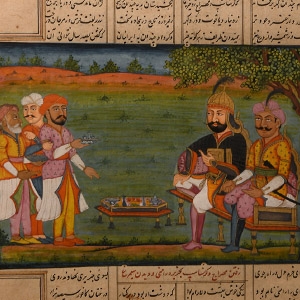
Framed Watercolour Painting
Persia, late 19th-early 20th century A.D.Estimate: £80 - 100 (+bp*)
Opening Bid: £40
Composed of four columns of text divided by a watercolour scene showing two noblemen seated beneath a tree, attendants serving food and drink, Indian workmanship on older paper; mounted in a reveal and an unglazed wooden frame. 656 grams, 49 x 37 cm
Fine condition.
Acquired on the UK art market, 1980s-1990s. The Woodbridge collection of Indo-Persian art.
