
Loading, please wait...
LOT 1476
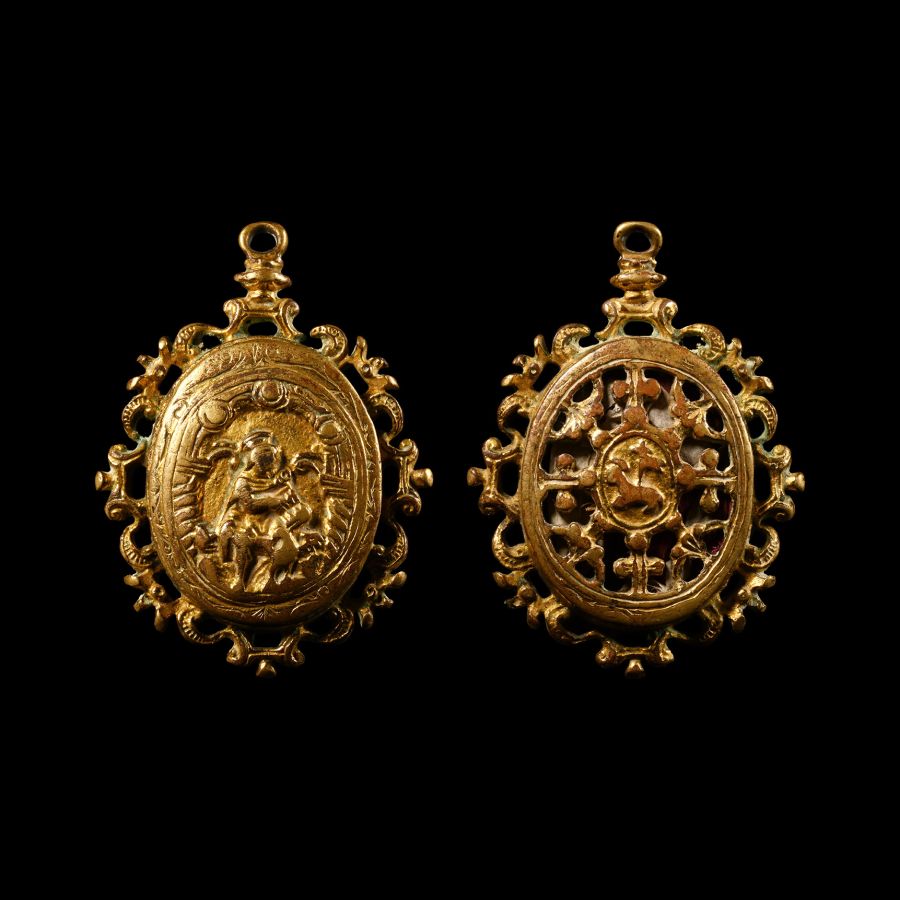
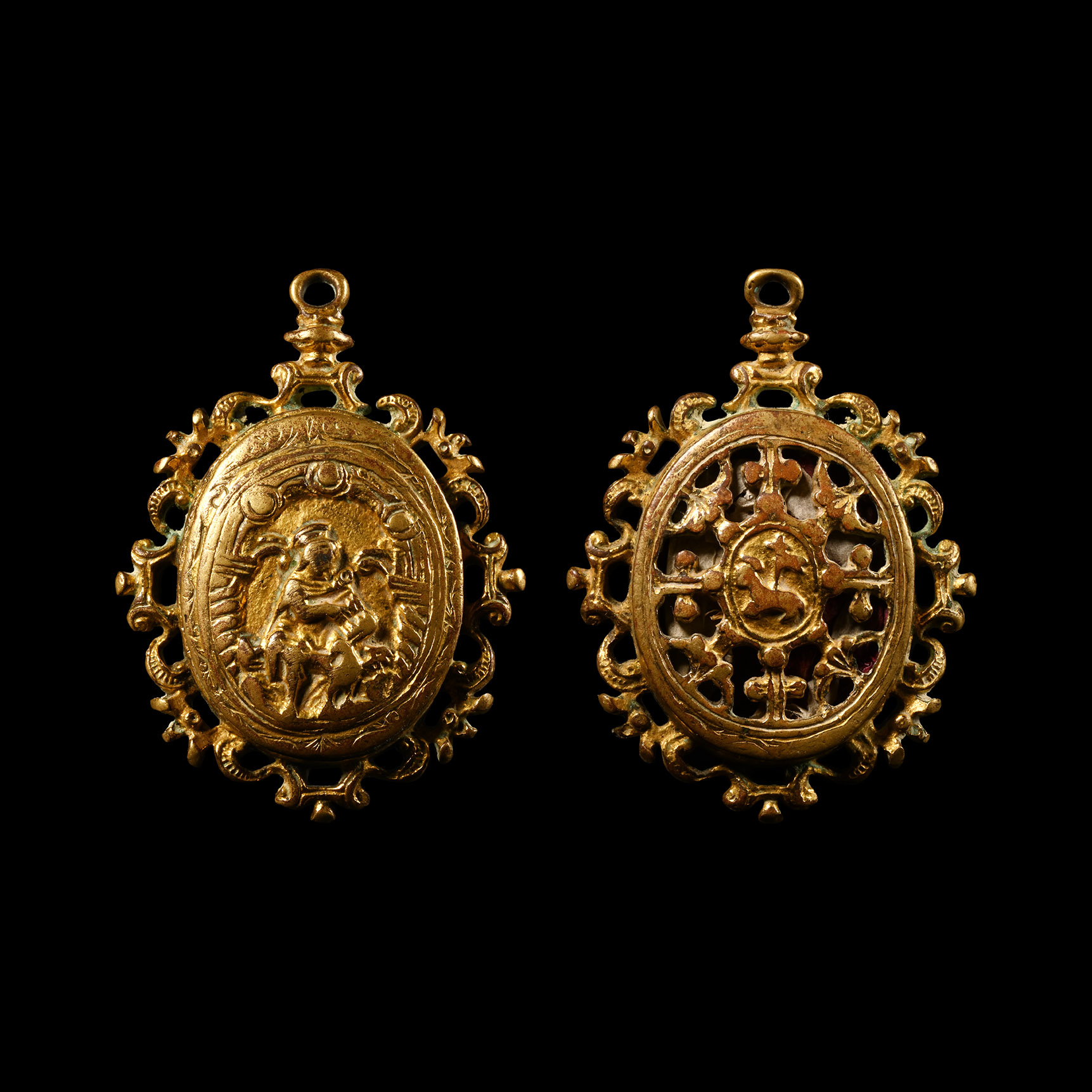
Gilt Reliquary Pendant
17TH CENTURY A.D.
2 1/4 in. (34.76 grams, 56 mm).
A gilt copper-alloy reliquary pendant of oval form, front face portraying the lamb with cross and flag symbolising Christ crucified, the relic visible between the openwork, solid reverse plate depicting the Virgin and Child seated beneath an arch; openwork flourishes to the frame circumference; integral suspension loop.
ProvenanceAcquired early 2000s.
Property of a Birmingham, UK, collector.
Property of an Essex, UK, gentleman.
Cf. The V&A Museum, accession number 4055-1856, for a comparable example.
CONDITIONTimeLine Auctions follows a vetting process to ensure the authenticity and legality of all items, reinforcing our commitment to integrity and responsible trading. Each antiquity, antique, and coin lot undergoes thorough examination by a vetting committee of at least ten external specialists, professional trade association members, scientists, and archaeologists: Our Vetting Process
AUCTIONS:
TimeLine is a leading auction house specialising in antiquities, ancient art, collectables, natural history, coins, medals, and books. Our auctions offer museums, collectors, historians, and enthusiasts the opportunity to acquire unique and historically significant pieces.
-
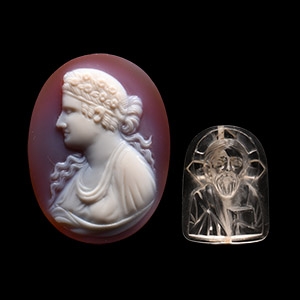
Gemstone Group
19th-20th century A.D.Estimate: £100 - 140 (+bp*)
Opening Bid: £50
A group of two carved gemstones: an ellipsoid plaque with reserved profile bust of a young female with elaborately dressed hair; a miniature rock crystal stele with bust of Christ holding a book to the obverse, and to the reverse a high-relief cross aiguisée visible behind the bust. 12.8 grams total, 24-39 mm
English private collection. -
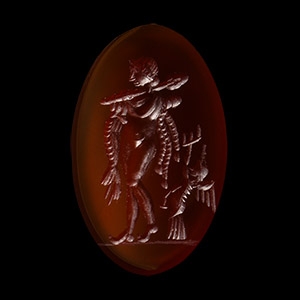
Large Carnelian Gemstone with Venus and Cupid
19th century A.D.Sold for (Inc. bp): £33
A large polished carnelian intaglio gemstone showing Venus and Cupid advancing right, the goddess with a thyrsus over her shoulders, Cupid holding a trident. 2.44 grams, 27 mm high
From the collection of G.M.R.H., London, UK. -
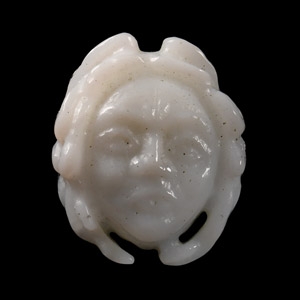
Post Medieval Glass Cameo Bust
19th century A.D.Estimate: £200 - 300 (+bp*)
Opening Bid: £100
A glass cameo with bust of Medusa; imitating agate. 3.72 grams, 18 mm
Very fine condition.
Acquired Munich, Germany, late 1990s. Property of an East London gentleman.
