
Loading, please wait...

LOT 2223
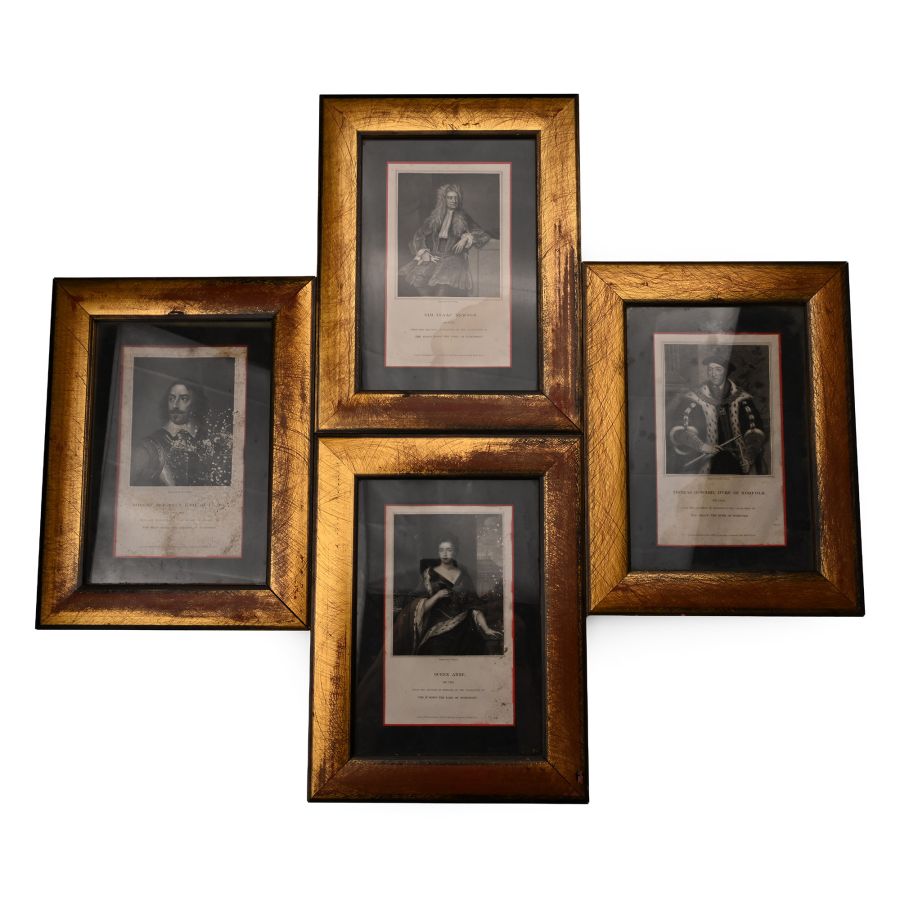
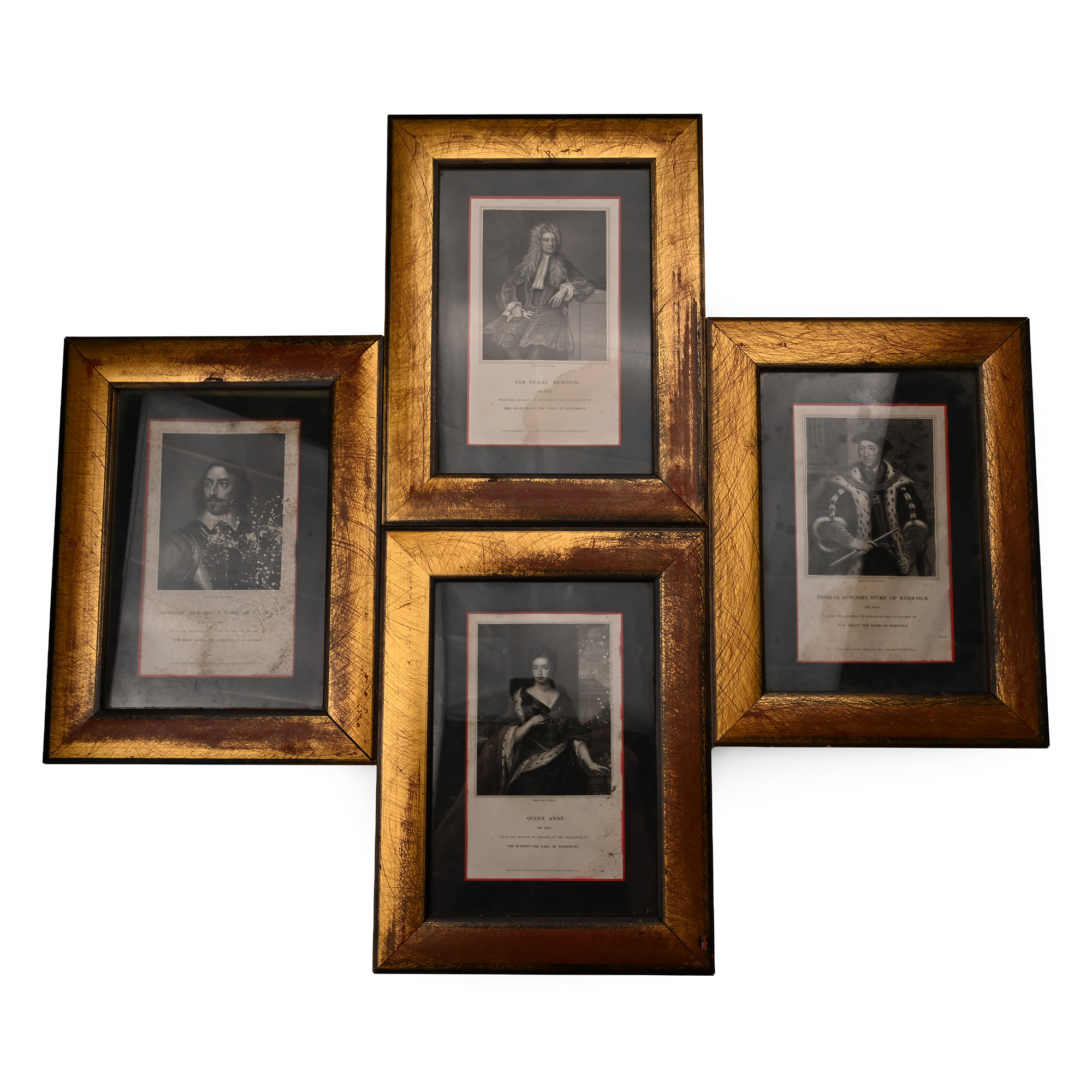
Gilt Framed Set of Historical Prints
19TH CENTURY A.D.
12 3/4 x 9 5/8 in. (2.4 kg total, 32.5 x 24.5 cm each).
A set of four framed and glazed historical prints: Sir Isaac Newton, engraved by W.T. Fry, published London, 1831, by Harding & Lepard; Thomas Howard, Duke of Norfolk, engraved by E. Scriven, published London, 1830, by Harding & Lepard; Queen Anne, engraved by J. Cochran, published London, 1835, by Harding & Lepard; Robert Devereux, Earl of Essex, published London, 1829, by Harding & Lepard. [4, No Reserve]
ProvenanceProperty of a North London, UK, gentleman.
From the private collection of John Meredith, acquired since the 1990s; thence by descent.
This lot is accompanied by an illustrated lot declaration signed by the Head of the Antiquities Department, Dr Raffaele D'Amato.
TimeLine Auctions follows a vetting process to ensure the authenticity and legality of all items, reinforcing our commitment to integrity and responsible trading. Each antiquity, antique, and coin lot undergoes thorough examination by a vetting committee of at least ten external specialists, professional trade association members, scientists, and archaeologists: Our Vetting Process
AUCTIONS:
TimeLine is a leading auction house specialising in antiquities, ancient art, collectables, natural history, coins, medals, and books. Our auctions offer museums, collectors, historians, and enthusiasts the opportunity to acquire unique and historically significant pieces.
-
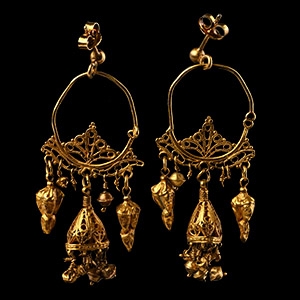
Sicilian Gold Earrings with Droplets
South Italian, 1860-1910 A.D.Sold for (Inc. bp): £910
Each a slender hoop with openwork filigree palmette to the inner face and openwork filigree bar to the underside with small pendant drops and openwork bell with biconical and other drops attached to the rim. 12.18 grams total, 48-51 mm
Ex Georgie Chrischilles. Private collection, London. This lot is accompanied by an illustrated lot declaration signed by the Head of the Antiquities Department, Dr Raffaele D'Amato. -
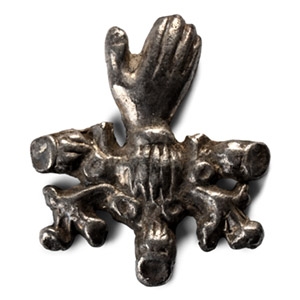
Post Medieval Silver Retainer's Badge with Hand
Circa 18th century A.D.Sold for (Inc. bp): £33
Depicting an extended right hand with acorns(?) and foliage. 3.06 grams, 21 mm
From continental Europe. Previously part of an East Anglia, UK, collection. Acquired in 1983 in Kings Lynn, Norfolk, UK. Property of a Nottinghamshire, UK, gentleman. This lot is accompanied by an illustrated lot declaration signed by the Head of the Antiquities Department, Dr Raffaele D'Amato. -
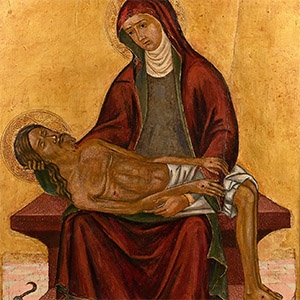
Large Veneto-Cretan Icon of the Pieta
16th century A.D.Sold for (Inc. bp): £4,680
Mary portrayed with sorrow expression, seated on a marble bench, cradling the body of Jesus on her lap; the maphorion of Mary rendered in red carmine with geometrically shaped folds, embellished with a golden hem, lined internally in grey; the neck and throat of Mary covered by a white fabric, according to the fashion of the time; the haloes decorated with elaborate floral patterns, against a brilliant gold background; on the bottom, hooked rope used for lowering the body from the cross. 2.6 kg, 53 x 45.5 cm with frame
Vertical crack restored, areas of retouching
Acquired on the European art market. Private collection, London, UK. Accompanied by an academic report by Dr Raffaele D'Amato. This lot has been checked against the Interpol Database of stolen works of art and is accompanied by search certificate no.12792-240886. This lot has been cleared against the Art Loss Register database, and is accompanied by an illustrated lot declaration signed by the Head of the Antiquities Department, Dr Raffaele D'Amato.
The painting belongs to the 16th century Veneto-Cretan School. The Venetians, masters of Crete since the 13th century AD, encouraged their Greek subjects to keep and develop their Christian religious traditions while at the same time bringing them into contact with intellectual trends current in Western Europe. The new artistic currents and the great Byzantine tradition were transferred to the Island which was able to adopt that tradition and create a new one. The icon painters were organised into a guild - the Scuola di San Luca - which promoted a specific post-Byzantine style through a system of instruction and apprenticeship which lasted for more than two centuries.
