
Loading, please wait...
LOT 2122
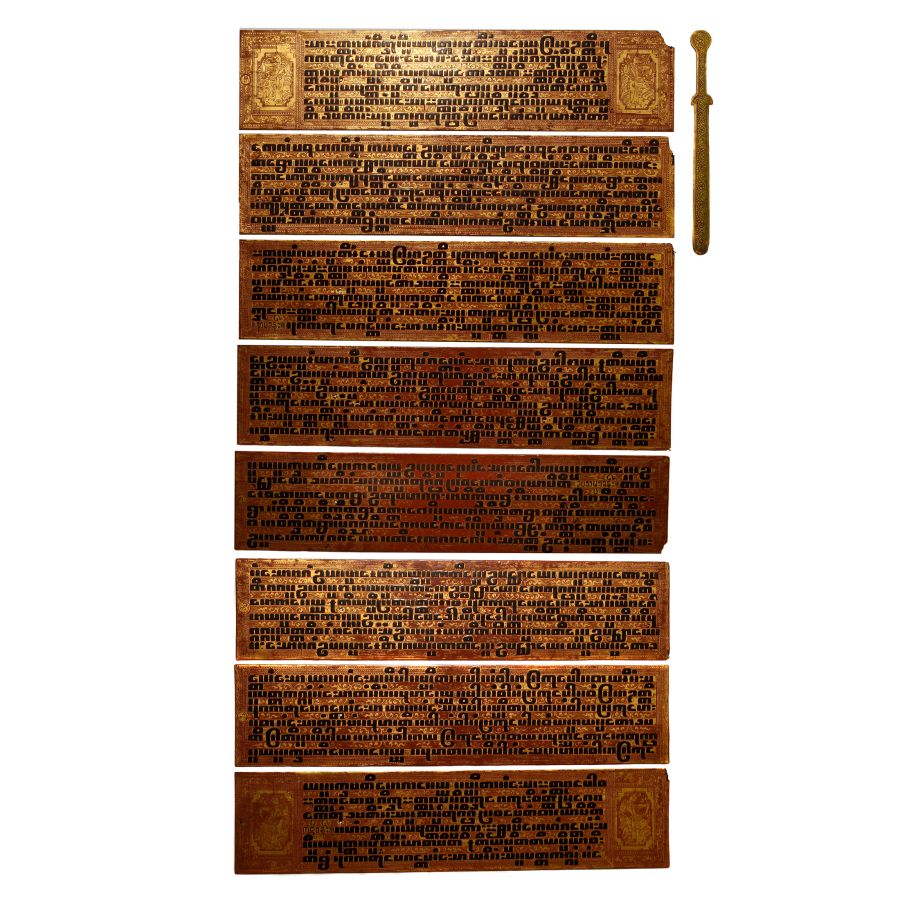
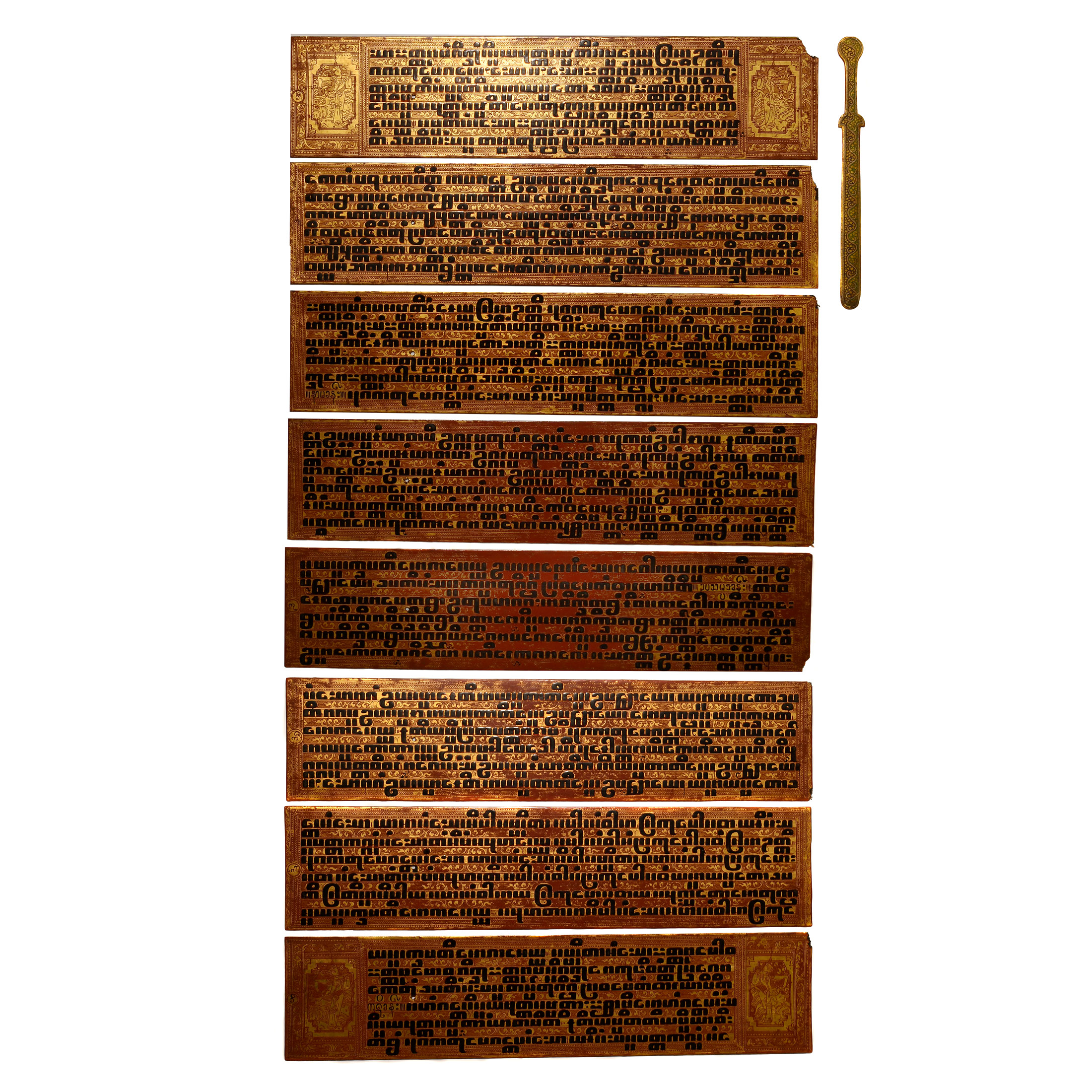
Gilt Burmese Buddhist Kammavaca Manuscript Group
KONBAUNG DYNASTY, 18TH-19TH CENTURY A.D.
11 1/2 - 23 1/2 in. (1.15 kg total, 29-56.5 cm).
Written in Pali in Burmese square script on gilded, lacquered and numbered palm leaves; each leaf is double-sided with the exception of one cover leaf which displays interlaced geometric panels populated with female figures, dragonesques and birds to one face; accompanied by an ornately decorated sword-shaped 'pointer', also gilded, possibly not belonging. [9, No Reserve]
ProvenanceLondon collection since the 1980s.
Property of a Canadian family.
Kammavaca is a Pali term describing an assemblage of passages from the Tipitaka (the Theravada Buddhist canon) relating to ordination, the bestowing of robes and other rituals of monastic life. The texts typically contain religious instructions for monks.
The piercings in the leaves are functional; each leaf was placed over a skewer (likely bamboo) when read.
TimeLine Auctions follows a vetting process to ensure the authenticity and legality of all items, reinforcing our commitment to integrity and responsible trading. Each antiquity, antique, and coin lot undergoes thorough examination by a vetting committee of at least ten external specialists, professional trade association members, scientists, and archaeologists: Our Vetting Process
AUCTIONS:
TimeLine is a leading auction house specialising in antiquities, ancient art, collectables, natural history, coins, medals, and books. Our auctions offer museums, collectors, historians, and enthusiasts the opportunity to acquire unique and historically significant pieces.
-

Western Tibetan Fresco of Hayagriva
Circa 14th century A.D. or laterSold for (Inc. bp): £16,900
Painted on stone in vibrant polychrome; on a wooden display base. 3.55 kg total, 38 x 33 cm
Ex London gallery stock. This lot has been checked against the Interpol Database of stolen works of art and is accompanied by search certificate number no.11917-206181. -
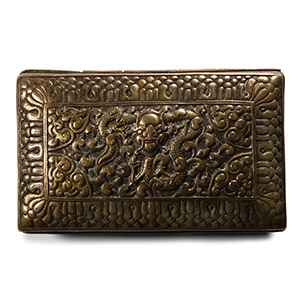
Bhutanese Part Gilded Repousse Betel Nut Box
Mid 19th century A.D.Sold for (Inc. bp): £130
Rectangular form in silver-coloured metal with a hinged closure, repoussé dragonesque beast amidst swirling clouds to the top face, geometric ornament to the edge faces, base decorated with a central gammadion within a rectangular panel, enclosed by stylised petals. 250 grams, 13.3 cm
Acquired by private treaty from old Belgian collection. Property of RWM Collection. -
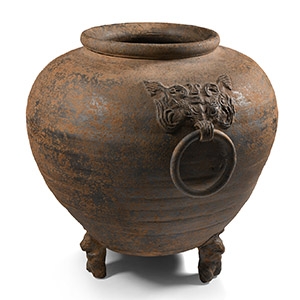
Chinese Han Ceramic Tripod Vessel
Han Dynasty, 206 B.C.-220 A.D.Estimate: £500 - 700 (+bp*)
Opening Bid: £265
Piriform bodied with two opposed Tao Tie, each holding a free-running ring in its mouth, further decorated with a shallow incised dragon to one face and a figure holding a cup on the other, together with an inscription in Chinese; tripod feet formed as squatting animals; restoration to the rings and feet. 3.8 kg, 35.5 cm high
with Galerie Golconda May 2006. Ex private collection, London, UK. Accompanied by a thermoluminescence report no.11270306 from Laboratory Ralf Kotalla dated 5 May 2006.
Dragons in ancient Chinese art could be religious symbols, representatives of clans and creatures linking man to the spirit world. The Tao Tie often evoked mystery and beauty.
