
Loading, please wait...
LOT 0181
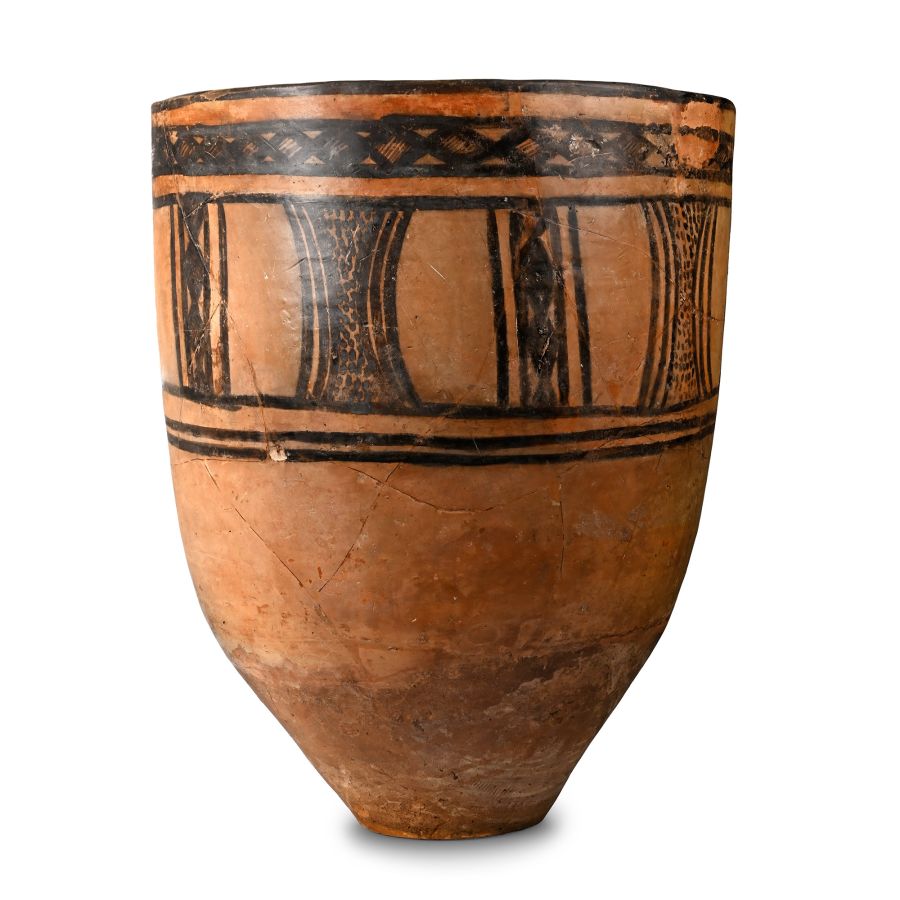
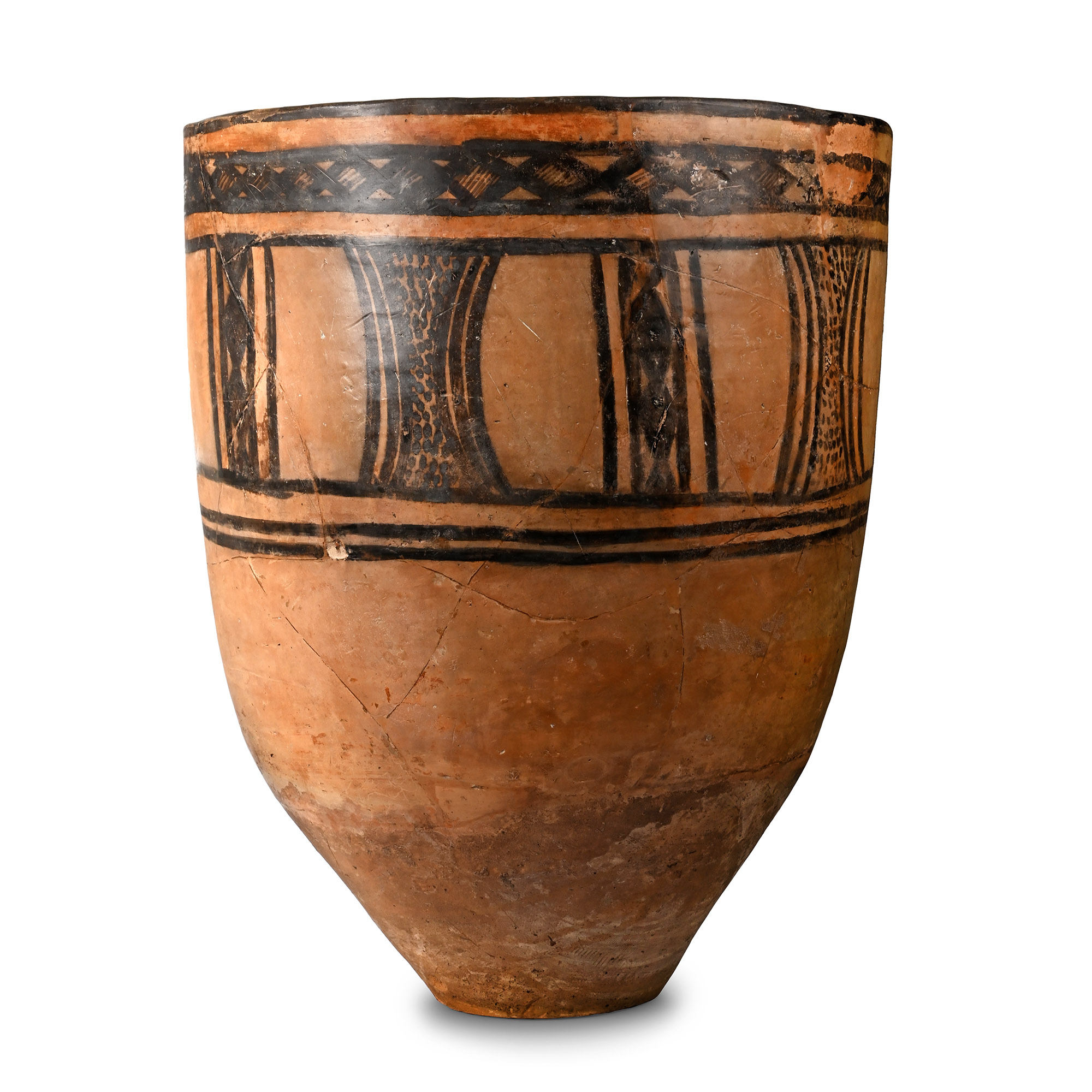
Gigantic Western Asiatic Pottery Jar
CIRCA 3000 B.C.
24 3/8 in. (14.85 kg, 62 cm high).
Cylindrical in plan and bullet-shaped in profile, sidewall decorated in dark brown with dense hatched filet below the rim and broad band of D-shaped voids and other detailing.
ProvenanceWith Mahboubian Gallery, London, UK, 1974.
This lot has been checked against the Interpol Database of stolen works of art and is accompanied by search certificate number no.12810-241412.
This lot has been cleared against the Art Loss Register database, and is accompanied by an illustrated lot declaration signed by the Head of the Antiquities Department, Dr Raffaele D'Amato.
Cf. Cort, L.A., Farhad, M., Gunter, A.C., Asian Tradition in Clay, The Hauge Gifts, Washington, 2000, pp.31, 45, for similar pottery.
CONDITIONTimeLine Auctions follows a vetting process to ensure the authenticity and legality of all items, reinforcing our commitment to integrity and responsible trading. Each antiquity, antique, and coin lot undergoes thorough examination by a vetting committee of at least ten external specialists, professional trade association members, scientists, and archaeologists: Our Vetting Process
AUCTIONS:
TimeLine is a leading auction house specialising in antiquities, ancient art, collectables, natural history, coins, medals, and books. Our auctions offer museums, collectors, historians, and enthusiasts the opportunity to acquire unique and historically significant pieces.
-
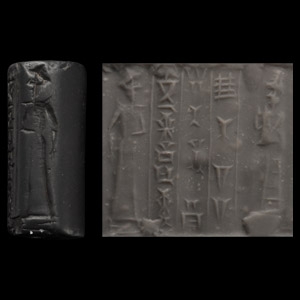
Old Babylonian Stone Cylinder Seal for Sherum-ili, Son of Begum, Servant of Ninsianna
Circa 2000-1530 B.C.Sold for (Inc. bp): £598
With three columns of cuneiform inscription, reading 'Sherum-ili, son of Begum, servant of Ninsianna', a standing robed figure on each side; accompanied by a museum-quality impression. 9.53 grams, 25 mm
From the collection of the late S, London, UK, 1970-2000. Examined by Professor Wilfrid George Lambert FBA (1926-2011), historian, archaeologist, and specialist in Assyriology and Near Eastern archaeology, in the 1990s. This lot has been cleared against the Art Loss Register database, and is accompanied by an illustrated lot declaration signed by the Head of the Antiquities Department, Dr Raffaele D'Amato. -
.jpg)
Luristan Bronze Vessel
Circa 950 B.C.Sold for (Inc. bp): £98
With flattened base and everted rim, two circumferential bands on the body. 248 grams, 95 mm wide
Ex London, UK, collections, 1990s-2000s. This lot has been cleared against the Art Loss Register database, and is accompanied by an illustrated lot declaration signed by the Head of the Antiquities Department, Dr Raffaele D'Amato.
The people of Luristan were mainly nomadic, constantly moving in summer and winter pastures, and needed metal utensils. Therefore, in addition to weapons, these excellent metal workers produced, in considerable numbers, light and elegant bronze vases and cups. -
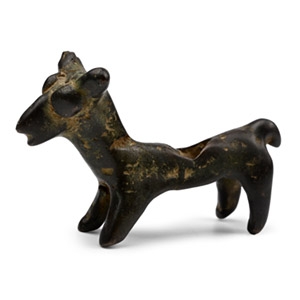
Amlash Bronze Standing Animal Statuette
10th-8th century B.C.Estimate: £100 - 140 (+bp*)
Opening Bid: £50
Hollow to the underside with pellet eyes and pinched ears. 55 grams, 72 mm
UK collection, 1990s. Acquired on the UK art market, before 2000. Private collection, Mr M.V., a London-based businessman. This lot has been cleared against the Art Loss Register database, and is accompanied by an illustrated lot declaration signed by the Head of the Antiquities Department, Dr Raffaele D'Amato.
