
Loading, please wait...
LOT 0182
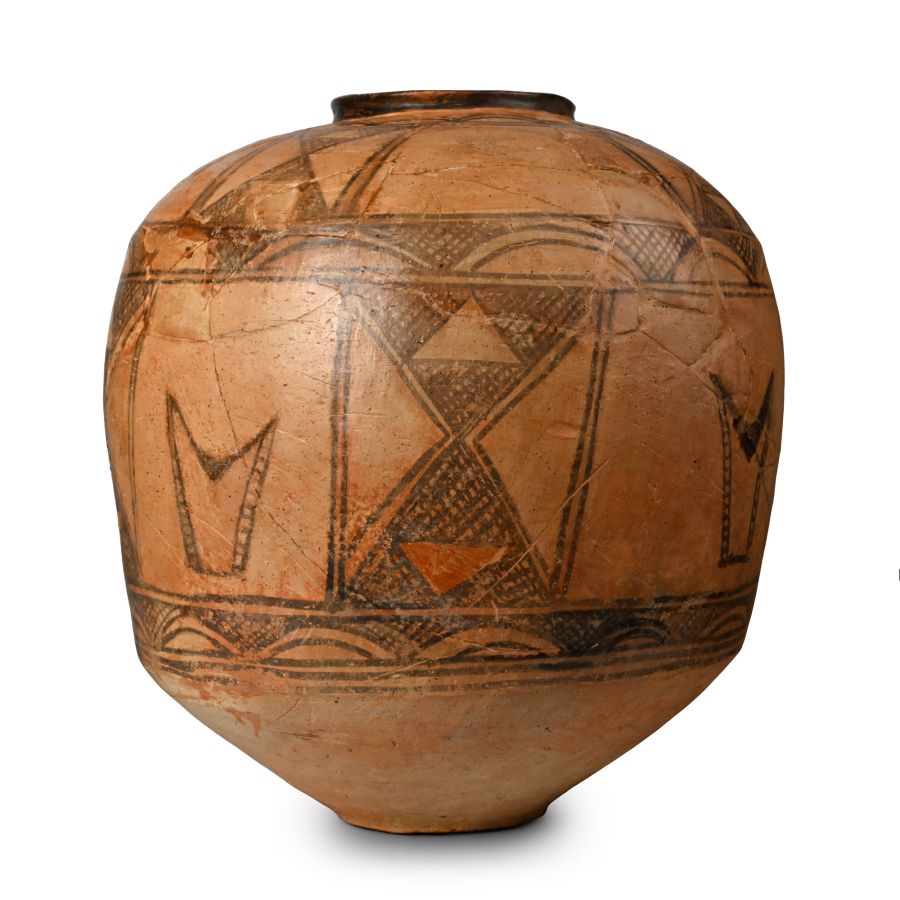
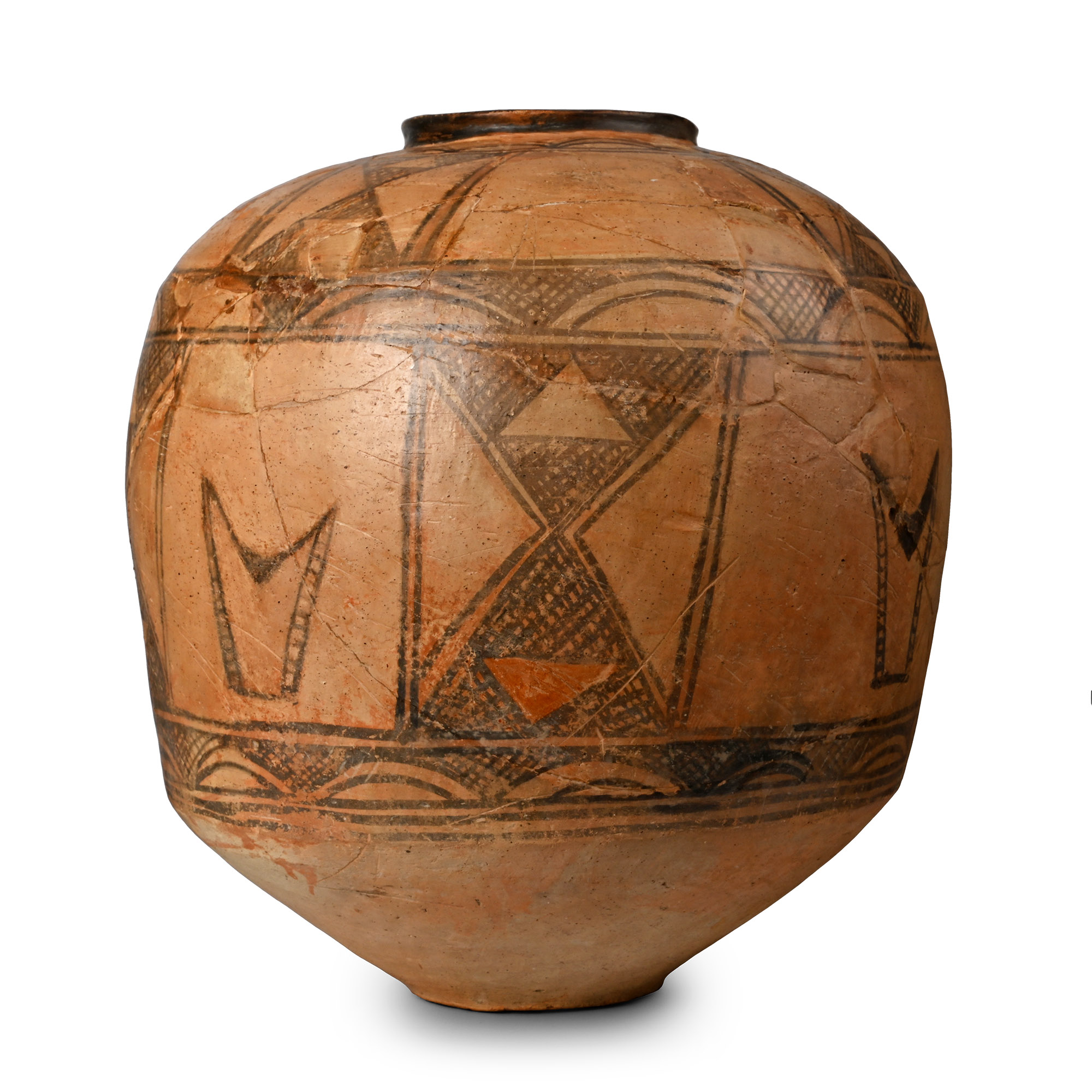
Gigantic Western Asiatic Pottery Jar
CIRCA 3000 B.C.
21 in. (11.9 kg, 53 cm high).
Barrel-shaped in profile with low rim to the mouth; painted dentilled band to the shoulder with eight panels below alternating plain and hatched; similar pattern to the sidewall, the plain panels with swallowtail motif.
Provenancewith Mahboubian Gallery, London, 1974.
This lot has been checked against the Interpol Database of stolen works of art and is accompanied by search certificate number no.12811-241409.
This lot has been cleared against the Art Loss Register database, and is accompanied by an illustrated lot declaration signed by the Head of the Antiquities Department, Dr Raffaele D'Amato.
Cf. Cort, L.A., Farhad, M., Gunter, A.C., Asian Tradition in Clay, The Hauge Gifts, Washington, 2000, pp.31, 45, for similar pottery.
CONDITIONTimeLine Auctions follows a vetting process to ensure the authenticity and legality of all items, reinforcing our commitment to integrity and responsible trading. Each antiquity, antique, and coin lot undergoes thorough examination by a vetting committee of at least ten external specialists, professional trade association members, scientists, and archaeologists: Our Vetting Process
AUCTIONS:
TimeLine is a leading auction house specialising in antiquities, ancient art, collectables, natural history, coins, medals, and books. Our auctions offer museums, collectors, historians, and enthusiasts the opportunity to acquire unique and historically significant pieces.
-
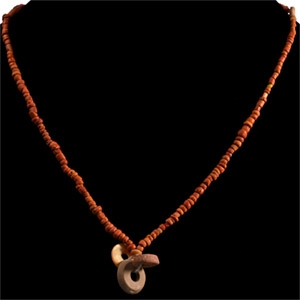
Western Asiatic Orange Glass and Other Bead Necklace String
1st millennium B.C. and laterSold for (Inc. bp): £33
Composed of annular, tubular and other beads, central feature comprising three larger annular beads, one made of shell; restrung. 11.15 grams, 42.5 cm
From the London, UK, art market in the 1990s. This lot has been cleared against the Art Loss Register database, and is accompanied by an illustrated lot declaration signed by the Head of the Antiquities Department, Dr Raffaele D'Amato. -
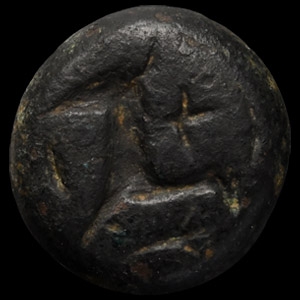
Western Asiatic Bronze Seal Matrix
1st millennium B.C.Sold for (Inc. bp): £13
Bell-shaped with incuse design of a quadruped with a cross above its back. 12.9 grams, 23 mm
From the collection of a gentleman, acquired on the London art market in the 1990s. This lot has been cleared against the Art Loss Register database, and is accompanied by an illustrated lot declaration signed by the Head of the Antiquities Department, Dr Raffaele D'Amato. -
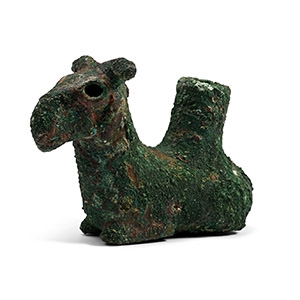
Western Asiatic Bronze Vase of a Recumbent Ram
Circa 1000-600 B.C.Estimate: £150 - 200 (+bp*)
Opening Bid: £75
Modelled reclining with its legs tucked beneath the body; short, curving horns and long droopy ears, hollow eyes to accept inserts, tubular shaft on the back. 157 grams, 72 mm
Nicolas Koutoulakis (1910-1996), thence by descent. Ex Galerie Khnoum, Geneva, Switzerland. Private collection of Mr K.A. This lot has been cleared against the Art Loss Register database, and is accompanied by an illustrated lot declaration signed by the Head of the Antiquities Department, Dr Raffaele D'Amato.
