
Loading, please wait...
LOT 1121
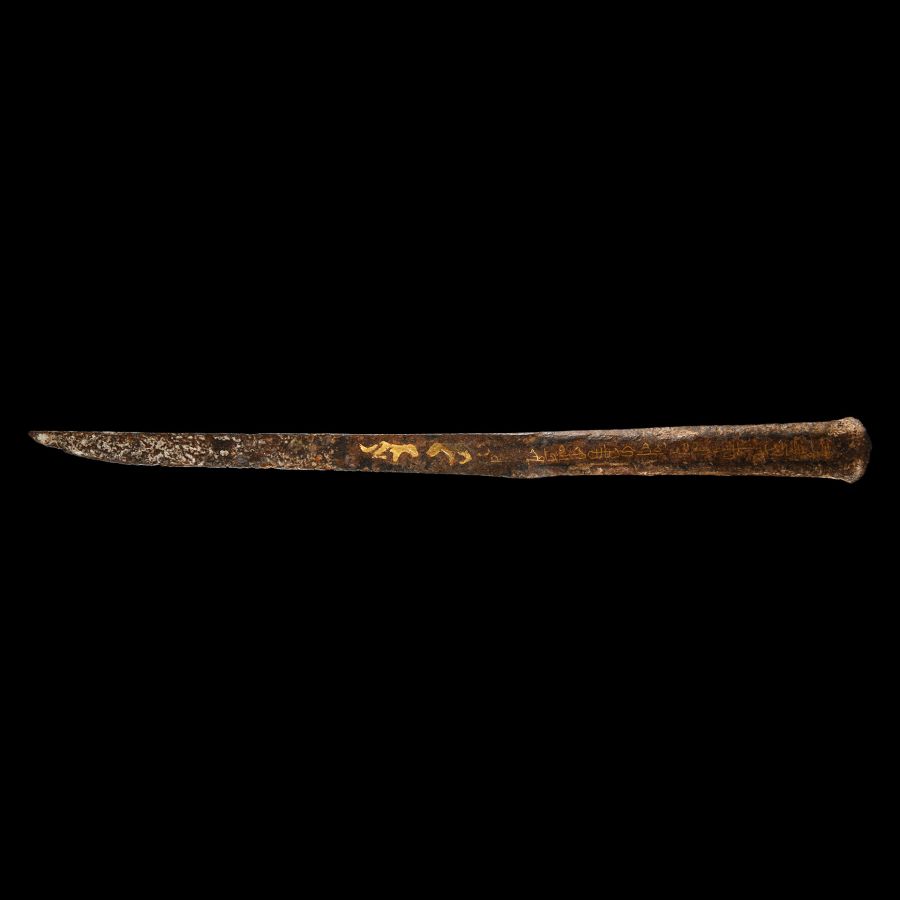
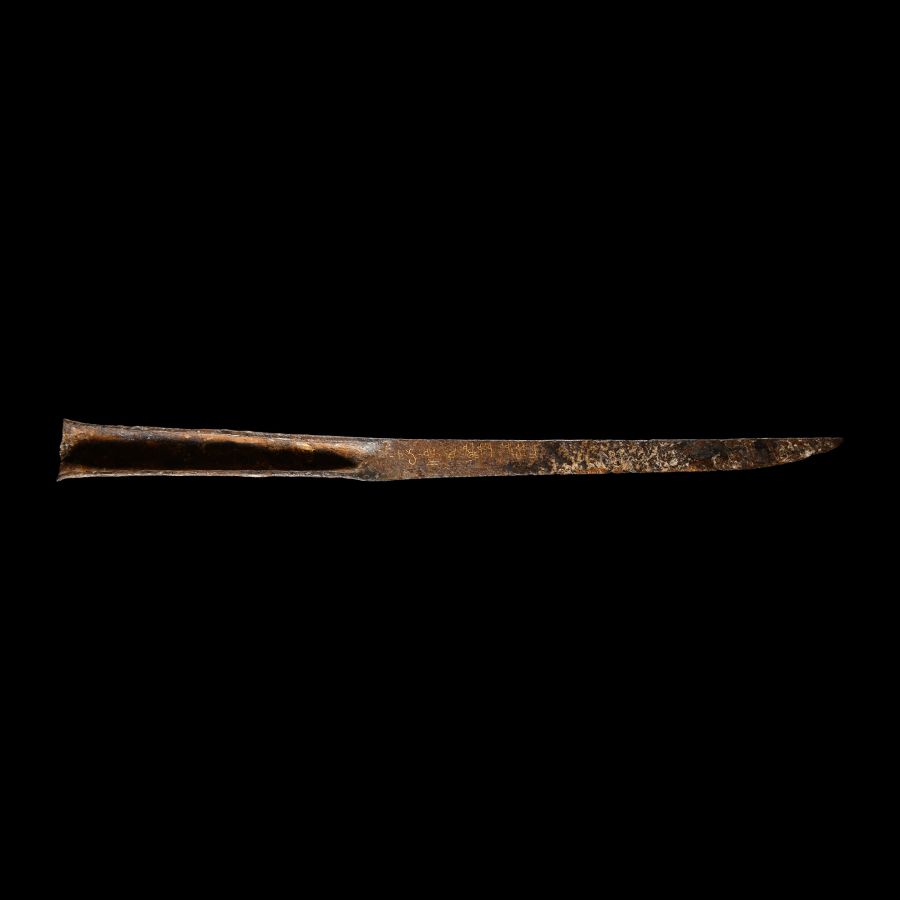
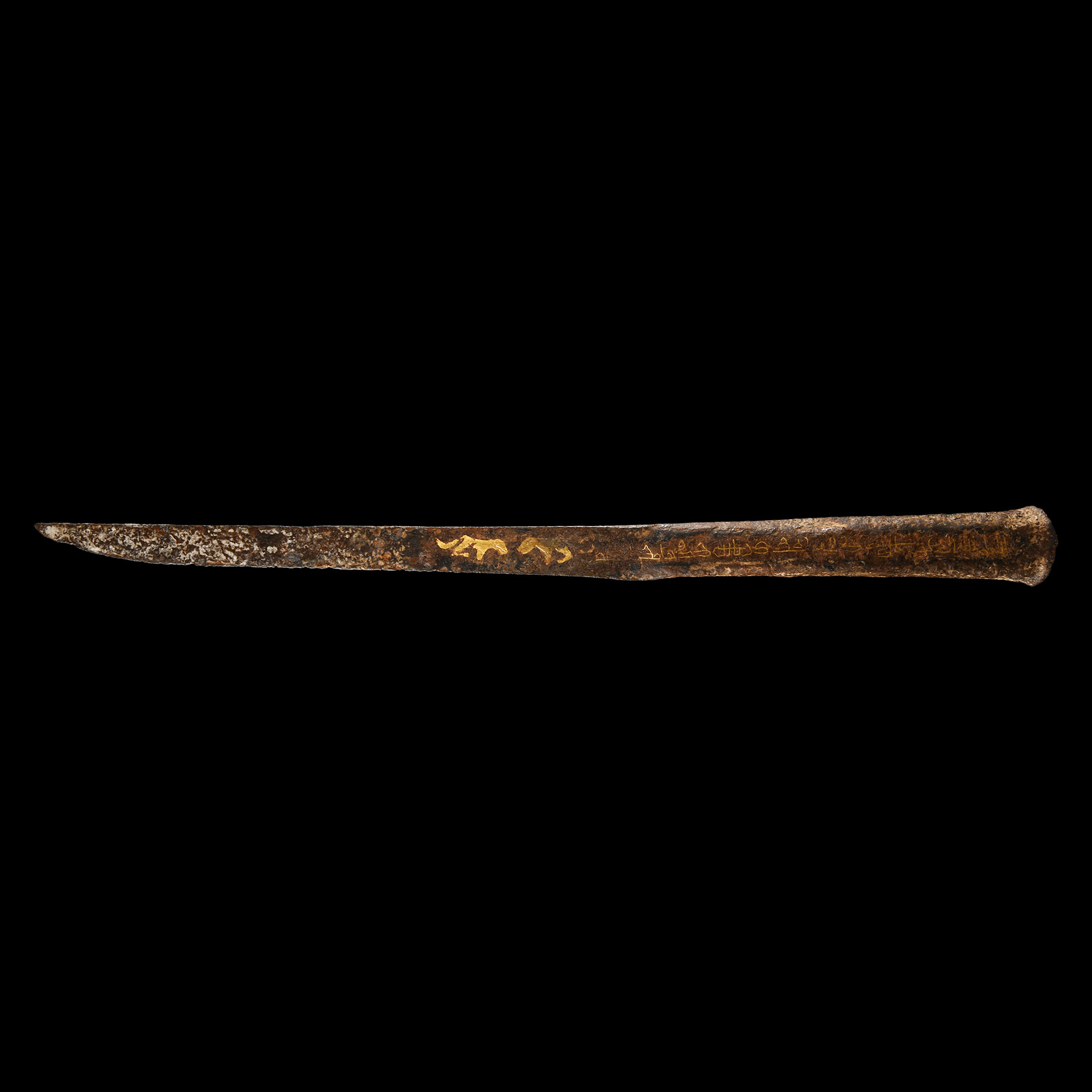
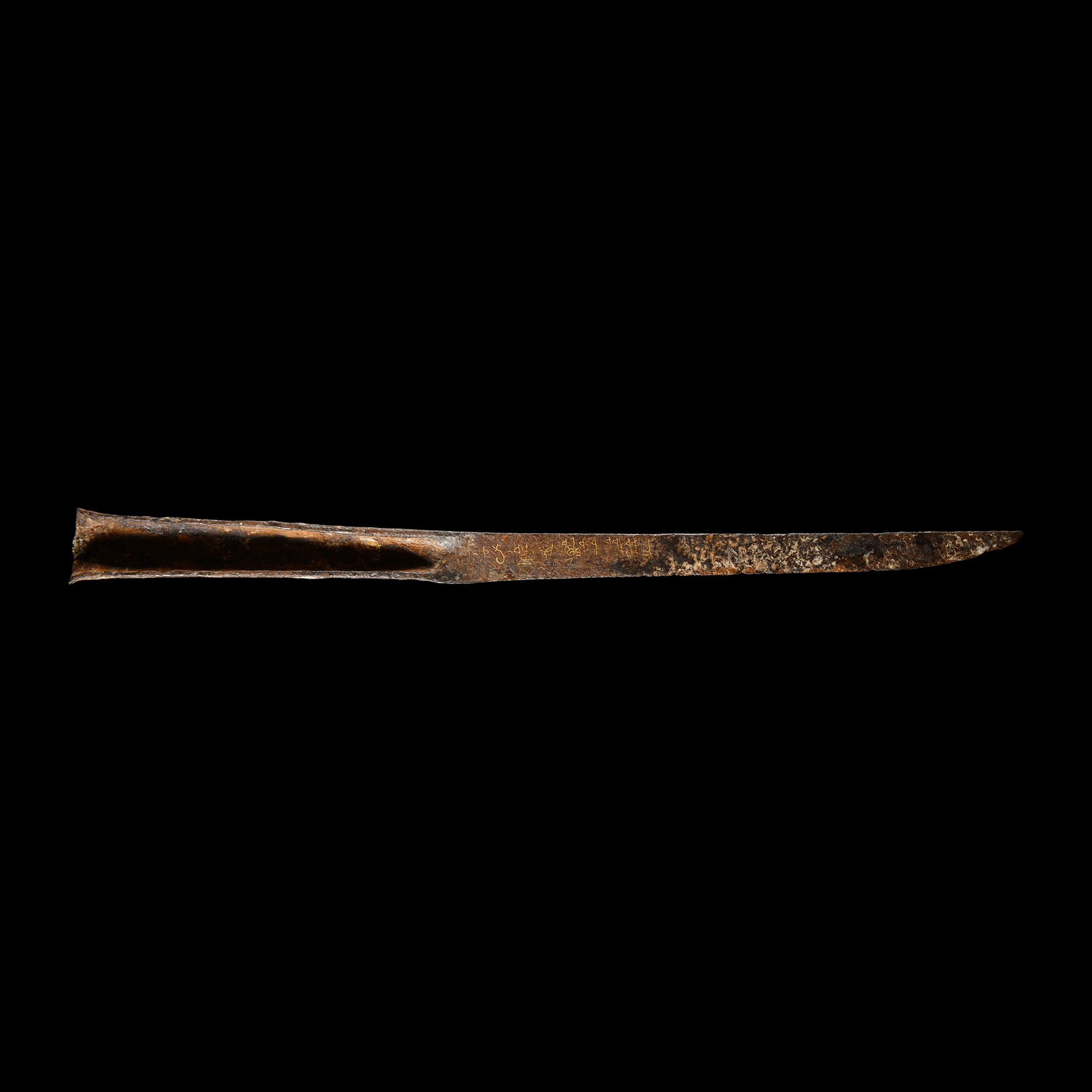
Ghaznavid Iron Knife with Calligraphic Inlays
10TH-12TH CENTURY A.D.
12 3/8 in. (91 grams, 31.5 cm).
Composed of a C-shaped socketted hilt and slender blade with single cutting edge slightly curved towards the tip; the outer face of the socket, the top edge and one side of the blade inlaid with gilt inscription, the other side of the blade displaying two gilt felines. [No Reserve]
ProvenanceLondon collection since the 1980s.
Property of a Canadian family.
Cf. Bashir, M., The Arts of the Muslim Knight, The Furusiyya Art Foundation Collection, Milano, 2008, p.143, for the dagger type.
FootnotesThe gilding process used on the blade seems to be an exceptionally rare example of what was known in medieval Islamic literary sources as ‘gold water’. The blade seems to have been decorated with a Kufic inscription to three sides. It bears witness to the extraordinary sophistication of the metalworkers and jewellers of this period.
CONDITIONTimeLine Auctions follows a vetting process to ensure the authenticity and legality of all items, reinforcing our commitment to integrity and responsible trading. Each antiquity, antique, and coin lot undergoes thorough examination by a vetting committee of at least ten external specialists, professional trade association members, scientists, and archaeologists: Our Vetting Process
AUCTIONS:
TimeLine is a leading auction house specialising in antiquities, ancient art, collectables, natural history, coins, medals, and books. Our auctions offer museums, collectors, historians, and enthusiasts the opportunity to acquire unique and historically significant pieces.
-
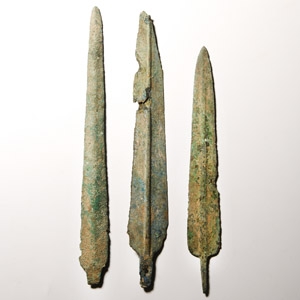
Luristan Bronze Arrowhead Group
2nd-1st millennium B.C.Estimate: £100 - 140 (+bp*)
Opening Bid: £50
Comprising three leaf-shaped tanged arrowhead types. 215 grams total, 19-21 cm
Acquired 1980-2015. Ex Abelita family collection. -
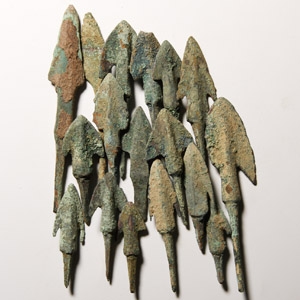
Luristan Bronze Arrowhead Group
12th-10th century B.C.Sold for (Inc. bp): £117
Comprising seventeen tanged arrowheads, most of them having large elongated triangular blades and raised midrib; one with long tang. 105 grams total, 34 - 82 mm
Acquired 1980-2015. Ex Abelita family collection.
Most of these arrowhead seem to belong to the type V, subcategory types A and C according to the classification of Khorasani and Negahban. In the four categories of triangular bronze arrowheads from Luristan, Marlik and Northern Iran individuated by Negahban, subtypes A and C are small triangular arrowheads with barbed shoulders. The arrowhead with squared shoulders belongs to type III of the same classification. -
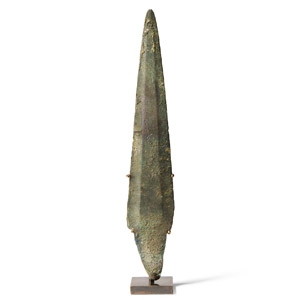
Western Asiatic Bronze Dagger
2nd millennium B.C.Estimate: £200 - 300 (‡+bp*)
Opening Bid: £100
With narrow pointed blade and wide raised flange down centre, straight sides, well marked shoulders with wide tang, one upper hole for rivet. 149 grams total, 21 cm high including stand
From the possessions of a member of a German princely family, gathered in the late 19th century, until the 1930s. with Auction House CUSP, Vienna, Auction Antique Art from Asia and from the Eastern Mediterranean, 16 June 2012, lot 75 [Part].
The type was technically more advanced than previous types of blades in the Near East due to its shape and its slightly convex sides widening out near the point, which combined the advantages of the leaf-shaped and straight-sided forms.
