
Loading, please wait...
LOT 0377
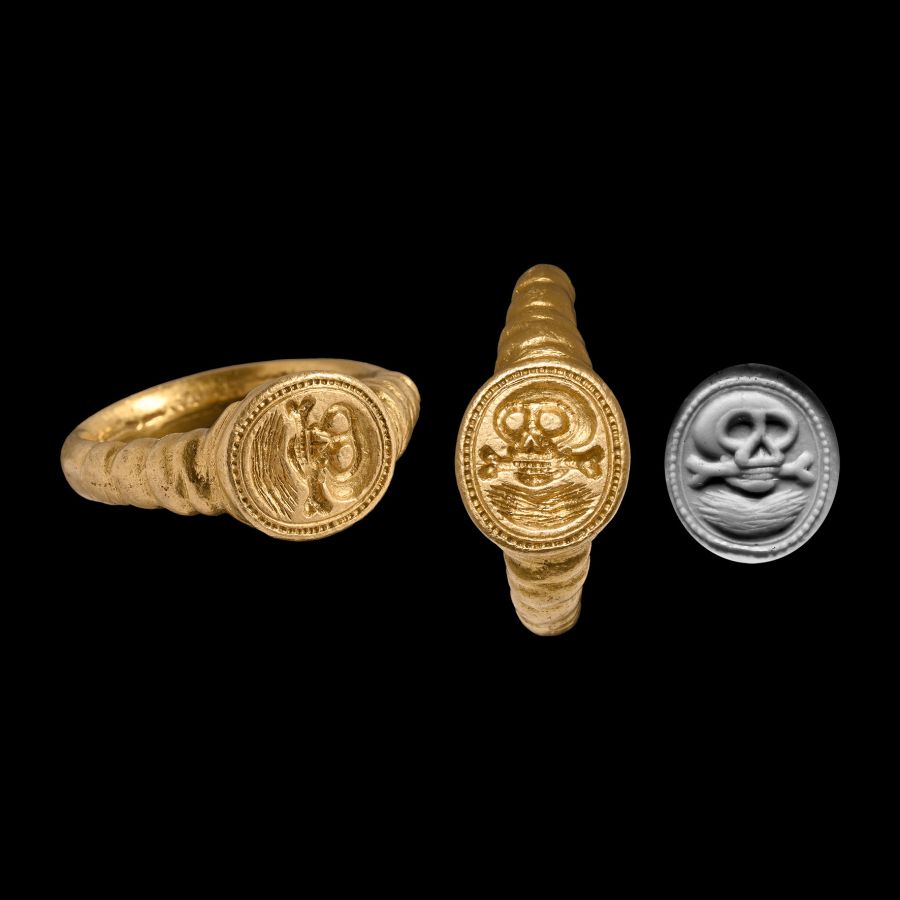
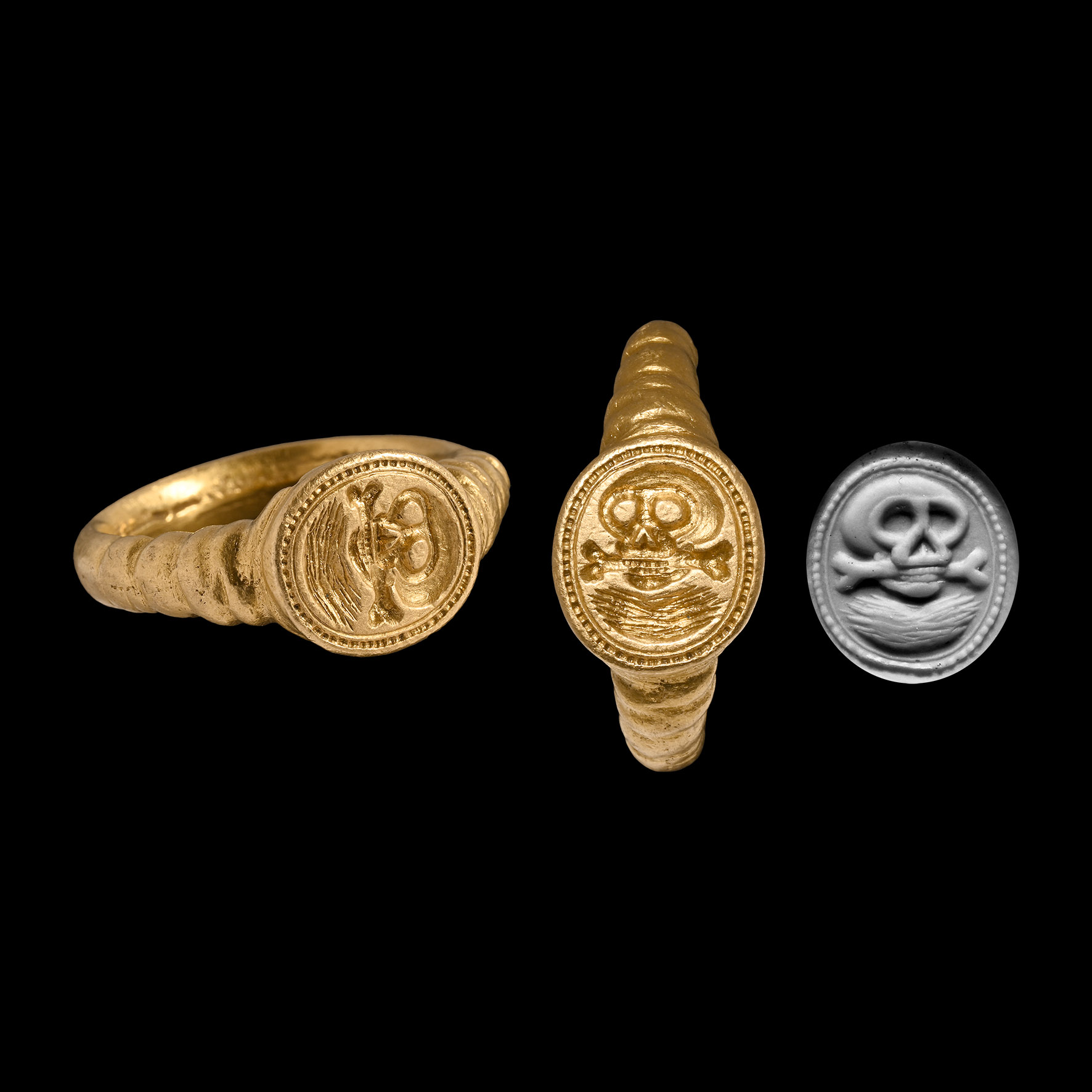
German Memento Mori Signet Ring
CIRCA 1600 A.D.
1 in. (22.40 grams, 27.88 mm overall, 21.55 mm internal diameter (approximate size British V, USA 10 1/2, Europe 23.77, Japan 22)).
Substantial gold hoop with ribbed shoulders and underside to the discoid bezel; incuse pelleted border enclosing a skull and single long bone above a bird's nest.
ProvenanceAcquired in the 1980s.
Property of a London gentleman.
This lot has been checked against the Interpol Database of stolen works of art and is accompanied by search certificate no.11980-210514.
Cf. Chadour, A.B., Rings. The Alice and Louis Koch Collection, volume I, Leeds, 1994, item 654, for type.
CONDITIONTimeLine Auctions follows a vetting process to ensure the authenticity and legality of all items, reinforcing our commitment to integrity and responsible trading. Each antiquity, antique, and coin lot undergoes thorough examination by a vetting committee of at least ten external specialists, professional trade association members, scientists, and archaeologists: Our Vetting Process
AUCTIONS:
TimeLine is a leading auction house specialising in antiquities, ancient art, collectables, natural history, coins, medals, and books. Our auctions offer museums, collectors, historians, and enthusiasts the opportunity to acquire unique and historically significant pieces.
-
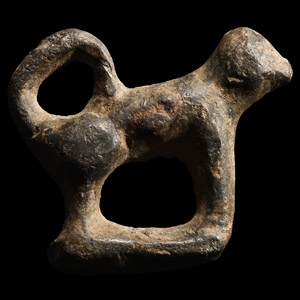
Medieval Bronze Dog Mount
14th-15th century A.D.Sold for (Inc. bp): £33
Thick D-section casting with looped tail; probably an element of harness for a hound. 60.8 grams, 45 mm
Acquired on the UK art market in the 1990s. Property of a Stowmarket, UK, gentleman. -
.jpg)
Medieval Iron Single-Edged Dagger
15th-16th century A.D.Estimate: £80 - 100 (+bp*)
Opening Bid: £40
Comprising a slender cutting edge and a long tang. 123 grams, 29.3 cm
Acquired 1960s-1990s. Late Alison Barker collection, a retired London barrister. -
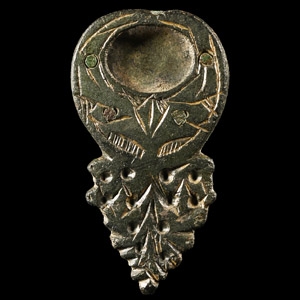
Medieval Bronze Belt End
Circa 14th-15th century A.D.Sold for (Inc. bp): £33
Attachment plate a disc with ellipsoid void and incised linear detailing, triangular extension with chip-carved foliage ornament; separate riveted backplate. 18 grams, 54 mm
Found Fring, Norfolk. Acquired on the UK art market in the 1980s. From an East Anglian private collection. Accompanied by an old handwritten identification packet.
